Maddy summaryThis House resolution expresses support for designating the week beginning September 14, 2026, as National Hispanic-Serving Institutions Week. It recognizes these colleges and universities, which enroll at least 25 percent Hispanic students, for their role in providing higher education access to low-income and underserved populations. The bill highlights that these institutions serve a significant portion of the nation's undergraduate students and contribute to economic mobility. It calls on the public and interested groups to observe the week with ceremonies and activities during Hispanic Heritage Month.

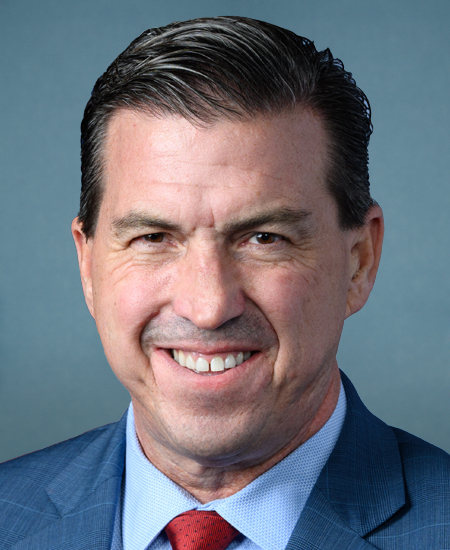
Rep. Kevin Mullin
Sponsored bills
Maddy summaryThe Affordable Innovation for the Grid Act directs the Department of Energy to study how artificial intelligence and high-performance computing can improve the reliability and efficiency of the national power grid. This assessment will specifically examine how these technologies can speed up the process of connecting new power sources to the grid and identify any technical or cybersecurity barriers to their use. Within one year of passing, the Department of Energy must submit a report to Congress outlining its findings and offering recommendations to overcome identified limitations and encourage wider adoption of these tools. The bill primarily affects federal agencies responsible for energy oversight and the electric power industry, aiming to gather data rather than immediately changing laws.
Maddy summaryThis bill would require Medicare to cover early detection screening tests for Alzheimer's disease and related dementias starting January 1, 2028. It defines eligible tests as FDA-cleared genomic blood tests, blood product analyses, or equivalent medical imaging methods (like protein expression or whole genome sequencing) that detect pre-symptomatic or early-stage conditions. Medicare beneficiaries would receive this coverage without cost-sharing for these specific screenings. The bill amends Medicare coverage rules to explicitly include these tests under Section 1861(nnn) of the Social Security Act.
Maddy summaryHR 5334, the SEED Act of 2025, expands the existing educator expense deduction under federal tax law to explicitly include early childhood educators. It revises the Internal Revenue Code to cover expenses for "early childhood educators" and broadens the educational levels affected to include "pre-kindergarten through grade 12." This change allows early childhood educators (such as preschool teachers) to deduct work-related expenses like classroom supplies and professional development costs, which they previously could not claim under the existing deduction for "kindergarten through grade 12" teachers. The amendment applies to expenses incurred in taxable years beginning after December 31, 2024.
Maddy summaryThis bill requires all new passenger vehicles manufactured for sale in the U.S. to include AM radio as standard equipment (not an optional add-on) by 2027-2028, depending on manufacturer size. It mandates that AM radio receivers must be easily accessible to drivers and allows compliance through digital AM broadcast technology. During a transition period, manufacturers must clearly label vehicles without AM radio but cannot charge extra for this feature. The bill also mandates a GAO study on AM radio's role in emergency alerts and includes a 10-year sunset provision for the rule. It preempts state laws regarding AM radio access in vehicles.
Maddy summaryThis House resolution designates September 2026 as National Voting Rights Month to highlight the historical and ongoing challenges faced by various groups in exercising their right to vote. It encourages Congress to pass legislation that strengthens voting protections, specifically endorsing the John R. Lewis Voting Rights Advancement Act of 2025 while opposing bills that could restrict voter eligibility. The resolution also recommends that public schools develop curricula on voting history and current suppression tactics, and it invites funding for public service announcements to promote voter registration and participation.
Maddy summaryHR 7254 requests a study to evaluate designating the Bay Area Ridge Trail as a National Scenic Trail. The bill directs the Secretary of the Interior to complete a feasibility study within one year, consulting with the Bay Area Ridge Trail Council and relevant agencies. The study would assess the 550-mile trail - currently 415 miles completed - connecting over 75 parks and open spaces across the San Francisco Bay Area. This bill does not designate the trail as a National Scenic Trail but initiates a review process to determine its potential for that status. The study would examine the trail’s scenic, historic, and recreational value, including its connections to urban areas and natural features like the Golden Gate Bridge and San Andreas Fault.
Maddy summaryThis House resolution supports designating the week of September 14 through September 18, 2026, as National Clean Energy Week to highlight the growth of zero- and low-emission energy sources. The bill cites a Department of Energy report stating that the U.S. energy sector employed approximately 8.5 million people at the end of 2024 and emphasizes that clean energy jobs are local and cannot be outsourced. It encourages federal, state, and private entities to invest in affordable clean technologies and specifically applauds the work of Department of Energy National Laboratories across multiple states.
Maddy summaryThe Priority for Pediatric Cures Act permanently extends the authority to award priority review vouchers for drugs and biologics that treat rare pediatric diseases. By amending the Federal Food, Drug, and Cosmetic Act, the bill removes a specific expiration provision that would otherwise limit this incentive program. This change ensures that pharmaceutical companies can continue to receive expedited FDA review in exchange for developing treatments for children with rare conditions.
This bill designates the facility of the United States Postal Service located at 6444 San Fernando Road in Glendale, California, as the "Paul Ignatius Post Office".