
Home Wisconsin Committees Education
Senate Committee
Committee

Education

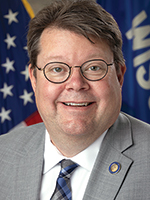
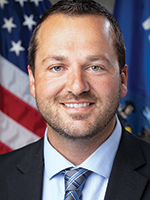
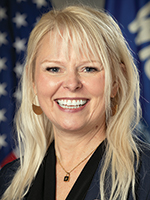
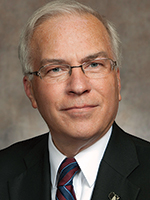
Roster

Members · 5

Legislation

Recent bills · 5

failed · Wisconsin · Senate Jul 2, 2026

SB 268: Relating to: prohibiting corporal punishment in public and private schools.

SB 268 prohibits corporal punishment in all public and private K-12 schools across the state. It defines corporal punishment as intentional physical pain used for discipline (excluding individualized education plans and athletic training) and bans school staff from using it, except in limited circumstances like preventing harm or during safety-related activities. Schools must adopt policies allowing "reasonable and necessary force" for specific safety purposes, while clarifying that this does not create new liability for proper force use. The bill directly affects schools, staff, and students by replacing existing rules with this clear prohibition and defined exceptions.
vetoed · Wisconsin · Senate May 13, 2026

SB 424: Relating to: teacher preparatory programs.

SB 424 amends Wisconsin law to require all teacher preparatory programs in the state to mandate student teaching consisting of full days for a full semester or summer session, aligned with the cooperating school's daily schedule and calendar. This affects teacher preparation programs and applicants seeking teaching licenses in Wisconsin public schools. The bill specifies that the state superintendent must accept accreditation from U.S. Department of Education-recognized agencies for licensing or program approval purposes. Exceptions to the student teaching requirement are permitted only when institutional and school calendars conflict, as determined by the state superintendent.
failed · Wisconsin · Senate Apr 24, 2026

SB 1085: Relating to: longevity bonuses for teachers in school districts. (FE)

This bill establishes a teacher longevity bonus program for Wisconsin school districts, providing a $7,000 payment to teachers who have been continuously licensed and employed by the same school board for five consecutive school years. The program begins in the 2031-32 school year and allows teachers to receive additional bonuses for each subsequent five-year period of continuous service, provided those years were not already used to qualify for a prior bonus. School boards must annually report eligible teacher names to the Department of Public Instruction, and the funding comes from a new state appropriation. The legislation amends existing statutes to create this new bonus structure and clarifies which school district provisions apply to first-class city school districts.
failed · Wisconsin · Senate Apr 21, 2026

SB 569: Relating to: implementation of an individualized education program or services plan under the Special Needs Scholarship Program. (FE)

SB 569 requires private schools participating in the Special Needs Scholarship Program to implement each student's most recent individualized education program (IEP) or services plan, adjusted through agreement between the school and the student's parent. It also mandates that these schools share all IEP-related records with the student's public school district within 5 days of a formal request. The law directly affects private schools in the scholarship program, parents of students with disabilities, and public school districts seeking IEP documentation. These requirements will take effect for the 2026-27 school year. The bill focuses on ensuring consistent educational planning and record-sharing between private and public schools for scholarship program participants.
failed · Wisconsin · Senate Apr 15, 2026

SB 1172: Relating to: human growth and development instruction. (FE)

This bill requires Wisconsin school boards to provide age-appropriate, medically accurate instruction on human growth and development in grades K-12, covering topics like puberty, reproductive anatomy, gender identity, and healthy relationships. It mandates that schools teach abstinence as the most reliable way to prevent pregnancy and STIs while also including information on contraceptives, consent, and digital safety. The legislation defines key terms such as "age-appropriate" and "medically accurate" to ensure content is scientifically based and recognized by leading health organizations. School boards must decide whether to separate students by gender during instruction and include specific subjects like enthusiastic consent and parental communication. The bill also connects marriage and parenting to parental responsibility while addressing bullying and stereotyping prevention.