Home Wisconsin Committees Regulatory Licensing Reform
House Committee
Committee

Regulatory Licensing Reform

Roster

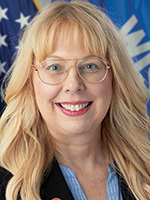
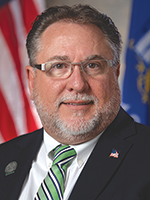
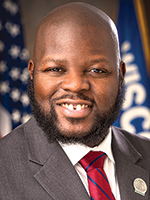
Members · 7

Legislation

Recent bills · 5

signed · Wisconsin · House Apr 9, 2026

AB 759: Relating to: eligibility to receive occupational credentials for recipients of deferred action under the Deferred Action for Childhood Arrivals program. (FE)

AB 759 allows individuals with deferred action under the federal DACA program to obtain state occupational licenses (like nursing or cosmetology credentials) if they have valid federal work permits. It requires state licensing agencies to verify DACA recipients' federal work authorization through official systems before issuing licenses. Licenses issued under this law expire when the federal work permit expires, and recipients must renew both simultaneously. The bill explicitly states it does not grant eligibility for public benefits beyond occupational credentials.
failed · Wisconsin · House Apr 3, 2026

AB 1095: Relating to: speech-language pathologist licenses issued by the Department of Public Instruction and modifying administrative rules promulgated by the Department of Public Instruction. (FE)

This bill updates Wisconsin's licensing requirements for speech-language pathologists working in public schools by allowing the Department of Public Instruction to issue licenses to individuals who already hold valid licenses from the state's hearing and speech examining board or possess a valid compact privilege. The legislation modifies existing statutes and administrative rules to streamline the licensing process, ensuring that qualified professionals can transition from clinical practice to school employment without redundant certification steps. Additionally, the bill includes broader changes to teacher licensing standards, such as requiring full semester student teaching for all teacher preparation programs, including those outside the state. These provisions aim to align school-based speech-language pathology credentials with established professional standards while maintaining oversight through the state superintendent.
failed · Wisconsin · House Mar 23, 2026

AB 1080: Relating to: regulating trampoline parks, providing an exemption from emergency rule procedures, and granting rule-making authority. (FE)

AB 1080 establishes new safety regulations for trampoline parks in the state. It requires operators to obtain an annual license, maintain $1 million in liability insurance, and follow specific safety standards - including proper signage, staff certification in first aid/CPR, equipment maintenance, and injury reporting. The bill exempts school playgrounds (if incidental and not fee-based), training facilities (like gymnastics studios with 80% instructional revenue), and inflatable bounce houses used exclusively for exercise. These rules apply directly to commercial trampoline park operators, not to facilities covered by the exemptions.
failed · Wisconsin · House Mar 23, 2026

AB 1014: Relating to: ratification of the Interstate Massage Compact. (FE)

AB 1014 ratifies Wisconsin's participation in the Interstate Massage Compact (IMpact), allowing massage therapists licensed in other participating states to practice in Wisconsin with a multistate license. This directly affects licensed massage therapists and the state's massage therapy credentialing board, which will manage the new licensing system. The bill creates a commission to oversee the compact and updates licensing definitions to recognize "multistate licenses" granted under the compact, replacing some single-state licensing requirements. It also clarifies that the licensing board may not deny licenses based on certain criminal convictions when evaluating multistate applicants.
failed · Wisconsin · House Mar 23, 2026

AB 141: Relating to: provisional social worker certificates and licenses.

AB 141 creates a temporary "provisional" pathway for social work licensure in Wisconsin, directly affecting individuals who have taken but not passed the required national social work exam. It allows these applicants to obtain a provisional certificate or license (valid for 36 months) while completing supervised practice, requiring 37.5 hours of supervision (including 25 hours of in-person one-on-one) over their first 2,000 hours of practice. The bill specifies that provisional credentials cannot be renewed and transition to full certification only after verified completion of supervised practice and meeting other requirements under Section 457.08(6). This change streamlines the process for entry-level social workers to gain practical experience while working toward full licensure.