

Relating to: making certain child care expenditures eligible for the business development tax credit. (FE)
SB 291 expands Wisconsin's business development tax credit to include certain employer-provided child care costs. It allows businesses to claim a tax credit equal to up to 15% of qualifying expenses for establishing or operating child care programs for employees, such as upfront setup costs, operational expenses, employee reimbursements, or reserved child care slots. The bill directly affects Wisconsin-based businesses that provide child care benefits to employees, making these costs eligible for the tax credit starting in 2025. Key provisions define "eligible child care costs" broadly to cover capital expenditures, operational spending, and reimbursements, while capping the credit at 15% of those expenses. The law applies to taxable years beginning after December 31, 2024.
Bill status
vetoed
4 of 5 stages cleared
Introduction
May 2025
Committee Review
Feb 2026
Senate Passage
Nov 2025
Assembly Passage
Feb 2026
Vetoed
Mar 2026
Introduced May 30, 2025
Vetoed Mar 13, 2026
Maddy AI version diff · 1 comparison
What changed between versions
Bill Text
→
Text as Enrolled
·
4 edits
MODERATE
The bill was finalized and enacted into law, transitioning from a draft proposal to an official statute. The core policy remains unchanged: it expands the Business Development Tax Credit to allow businesses to claim up to 15% of costs for various child care expenses, not just capital investments. A new section was added to clarify that the tax credit applies to taxable years beginning after December 31, 2024.
Scope change
The bill's scope effectively expanded by clarifying that the tax credit applies to a broader range of child care costs, including operational expenses and reimbursements, rather than just capital expenditures. Additionally, the effective date for claiming the credit was explicitly set to taxable years beginning after December 31, 2024.
TIMELINE
Added a specific effective date stating the act applies to taxable years beginning after December 31, 2024.
ELIGIBILITY
Broadened eligibility criteria to include operational costs, reimbursements, and flexible spending accounts alongside capital expenditures.
DEFINITION
Created a new statutory definition for 'Costs incurred to provide child care services for employees' to list specific allowable expenses.
TECHNICAL
Added administrative sections regarding the certification of nonprofit entities and renumbering of existing statute sections.
Floor votes · Assembly Feb 19, 2026
How they voted
This bill passed the Senate by voice vote (no roll call recorded).
Full legislative history
Actions timeline
Total actions
33
Key actions
5
Committee
5
Mar 13, 2026
Vetoed
Report vetoed by the Governor on 3-13-2026
upper
Feb 19, 2026
Lower · Passed
Read a third time and concurred in, Ayes 63, Noes 31
lower
Feb 4, 2026
Committee
Referred to committee on Rules
lower
Feb 4, 2026
Lower · Passed
Report concurrence recommended by Joint Committee on Finance, Ayes 11, Noes 4
lower
Feb 3, 2026
Lower · Passed
Executive action taken by joint committee on Finance
lower
Jan 30, 2026
Committee
Withdrawn from committee on Rules and referred to joint committee on Finance pursuant to Assembly Rule 24 (3)(a)
lower
Nov 18, 2025
Upper · Passed
Read a third time and passed, Ayes 19, Noes 14
upper
Sep 19, 2025
Upper · Passed
Report passage recommended by Committee on Agriculture and Revenue, Ayes 5, Noes 3
upper
May 30, 2025
Introduced
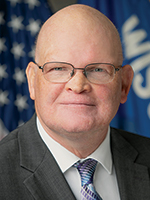
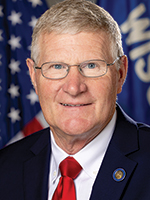
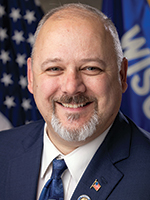
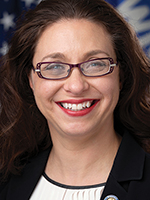
Introduced by Senators Marklein, Cabral-Guevara, Feyen, James, Nass and Quinn;
cosponsored by Representatives Hurd, Armstrong, Behnke, Dittrich, Donovan, Green, Kaufert, Kitchens, Knodl, Kreibich, Krug, Melotik, Mursau, Novak, O'Connor, Penterman and Steffen
upper
6 primary · 0 co-sponsors
Sponsors


Ask Maddy
·
AI policy assistant
Ask Maddy about SB 291
Scope: WI
Hi! I can help you understand SB 291. What would you like to know?
Try one of these
i
Maddy answers using official bill text and legislative records. Always verify before sharing.
Sources cited inline