

Relating to: statutory recognition of specialized treatment court and commercial court dockets.
AB 73 creates a new statute (Chapter 798) to formally recognize two types of specialized court programs in Wisconsin: treatment courts and commercial courts. Treatment courts (e.g., drug, mental health, veterans courts) address underlying issues like addiction to reduce recidivism through treatment and supervision, while commercial courts handle business disputes more efficiently. The bill establishes these dockets within the existing court system, requiring judges to receive specialized training and operate using graduated sanctions and rewards. It directly affects courts handling these case types, aiming to improve outcomes for participants and streamline dispute resolution.
Bill status
vetoed
4 of 5 stages cleared
Introduction
Feb 2025
Committee Review
May 2025
Assembly Passage
Apr 2025
Senate Passage
May 2025
Vetoed
Aug 2025
Introduced Feb 24, 2025
Vetoed Aug 11, 2025
Maddy AI version diff · 1 comparison
What changed between versions
Bill Text
→
Text as Enrolled
·
3 edits
MINOR
No substantive policy changes were made between the Bill Text and Text as Enrolled versions of AB 73. The differences are purely formatting: the bill was converted from its legislative draft format (with line numbers, sponsor information, and an LRB analysis summary) into the official enrolled act format (with enactment/publication date fields and a standard effective-date footnote). The legislation passed without amendment.
TECHNICAL
Header changed from '2025 ASSEMBLY BILL 73' with sponsor and introduction details to '2025 WISCONSIN ACT' with blank 'Date of enactment' and 'Date of publication' fields for official record-keeping.
The Legislative Reference Bureau analysis summary paragraph and the bill's line-numbered formatting were removed, as is standard when a bill transitions to enrolled act format.
A footnote citing Section 991.11 of the Wisconsin Statutes was added, stating that acts without an expressly prescribed effective date take effect the day after their date of publication.
Floor votes · Assembly Apr 22, 2025
How they voted
This bill passed the Senate by voice vote (no roll call recorded).
Full legislative history
Actions timeline
Total actions
34
Key actions
6
Committee
5
Amendments
2
Aug 11, 2025
Vetoed
Report vetoed by the Governor on 8-8-2025
lower
May 15, 2025
Upper · Passed
Read a third time and concurred in, Ayes 18, Noes 15
upper
May 15, 2025
Introduced
Point of order that Senate Amendment 1 was not germane well taken
upper
May 15, 2025
Introduced
Senate Amendment 1 offered by Senators Roys, L. Johnson, Keyeski, Spreitzer, Habush Sinykin, Dassler-Alfheim, Smith, Drake, Larson, Carpenter, Wirch and Hesselbein
upper
May 13, 2025
Upper · Passed
Public hearing requirement waived by committee on Senate Organization, pursuant to Senate Rule 18 (1m), Ayes 3, Noes 2
upper
May 8, 2025
Upper · Passed
Report concurrence recommended by Committee on Judiciary and Public Safety, Ayes 5, Noes 3
upper
Apr 22, 2025
Lower · Passed
Read a third time and passed, Ayes 53, Noes 42, Paired 2
lower
Apr 17, 2025
Lower · Passed
Placed on calendar 4-22-2025 by Committee on Rules
lower
Apr 15, 2025
Committee
Referred to committee on Rules
lower
Apr 15, 2025
Lower · Passed
Report passage recommended by Committee on Mental Health and Substance Abuse Prevention, Ayes 7, Noes 2
lower
Feb 24, 2025
Introduced
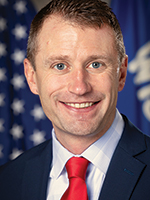
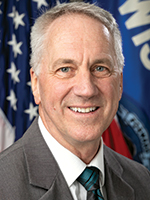
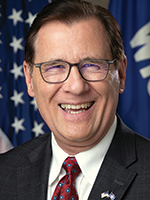
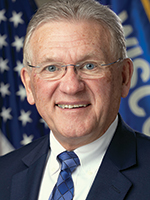
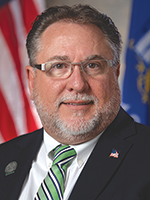
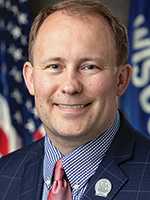
Introduced by Representatives Tusler, B. Jacobson, Brooks, Knodl, Murphy and O'Connor;
cosponsored by Senators Jacque and Wimberger
lower
6 primary · 0 co-sponsors
Sponsors
Ask Maddy
·
AI policy assistant
Ask Maddy about AB 73
Scope: WI
Hi! I can help you understand AB 73. What would you like to know?
Try one of these
i
Maddy answers using official bill text and legislative records. Always verify before sharing.
Sources cited inline