Maddy summarySB 890 changes West Virginia's public school calendar requirements from day-based to hour-based standards. It replaces the 180-day instructional requirement with a minimum of 900 instructional hours per year and changes the teacher employment term from 200 days to 1,600 hours. The bill allows counties to use up to 25 hours of alternative instruction (like remote learning during closures) toward the total hour requirement and permits flexible scheduling for educator development time. These changes directly affect all public school districts, teachers, and students in West Virginia by shifting how school calendar compliance is measured.

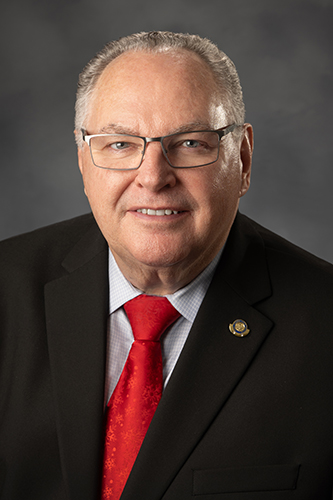
Sen. Rollan Roberts
Sponsored bills
Maddy summaryThis bill (SB 1038) increases salaries by 15% for three specific positions at the Unemployment Compensation Board of Review: Chief Administrative Law Judge, Administrative Law Judge 1, and Administrative Law Judge 2. The adjustment applies to salary levels effective when the bill takes effect and is separate from other 2026 budget salary changes. The stated purpose is to help ensure unemployment compensation hearings occur in a timely manner. The funding for this increase is exempt from standard budget constraints, and the law explicitly states it creates no legal liability for implementation.
Maddy summarySB 1053 creates a new "Unemployment Automation and Administration Fund" to modernize West Virginia's unemployment system. It requires employers to pay 7% of their quarterly unemployment tax contributions into this fund, with limits: deposits stop if the fund reaches $18 million in a year or if the Unemployment Compensation Trust Fund falls below $300 million. The fund will cover costs for upgrading the unemployment claims system, improving the job search platform, administrative expenses, and workforce development initiatives. This directly affects employers who pay unemployment taxes in West Virginia, redirecting a portion of their payments toward system improvements.
Maddy summarySenate Bill 587 sets new salary amounts for West Virginia county commissioners and other elected county officials, effective July 1, 2026, based on their county's population class (e.g., Class I commissioners will earn $53,731 annually, up from $45,535). To receive the increase, county officials must submit a written request to their county clerk, and the county auditor must certify sufficient fiscal health to cover the raise and related taxes. The bill applies directly to all elected county officials (including sheriffs, clerks, and assessors) across West Virginia's 55 counties, with salary tiers determined by county classification. It does not automatically increase pay; officials must actively request the raise, and counties must meet fiscal certification requirements before implementation.
Maddy summarySB 592 creates a tax credit program for West Virginia short line railroads and related infrastructure. It provides a 50% tax credit on qualified maintenance costs (capped at $5,000 per mile of track) and new infrastructure investments (capped at $2 million per project, with a $5 million annual limit). Eligible taxpayers include Class II/III railroads operating in West Virginia and owners/lessees of rail sidings or industrial spurs. Credits can be carried forward for up to five years or transferred to other taxpayers via written agreement. The bill directly supports rail infrastructure modernization by reducing costs for qualifying rail operators.
Maddy summarySB 1, the Small Business Growth Act, creates a new tax credit program administered by the West Virginia Department of Commerce to incentivize investment in small businesses. It provides insurance companies with a credit against their state premium tax equal to 15% of qualifying capital investments made by certified "growth funds" into eligible West Virginia businesses. Eligible businesses must have fewer than 250 employees and principal operations in the state, and investments are limited to 20% of a growth fund's capital authority or $7.5 million per business. The credit is claimed annually based on certified investments, with the program requiring annual reporting and prohibiting certain investment types.
Maddy summaryWest Virginia's SB 531, the First Amendment Preservation Act, prohibits state agencies from entering contracts with media monitoring organizations that rate news sources for factual accuracy, bias, or adherence to journalistic standards. It directly affects all state departments, institutions of higher education using state funds, and companies bidding for state advertising contracts. The bill requires contractors to provide written certifications confirming they do not use such media monitoring services, and clarifies that contracts for aggregating news or tracking ad performance are still permitted. The law takes effect July 1, 2026, for all new or renewed state contracts.
Maddy summaryThis bill establishes a process for determining which short-term workforce training programs in West Virginia qualify for federal Workforce Pell Grants. It directs the West Virginia Workforce Development Board to assess programs against federal criteria, define key terms, and require reporting from institutions offering eligible programs. The bill directly affects short-term training providers (like vocational courses or certifications) seeking federal funding to help workers access career-focused education. It creates a state-level mechanism to align local programs with federal grant requirements without changing the federal Pell Grant program itself. The summary focuses solely on the eligibility process, as described in the bill's provisions (§5B-12-1 through §5B-12-6).
Maddy summarySB 648, titled the "Strategic and Critical Resources Act," defines specific minerals (like lithium, cobalt, uranium, and others vital for national security) and establishes statewide regulations for their extraction. It prevents local governments from restricting or regulating extraction activities or facility development outside urban areas, reserving this authority for the state and federal governments. The bill also prohibits foreign adversaries (as defined by federal law) from owning, controlling, or operating facilities related to these resources. It explicitly states that federal environmental and health laws remain fully applicable, and does not affect standard business licenses or taxes. This bill directly affects mining companies, local governments, and foreign entities seeking to develop these critical resources in West Virginia.
Maddy summaryThis Senate resolution formally recognizes the dedicated public service of Honorable Michael Andrew Woelfel, a former West Virginia State Senator. The bill honors his career as a prosecutor, juvenile court referee, university professor, and legislator who served three consecutive terms in the Senate. It expresses the Senate's appreciation for his contributions to West Virginia citizens and directs the Clerk to send a copy of the resolution to Woelfel. This is a commemorative measure with no policy changes or budgetary impact.