Maddy summarySB 950 repeals West Virginia Code §6-7-5, which previously governed mileage and expense reimbursements for judges. This bill directly affects judges by eliminating the existing rule for calculating travel costs related to their official duties. The key provision is the complete removal of the former statute, with no new mechanisms or allowances being introduced. The change is purely procedural, streamlining the legal framework without altering how judges are compensated for travel.

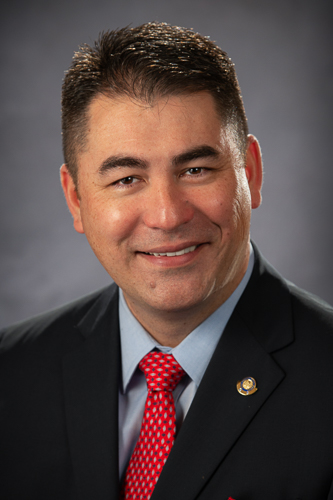
Sen. Tom Takubo
Sponsored bills
Maddy summarySB 977 creates a partial disability benefit for West Virginia emergency medical services (EMS) members who develop work-related injuries or illnesses that prevent them from performing all duties but do not cause total disability. It adds a provision allowing these members to receive 45% of their average monthly compensation (based on the previous 12 months) instead of the 90% offered for total disability. To qualify as partially disabled, a member must have a medical condition lasting at least 12 months that prevents them from performing EMS duties, though they may still work other jobs. If partially disabled, the benefit continues until age 60, at which point they transition to the standard retirement benefit under the Emergency Medical Services Retirement System.
Maddy summarySB 741 expands the pilot program for involuntary commitment processes to include additional counties: Cabell, Berkeley, Hampshire, Morgan, Ohio, and Wood. The bill requires mental health centers in these counties to provide timely evaluations (in-person or via video) for potential commitment and explain the process to affected individuals. It also mandates quarterly audits of commitment applications to ensure clinical justification, with findings kept confidential. This bill directly affects mental health centers, courts, law enforcement, and individuals subject to involuntary commitment in the expanded counties.
Maddy summaryThis bill increases salaries for West Virginia judges and certain judicial staff starting July 1, 2026. It raises the annual salary for Supreme Court justices to $154,600 (from $149,600), circuit court judges to $143,600 (from $138,600), and family court judges to $113,950 (from $103,950). It also adjusts pay for family court secretary-clerks and case coordinators, with secretary-clerks receiving $44,876 annually and case coordinators capped at $56,876. The bill suspends employer contributions to the judicial retirement system until specific conditions are met.
Maddy summarySenate Bill 587 sets new salary amounts for West Virginia county commissioners and other elected county officials, effective July 1, 2026, based on their county's population class (e.g., Class I commissioners will earn $53,731 annually, up from $45,535). To receive the increase, county officials must submit a written request to their county clerk, and the county auditor must certify sufficient fiscal health to cover the raise and related taxes. The bill applies directly to all elected county officials (including sheriffs, clerks, and assessors) across West Virginia's 55 counties, with salary tiers determined by county classification. It does not automatically increase pay; officials must actively request the raise, and counties must meet fiscal certification requirements before implementation.
Maddy summarySB 1, the Small Business Growth Act, creates a new tax credit program administered by the West Virginia Department of Commerce to incentivize investment in small businesses. It provides insurance companies with a credit against their state premium tax equal to 15% of qualifying capital investments made by certified "growth funds" into eligible West Virginia businesses. Eligible businesses must have fewer than 250 employees and principal operations in the state, and investments are limited to 20% of a growth fund's capital authority or $7.5 million per business. The credit is claimed annually based on certified investments, with the program requiring annual reporting and prohibiting certain investment types.
Maddy summarySB 648, titled the "Strategic and Critical Resources Act," defines specific minerals (like lithium, cobalt, uranium, and others vital for national security) and establishes statewide regulations for their extraction. It prevents local governments from restricting or regulating extraction activities or facility development outside urban areas, reserving this authority for the state and federal governments. The bill also prohibits foreign adversaries (as defined by federal law) from owning, controlling, or operating facilities related to these resources. It explicitly states that federal environmental and health laws remain fully applicable, and does not affect standard business licenses or taxes. This bill directly affects mining companies, local governments, and foreign entities seeking to develop these critical resources in West Virginia.
Maddy summarySB 650 amends West Virginia law to define a psychiatric hospital treating exclusively civil and forensic patients (with over 95% of its inpatient census being court-ordered forensic or civil involuntary commitments from state custody) as a "state-designated facility" for tax purposes. This change excludes such hospitals from the category of "eligible acute care hospitals" subject to a 0.75% tax on gross receipts, exempting them from this tax. The bill directly affects psychiatric hospitals in West Virginia meeting this specific patient mix requirement by altering their tax classification under the Medicaid funding structure.
Maddy summarySB 28 allows members of the West Virginia State Police Retirement System to convert accrued annual or sick leave into additional retirement credit. It specifically affects current and future State Police retirees, with different rules based on membership start dates: members joining before July 1, 2015, receive two days of retirement credit for each day of accrued leave, while those joining on or after that date receive one day of credit per day of leave. The bill clarifies that each leave day equals eight hours and establishes how remainders (e.g., less than 10 workdays) are handled, ensuring the conversion aligns with existing retirement service calculations.
Maddy summarySB 643 repeals all sections of West Virginia law (§3-12-1 through §3-12-16) that established the West Virginia Supreme Court of Appeals Public Campaign Financing Program. The bill directly discontinues a program that provided public funding to candidates running for the state Supreme Court. Key provisions include removing all legal references to this financing mechanism, effectively ending the program's operation. This is a procedural repeal with no new funding or requirements added.