Maddy summaryThis bill provides additional funding from the State Road Fund to the West Virginia Department of Transportation's Division of Highways for the 2026 fiscal year. It authorizes the use of unappropriated money already available in the state treasury to supplement existing budget allocations for road maintenance and construction projects. The legislation does not create new spending categories but rather increases the amount of money designated for the department's current operational fund. Once passed, the additional funds become available for the department to allocate toward its approved highway and infrastructure initiatives during the fiscal year ending June 30, 2026.

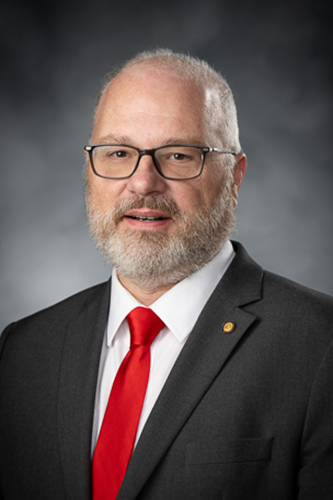
Rep. Gary Howell
Sponsored bills
Maddy summaryHB 5307 adds $10 million in funding from West Virginia's unappropriated surplus balance to the Division of Culture and History within the Department of Tourism for fiscal year 2026. This supplemental appropriation directly affects the division's ability to fund cultural programs, historical preservation, and related activities. The funds will be used for operational expenses during the 2026 fiscal year, as specified in the state budget's surplus allocation.
Maddy summaryHB 5685 authorizes up to $150 million in bonds to fund improvements at the West Virginia Science and Culture Center and other state historical sites acquired for preserving West Virginia history. The bill creates a dedicated "Cultural Center Improvements Revenue Debt Service Fund" to be financed annually by $12 million from the State Excess Lottery Revenue Fund (starting fiscal year 2026), with bonds maturing within 20 years. The Economic Development Authority must issue these bonds to cover capital improvements, and the fund will prioritize debt service payments. This directly affects the Science and Culture Center, other historical sites, and taxpayers through lottery revenue allocations.
Maddy summaryHB 4191 increases the tax credit available to West Virginia employers who provide on-site child care for their employees. The bill expands the credit to cover costs of building, improving, or operating qualifying child care facilities, including furniture and equipment. Employers can claim this credit for five years after the facility is first used, provided the facility primarily serves employees' children and meets ownership requirements. This directly affects West Virginia employers operating on-site child care programs, reducing their state tax burden for these expenses.
Maddy summaryHB 5168 establishes two new funds to increase emergency medical services (EMS) funding across West Virginia. The County Emergency Medical Services Fund supports counties with dedicated EMS taxes or fees, while the All County Emergency Medical Services Fund provides uniform support to all counties. The bill transfers $6 million annually from the state lottery fund to the renamed EMS Salary Enhancement, Crisis Response, and Mental Health Treatment Fund (for worker salaries and crisis services) and $3 million each to the two new funds. These funds must be used exclusively to boost EMS worker salaries, improve crisis response, and support mental health services to help retain staff.
Maddy summaryHB 5089 requires West Virginia public schools to accept transcripts from all types of schools (including homeschools, charter schools, private schools, and Hope Scholarship programs) when students enroll or re-enroll. It mandates that public schools record the class, grade, and source (e.g., "homeschool" or "charter school") directly on the student's public school transcript. Schools must also submit annual demographic reports to the Legislative Oversight Commission on Education Accountability (LOCEA) detailing re-enrolling students' backgrounds and prior educational settings. This bill directly affects students transferring between different school types and public schools receiving those students.
Maddy summaryHB 4538 limits the use of photo/video speed enforcement equipment to West Virginia Division of Highways work zones. It requires two advance signs indicating photo enforcement, mandates a law enforcement officer's physical presence during violations, and sets strict evidentiary standards (including vehicle identification and a sworn officer statement). The bill prohibits automated enforcement outside work zones and restricts equipment use to state-owned devices or those in patrol/DOH vehicles. This applies to all state and local law enforcement using such technology in active highway construction areas where workers are present.
Maddy summaryHB 4087 establishes the West Virginia-Ireland Education Alliance Partnership to strengthen academic, cultural, and workforce connections between West Virginia and Ireland. It creates a formal partnership requiring five four-year universities and five two-year colleges in West Virginia to collaborate with Irish institutions. The bill provides for five $50,000 grants to fund joint programs between these institutions. This partnership is governed by a commission with specific membership rules, including legislative and community representatives. The bill directly affects West Virginia higher education institutions and their Irish counterparts through structured collaboration and grant opportunities.
Maddy summaryHB 4404 increases the annual funding allowance for volunteer and part-volunteer fire departments in West Virginia from $500 to $5,000 specifically for educational/training supplies and fire prevention promotional materials. This change directly affects local fire companies that rely on state funds for operational needs, allowing them to better support firefighter training and community safety outreach. The bill amends Section 8-15-8b of West Virginia Code to adjust this specific budget line item, maintaining all other authorized uses of funds unchanged. The proposed increase aims to provide greater flexibility for fire departments to invest in critical safety education resources. The bill was introduced on January 16, 2026, and referred to the House Finance Committee.
Maddy summaryHB 4474 extends the expiration date of West Virginia's Alzheimer's Disease and Other Dementia Advisory Council, which was scheduled to sunset. The bill prevents the council from automatically dissolving by renewing its operational period. The council, composed of 15 voting members (including people with dementia, caregivers, healthcare providers, and researchers) and 5 nonvoting government representatives, examines dementia care needs, reviews state services, and assesses healthcare capacity. It does not create new policies but ensures the council can continue its work on dementia-related issues. This procedural bill affects only the council's continued operation, not direct service recipients.