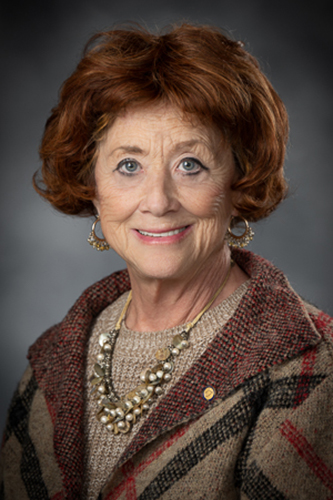
Photo of Mickey Petitto
R West Virginia House · District 70

Rep. Mickey Petitto

Compare
Total votes
2,380
all sessions
Attendance
84%
380 missed
Lower than 98% of chamber peers
With party
97%
of cast votes
Near the chamber average
Bipartisan score
2%
crosses aisle rarely
Near the chamber average
Sponsored
244
bills & resolutions
Lower than 94% of chamber peers
Committees
3
assignments
244 bills and resolutions

Sponsored bills

Total
244
Primary
0
Co-sponsor
244
This page
244
matching current filters
Co-sponsor HB 4390
Signed into law · West Virginia House · Co-sponsor
Relating to the temporary payment to a kinship parent of a subsidy equal to that of a foster parent

Maddy summaryHB 4390 requires West Virginia to temporarily pay kinship parents (family caregivers raising relatives' children) the same monthly rate as foster parents, under specific conditions. To qualify, kinship parents must pass a background check within five days, pass a home safety screening, and receive assistance from the Department of Human Services to become foster parent-certified. This temporary payment lasts up to six months to help families complete certification, after which the rate reverts to standard kinship payments if certification isn't achieved. The bill directly affects family caregivers in foster care placements who meet these initial requirements.

Signed into law Aug 13, 2026 1 co-sponsor
Co-sponsor HB 5430
Signed into law · West Virginia House · Co-sponsor
Relating to pharmaceutical benefits

Maddy summaryHB 5430 regulates pharmacy benefit managers (PBMs) for West Virginia's Public Employees Insurance Agency (PEIA), directly affecting state employees covered by PEIA, PBMs, and pharmacies providing services to them. The bill requires PBMs to submit detailed quarterly reports on claim payments, including costs charged to PEIA versus amounts paid to pharmacies, and prohibits certain PBM contracts that limit transparency. It also mandates PBMs to implement a cost containment tool and requires a study on pharmacy pricing. The law aims to increase transparency in pharmacy billing and control costs for state health insurance programs.

Signed into law Jun 29, 2026 1 co-sponsor
Co-sponsor HB 4004
Signed into law · West Virginia House · Co-sponsor
Creating the Recharge West Virginia Program

Maddy summaryThis bill establishes the Recharge West Virginia Program, which provides financial reimbursement to private employers in the state for costs associated with training their employees in new skills. The program is administered by the Division of Economic Development and targets companies that wish to upskill their workforce through specialized technical training, leadership development, or registered apprenticeships. To qualify for reimbursement, employers must demonstrate that their employees complete industry-recognized credentials and achieve a wage increase of at least 25% above their previous earnings, with individual reimbursements capped at $10,000 per employee and $100,000 annually per employer. The legislation defines eligible employees as those who have lived and worked full-time in West Virginia for the past six months, while excluding public bodies and foreign nonprofit corporations from participating. Employers must submit detailed applications including training plans, job descriptions, and wage projections to the Division of Economic Development, which will establish specific procedures and standards for evaluating reimbursement requests.

Signed into law Jun 29, 2026 1 co-sponsor
Co-sponsor HB 4793
Failed · West Virginia House · Co-sponsor
Creating the Barber Apprentice Program

Maddy summaryHB 4793 would lower the minimum age for barber and cosmetology apprentices in West Virginia from 16 to 14 years old. Apprentices must work under direct supervision of a licensed professional and meet requirements like being enrolled in school or having a high school credential. Sponsors (licensed professionals who supervise apprentices) must have at least five years of experience in a shop. This change adjusts the existing apprenticeship program to permit younger participants while maintaining oversight and safety standards.

Failed Mar 14, 2026 1 co-sponsor
Co-sponsor HB 4012
Failed · West Virginia House · Co-sponsor
Relating to reducing the regulatory burden on utility companies when constructing and maintaining electric power generation and transmission facilities within this state

Maddy summaryHB 4012 reduces regulatory requirements for utility companies building or maintaining electric power generation and transmission facilities in West Virginia. The bill waives the need for a certificate of public convenience and necessity for projects approved by the Infrastructure and Jobs Development Council, streamlining approvals for these projects. It also shortens the Public Service Commission’s decision timeline, reducing the maximum processing time for large projects (over $50 million) from 400 days to 270 days. This directly affects utility companies seeking to develop or upgrade electric infrastructure within the state.

Failed Mar 14, 2026 1 co-sponsor
Co-sponsor HCR 29
In committee · West Virginia House · Co-sponsor
Requesting Joint Committee study the feasibility of establishing a flexible, short-duration, on-demand respite care program for seniors and caregivers

Maddy summaryThis bill asks a state committee to study whether West Virginia should create a flexible respite care program for seniors and their caregivers. The proposed program would allow families to schedule short-term, on-demand assistance for specific needs like medical appointments or personal obligations, rather than being limited to fixed weekly service blocks. The study will examine costs, potential savings from delaying nursing home placement, and how to fund and manage the program, especially in rural areas with fewer resources. If the committee finds the idea feasible, it will recommend new legislation to establish the program.

In committee Mar 5, 2026 1 co-sponsor
Co-sponsor HR 21
In committee · West Virginia House · Co-sponsor
Recognizing President Donald J. Trump for reforms benefiting West Virginia

Maddy summaryThis House resolution formally recognizes President Donald J. Trump for various policies and actions that the West Virginia House of Delegates claims have benefited the state. The document highlights specific initiatives including regulatory reforms in the energy sector, tax relief measures, funding for rural healthcare, and programs aimed at reducing prescription drug costs and establishing investment accounts for newborns. It also cites border security improvements and drug control efforts as contributing factors to public safety and economic well-being. The resolution expresses appreciation for these actions and requests that the formal recognition be sent to the President.

In committee Mar 3, 2026 1 co-sponsor
Co-sponsor HR 20
Passed · West Virginia House · Co-sponsor
Memoralizing the life of the Honorable Larry D. Kump; dedicated public servant, principled legislator, and devoted family man.

Maddy summaryThis House Resolution honors the life and legacy of the late West Virginia legislator Larry D. Kump, who passed away on February 28, 2026. The resolution formally expresses the House of Delegates' condolences to Kump's family and acknowledges his service as a representative for Berkeley County across three different terms. It recognizes his career in criminal justice and mediation, his commitment to limited government, and his role as a devoted family member and church leader. The document is a ceremonial tribute rather than a law that changes policy or affects public programs.

Passed Mar 2, 2026 1 co-sponsor
Co-sponsor HB 4517
In committee · West Virginia House · Co-sponsor
To maximize the utility and accessibility of West Virginia’s child care tax credit for employers

Maddy summaryHB 4517 expands West Virginia's child care tax credit to include employer-sponsored daycare facilities located off-site but within a reasonable distance of the workplace, making the credit more accessible to employers. It directly affects businesses that provide or financially support licensed child care services for employees, whether on-site or at nearby locations. The bill amends tax code definitions to clarify that "employer-sponsored" care (third-party facilities supported by employers through payments or contracts) qualifies for the credit, regardless of proximity, as long as the facility is reasonably accessible to the workforce. This change removes previous restrictions requiring facilities to be on the employer's premises. The bill aims to increase participation in the credit program by simplifying eligibility for employers offering off-site child care options.

In committee Feb 18, 2026 1 co-sponsor
Co-sponsor HB 4067
In committee · West Virginia House · Co-sponsor
Providing any employee working 20 hours or more per week in a licensed child care center or certified family child care (FCC) home is eligible for a child care subsidy, regardless of their household income

Maddy summaryHB 4067 would provide a child care subsidy for the children of employees working at least 20 hours per week in licensed child care centers or certified family child care homes in West Virginia, regardless of the employee's household income. The bill requires the state department to subsidize child care services at these facilities for the employees' children. This directly affects child care workers who currently may not qualify for subsidies based on income, ensuring they can access affordable care for their own children. The policy change eliminates income requirements for this specific subsidy program, focusing solely on the employee's work hours in the child care sector.

In committee Feb 18, 2026 1 co-sponsor
Showing 1 to 10 of 244 bills
1 2 3 25 Next