Maddy summaryHB 5212 revises West Virginia's higher education financial aid programs to improve access and align with workforce development goals. It allows part-time enrollment for the higher education grant, combines the adult part-time grant into a new workforce-focused program, and updates medical/health sciences loan repayment programs to require direct payments to federal loan providers. The bill also adjusts eligibility for the PROMISE scholarship and WV Invests grant programs. These changes aim to better connect financial aid with employer needs as outlined in the bill's legislative findings.

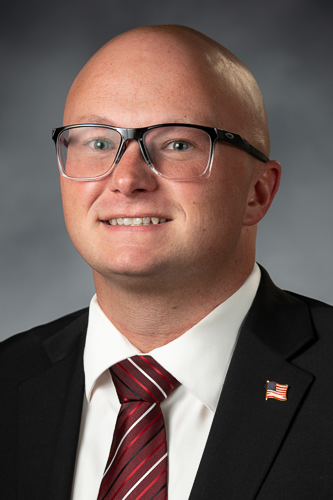
Rep. Andy Shamblin
Sponsored bills
Maddy summaryHB 5406 updates West Virginia's DUI laws by shifting authority for chemical testing oversight from the Bureau of Public Health to the West Virginia State Police Forensic Laboratory. It eliminates outdated references to urine testing, removes propoxyphene from drug testing requirements, and permits trained phlebotomists to collect blood samples for analysis. The bill also corrects blood alcohol concentration thresholds for juvenile drivers and clarifies that refusing only a blood test - without refusing a breath test - will not automatically trigger license revocation. These changes streamline DUI testing procedures for law enforcement and ensure current medical standards are reflected in the law.
Maddy summaryHB 5089 requires West Virginia public schools to accept transcripts from all types of schools (including homeschools, charter schools, private schools, and Hope Scholarship programs) when students enroll or re-enroll. It mandates that public schools record the class, grade, and source (e.g., "homeschool" or "charter school") directly on the student's public school transcript. Schools must also submit annual demographic reports to the Legislative Oversight Commission on Education Accountability (LOCEA) detailing re-enrolling students' backgrounds and prior educational settings. This bill directly affects students transferring between different school types and public schools receiving those students.
Maddy summaryHB 5065 amends West Virginia's hotel occupancy tax law to clarify collection requirements for online booking platforms (marketplace facilitators) like Airbnb or Booking.com. It requires these platforms to: (1) separately state the tax on all bills, (2) use geofencing for accurate tax calculation, (3) provide a nine-digit postal code to ensure taxes reach the correct local government (county or municipality), and (4) maintain detailed records of each transaction. The bill directly affects marketplace facilitators that meet sales thresholds ($100,000 revenue or 200+ transactions annually) and hotels using these platforms. It also prohibits businesses from claiming they will absorb the tax, ensuring the tax remains visible to consumers.
Maddy summaryHB 4474 extends the expiration date of West Virginia's Alzheimer's Disease and Other Dementia Advisory Council, which was scheduled to sunset. The bill prevents the council from automatically dissolving by renewing its operational period. The council, composed of 15 voting members (including people with dementia, caregivers, healthcare providers, and researchers) and 5 nonvoting government representatives, examines dementia care needs, reviews state services, and assesses healthcare capacity. It does not create new policies but ensures the council can continue its work on dementia-related issues. This procedural bill affects only the council's continued operation, not direct service recipients.
Maddy summaryHB 4008 establishes West Virginia's Business Ready Sites Program, which certifies properties for economic development readiness. Local governments and economic development entities (like counties, cities, or economic development authorities) can apply to have their sites evaluated for readiness, including access to utilities, transportation, and environmental status. The program provides two funding mechanisms: matching grants (up to 50% of improvement costs) and micro grants (up to $100,000 for sites ≥5 acres, $250,000 for sites >20 acres), both requiring repayment if the site is sold or leased for development within 12 months. All funds must be used directly to fix site deficiencies identified in the evaluation, with re-evaluations and recertification required after improvements.
Maddy summaryHB 4842 clarifies and strengthens civil remedies for individuals whose intimate images are disclosed without consent in West Virginia. The bill amends §55-20-3 to explicitly apply to cases involving sexual extortion (as defined in §61-8B-6), establish joint and several liability for all liable parties, and create civil penalties. It directly affects people who suffer harm from intentional or reckless disclosure of private intimate images they did not consent to share. The law ensures victims can pursue legal action against perpetrators who knew the image was private, the victim didn’t consent, and the victim was identifiable.
Maddy summaryHB 4995 requires public schools in West Virginia to install video cameras in self-contained special education classrooms (where most students receive special education services) and audio recording devices in restrooms of those classrooms. The bill mandates that cameras monitor all classroom areas except restrooms for clothing changes, while audio devices must be placed in restrooms with visible notices about the recording. Schools must maintain the equipment, document any malfunctions, and provide recordings to authorized personnel upon request. This law directly affects public school districts operating self-contained special education classrooms, aiming to enhance safety monitoring for students with disabilities.
Maddy summaryThis bill establishes the Recharge West Virginia Program, which provides financial reimbursement to private employers in the state for costs associated with training their employees in new skills. The program is administered by the Division of Economic Development and targets companies that wish to upskill their workforce through specialized technical training, leadership development, or registered apprenticeships. To qualify for reimbursement, employers must demonstrate that their employees complete industry-recognized credentials and achieve a wage increase of at least 25% above their previous earnings, with individual reimbursements capped at $10,000 per employee and $100,000 annually per employer. The legislation defines eligible employees as those who have lived and worked full-time in West Virginia for the past six months, while excluding public bodies and foreign nonprofit corporations from participating. Employers must submit detailed applications including training plans, job descriptions, and wage projections to the Division of Economic Development, which will establish specific procedures and standards for evaluating reimbursement requests.
Maddy summaryHB 4053 establishes the "Blue Envelope Program" to improve communication between law enforcement and drivers with autism spectrum disorder, dementia, or intellectual/developmental disabilities during traffic stops. Eligible drivers (with a valid license/permit) can request a specially designed blue envelope containing their license, registration, and emergency contact information, along with a vehicle decal and communication guidance for officers. The program, set to launch January 1, 2027, will be administered through the West Virginia Division of Motor Vehicles, sheriff's offices, and police stations.