

Maddy summaryHB 4784 extends West Virginia's Qualified Opportunity Zones (QOZ) tax incentive program until July 1, 2032. This bill modifies the tax code to allow new businesses in designated opportunity zones to continue receiving a tax reduction on income derived from their operations. Specifically, it permits corporate taxpayers to subtract from federal taxable income an amount equal to net income earned by a qualified opportunity zone business (QOZB) located in West Virginia, provided the business was newly registered between January 1, 2019, and July 1, 2032. The tax benefit applies for a 10-year period starting from the business's first qualifying year, and existing businesses that registered before July 1, 2032, retain their full entitlement.
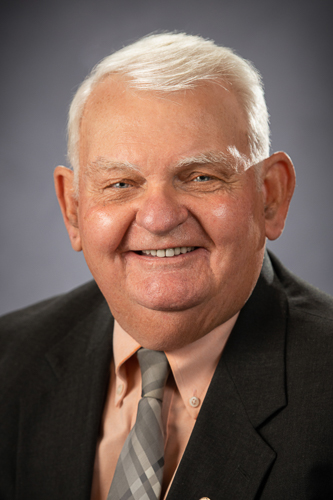
Rep. Roy Cooper
Sponsored bills
Maddy summaryHB 4437 allows Gold Star parents (mothers or fathers of veterans killed in combat) to receive one free vehicle registration plate for personal use. The bill amends West Virginia law to exempt Gold Star parents from all registration fees for a single Gold Star Family license plate, which is already available to surviving spouses under existing rules. This change directly affects eligible parents who qualify under the definition of "Gold star parent" (per 10 U.S.C. § 1126), waiving standard registration costs for one vehicle. The provision builds on the current Gold Star Family plate program without creating new fees or requirements.
Maddy summaryThis bill reduces the severance tax rate on metallurgical coal produced in West Virginia, affecting coal mining companies that extract this type of coal. The new rates will take effect in stages starting July 1, 2026, lowering the tax from 5% to 4.5% for the first year, then to 4% the following year, and finally to 3.5% beginning July 1, 2028. Metallurgical coal is defined as coal used for making steel and other metals, distinct from thermal coal used for electricity generation. The tax reduction applies to the gross value of coal produced and includes additional local taxes that are normally part of the total severance tax.
Maddy summaryThis bill proposes a constitutional amendment to increase the homestead property tax exemption in West Virginia from $20,000 to $50,000. It directly affects homeowners and mobile home owners who are at least 65 years old or permanently disabled, as well as younger homeowners who would receive a phased-in exemption starting at a lower value. The amendment would allow the state legislature to set specific rules for how the exemption applies, including a five-year phase-in period for properties appraised before the law takes effect. Additionally, the bill grants the legislature authority to provide property tax relief to tenants of residential or farm property. The measure requires approval by voters at the 2026 general election to become part of the state constitution.
Maddy summaryThis is a ceremonial resolution (HCR 13) honoring the late Senator Tony Eugene Whitlow, a longtime West Virginia legislator who served in the House (1970-1982) and Senate (1984-1992), including as Senate President pro Tempore. The resolution commemorates his life, military service, public career, family, and community contributions, directing the Clerk to send a copy to his surviving family members. It has no policy provisions or direct impact on constituents.
Maddy summaryThis resolution urges the U.S. Congress to pass the Major Richard Star Act, which would allow disabled veterans to receive both their full military retirement pay and full VA disability compensation without any dollar-for-dollar offset. The bill directly affects approximately 50,000 medically retired combat-wounded veterans who currently lose over $1,000 per month in benefits due to existing federal offset rules. It seeks to amend federal law to recognize that military retirement and disability benefits compensate for two distinct forms of service and sacrifice. The resolution is a formal request from the West Virginia Legislature to federal lawmakers to address this policy change.
Maddy summaryThis House Resolution honors the life and legacy of the late West Virginia legislator Larry D. Kump, who passed away on February 28, 2026. The resolution formally expresses the House of Delegates' condolences to Kump's family and acknowledges his service as a representative for Berkeley County across three different terms. It recognizes his career in criminal justice and mediation, his commitment to limited government, and his role as a devoted family member and church leader. The document is a ceremonial tribute rather than a law that changes policy or affects public programs.
Maddy summaryThis House Resolution urges the Capitol Building Commission and Department of Administration to assess and address hazardous trees along California Avenue and Kanawha Boulevard on the State Capitol Complex grounds. The resolution requests an immediate evaluation of trees that have caused property damage through falling limbs and broken trunks over the past two years. It specifically asks officials to trim trees back to the grass side of sidewalks or remove and replace hazardous trees to protect public safety and state property. This non-binding resolution directs state agencies to take preventative maintenance actions without mandating specific enforcement measures.
Maddy summaryHB 5053 establishes a 90-day waiting period during which families involved in active truancy cases or pre-petition processes cannot withdraw their child for homeschooling. The bill directly affects families navigating school attendance disputes, aiming to prevent short-term homeschooling as a way to bypass academic accountability, such as reading proficiency requirements under the Third Grade Success Act. Key provisions include a legislative finding that current processes allow "easy outs" without oversight for at-risk youth, and a recommendation for the state education department to survey families who choose homeschooling to understand systemic reasons for the decision. The bill does not change homeschooling rules generally but targets specific situations involving truancy proceedings.
Maddy summaryHB 5679 modifies West Virginia's school board operations by limiting assistant superintendent positions to one per 200 teachers (or fraction) and requiring professional educators in these roles (with teaching certificates) to substitute teach at least three days each school year. It clarifies that employment for these positions is at the county board's discretion and authorizes incentives for counties to share treasurers. The bill directly affects county school boards and educational staff, including assistant superintendents and directors of instruction, without changing attendance policies or other unrelated provisions.