

Maddy summaryHB 4007 amends West Virginia's Industrial Access Road Fund rules to clarify how state funds can be used for constructing or maintaining access roads to industrial sites. The bill directly affects counties and municipalities seeking funding for roads leading to approved manufacturing, distribution, or processing facilities (including West Virginia Business Ready Sites), while restricting the fund from covering roads to schools, hospitals, shopping centers, or private property. Key changes include raising the annual funding cap to $6 million per fiscal year, setting a $800,000 maximum for unmatched funds per county, and requiring counties to certify site construction or provide surety before funds are allocated. The bill also clarifies that funds cannot be used for utility adjustments or roads on private property, and mandates the Division of Highways must review location requests within 90 days.
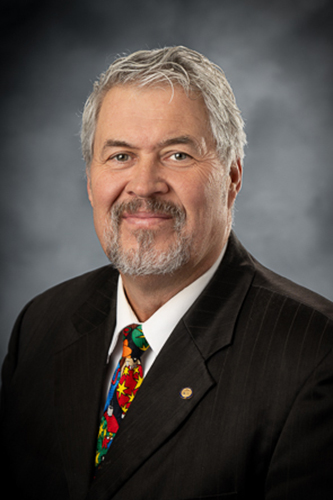
Rep. Jeff Eldridge
Sponsored bills
Maddy summaryHB 4696 authorizes West Virginia's Department of Environmental Protection to deposit federal grant funds - specifically from programs like the Infrastructure Investment and Jobs Act and the Safeguarding Treatment for the Restoration of Ecosystems from Abandoned Mines Act - into the state's existing Abandoned Land Reclamation Fund. This bill modifies state law to allow these federal funds to be added to the fund, which is used for cleaning up environmental damage from past coal mining, including restoring land, treating water pollution from mine drainage, and sealing abandoned mine sites. The bill does not change how the funds are spent but clarifies where they must be deposited. It directly affects communities impacted by historical mining, particularly those dealing with water quality and land degradation.
Maddy summaryHB 5398 modifies West Virginia's oil and gas well plugging funding mechanism to enable access to federal matching funds. It requires that if the state's well-plugging fund holds less than $6 million in unencumbered funds by September 30 each year, the state can receive federal money to plug abandoned oil and gas wells. The bill amends tax provisions related to oil and gas production but focuses on the fund's balance threshold as the key trigger for federal funding eligibility. This directly affects the state's oil and gas well plugging program and its ability to secure federal resources for abandoned well remediation.
Maddy summaryHB 5464 modifies West Virginia's horse racing regulations to support thoroughbred racing operations. It establishes definitions for "West Virginia Certified Thoroughbred horses," sets purse requirements for restricted races, and increases the $1 million annual funding cap for racetracks that did not participate in the West Virginia Development Fund before 1992. The bill also adds an inflation adjustment for net terminal income deposited into the state Excess Lottery Revenue Fund and changes how that income is distributed. These changes directly affect licensed thoroughbred racetracks in West Virginia, particularly those with historical non-participation in the Development Fund. The policy focuses on adjusting financial mechanisms for existing racetracks rather than creating new facilities or jobs.
Maddy summaryHB 5260 adds "edible" as an allowable form of medical cannabis in West Virginia, with strict requirements for safety and regulation. It requires processors to obtain bureau approval for each edible product, mandates specific shapes (like squares or circles), limits edibles to lozenges or gelatins, and caps THC content at 10mg per serving with a 15% potency variance. The bill prohibits color additives in edibles and requires all medical cannabis dispensing to be reported to the state's controlled substance monitoring database. This directly affects patients using medical cannabis, caregivers, and licensed processors who must comply with these new edible-specific rules.
Maddy summaryThis House resolution formally recognizes President Donald J. Trump for various policies and actions that the West Virginia House of Delegates claims have benefited the state. The document highlights specific initiatives including regulatory reforms in the energy sector, tax relief measures, funding for rural healthcare, and programs aimed at reducing prescription drug costs and establishing investment accounts for newborns. It also cites border security improvements and drug control efforts as contributing factors to public safety and economic well-being. The resolution expresses appreciation for these actions and requests that the formal recognition be sent to the President.
Maddy summaryThis House Resolution honors the life and legacy of the late West Virginia legislator Larry D. Kump, who passed away on February 28, 2026. The resolution formally expresses the House of Delegates' condolences to Kump's family and acknowledges his service as a representative for Berkeley County across three different terms. It recognizes his career in criminal justice and mediation, his commitment to limited government, and his role as a devoted family member and church leader. The document is a ceremonial tribute rather than a law that changes policy or affects public programs.
Maddy summaryHB 5648 updates West Virginia's electrical power regulations to prioritize consumer interests and modernize utility oversight. It requires utilities to notify customers before rate increases and hold public hearings for significant rate changes affecting large customer groups. The bill exempts small portable solar devices from connection agreements, allows customers to generate and store power through distributed programs, and mandates utilities to track customers dependent on life support systems. Additionally, it sets new rules for disconnecting service due to non-payment and requires utilities to develop community energy programs under a subscriber model.
Maddy summaryThis House Resolution urges the Capitol Building Commission and Department of Administration to assess and address hazardous trees along California Avenue and Kanawha Boulevard on the State Capitol Complex grounds. The resolution requests an immediate evaluation of trees that have caused property damage through falling limbs and broken trunks over the past two years. It specifically asks officials to trim trees back to the grass side of sidewalks or remove and replace hazardous trees to protect public safety and state property. This non-binding resolution directs state agencies to take preventative maintenance actions without mandating specific enforcement measures.
Maddy summaryHB 4971 requires new high-voltage electric transmission lines (400kV or greater) needing West Virginia Public Service Commission approval to include a substation near industrial parks if the line runs within five miles of one. It limits this requirement to one substation per 40-mile segment of the line within the state, with the substation needing completion within two years after the line becomes operational. The law applies to transmission developers and the Public Service Commission, aiming to boost economic development by linking grid infrastructure directly to industrial areas. Key provisions include evaluating substation locations based on expected job creation and tax benefits, and prohibiting route choices designed to avoid industrial park proximity.