Maddy summaryHB 4106 would allow West Virginia residents aged 18 to 20 to carry concealed handguns without a license in specific lawful situations, such as on their own property, while traveling to or from a hunting site, or transporting a firearm to a repair shop. The bill repeals the current requirement for a license and the criminal penalty for carrying without one for this age group, while clarifying that minors under 18 who carry unlawfully may be treated as delinquents. It does not change the existing license requirement for residents aged 21 and older. This bill directly affects 18- to 20-year-olds by removing barriers to concealed carry in the specified scenarios.

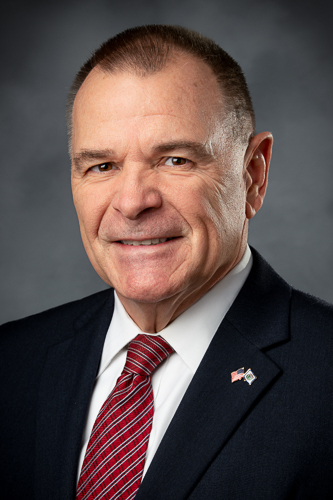
Rep. Bill Ridenour
Sponsored bills
Maddy summaryHB 4755 adds "aggravated vehicular homicide" (defined in §17C-5-1(c)) to West Virginia's list of offenses that trigger enhanced sentencing for repeat offenders. This change directly affects individuals convicted of aggravated vehicular homicide who have prior qualifying offenses under the state's recidivism laws. The bill amends Section 61-11-18 of the West Virginia Code to include this offense, meaning a second or third conviction for this crime could result in harsher penalties if the offender has previous serious convictions. The law focuses on increasing penalties for repeat offenders in cases involving severe DUI-related fatalities.
Maddy summaryHB 5182 authorizes security personnel employed by West Virginia's State Treasurer to carry concealed firearms while performing official duties. To qualify, staff must obtain the Treasurer's written approval, hold a valid concealed handgun license, pass firearms training equivalent to police academy standards, and maintain annual requalification. The State Treasurer may reimburse staff for training costs, and the state assumes liability for security personnel acting in good faith during official duties. This bill directly affects the Treasurer's security team and establishes specific safety requirements for firearm use.
Maddy summaryHB 5227 modifies West Virginia's business reporting fees and adds a new logotype for veteran-owned businesses. It sets an annual report fee at $25 (or $50 biennially) for corporations, limited partnerships, and LLCs required to file reports with the Secretary of State. The bill also grants the Secretary authority to waive late fees for these filings. Additionally, it establishes a new official logotype (a special mark or symbol) that qualified veteran-owned businesses - defined as those at least 51% owned by veterans or their spouses - may use on their materials. This bill directly affects businesses required to file annual/biennial reports and veteran-owned entities seeking the new logotype.
Maddy summaryHB 4592 requires West Virginia colleges and universities to create standardized safety mapping data for campus buildings and grounds, directly affecting all public institutions of higher education. The bill mandates that maps include detailed floor plans, hazard locations, emergency equipment, and accurate aerial imagery, all formatted to integrate with public safety software without additional costs. These maps must be verified on-site, stored within the U.S., and shared permanently at no cost with local police, fire, EMS, and the state emergency management division. The requirement becomes effective September 1, 2026, with counties eligible to receive up to $4,500 per school for implementation.
Maddy summaryHB 4756 requires commercial truck drivers in West Virginia who cannot comprehend English to pay triple the standard compensation for all accident-related damages and medical expenses if they cause an accident. It directly affects non-English-speaking commercial truck drivers and their employing companies. The bill’s key provision replaces standard damages with automatic "treble damages" (triple the usual amount) for qualifying accidents, without requiring separate legal proceedings. This policy change specifically targets language barriers in commercial driving incidents, mandating higher financial accountability for drivers unable to understand English during operations.
Maddy summaryHB 4176 allows youth hunters (ages 12-17) and individuals holding a Class Q special hunting permit to harvest one antlered deer during West Virginia's designated "Special Youth Deer Season." This change directly affects young hunters and disabled hunters with Class Q permits, expanding their hunting opportunities during this specific season. Any deer taken under this provision counts toward the regular firearms deer hunting season bag limit. The bill explicitly excludes Class XS license holders from these privileges.
Maddy summaryHB 4850 requires West Virginia executors and administrators of estates to complete free online training provided by the Supreme Court of Appeals, starting January 1, 2027. The training focuses on fiduciary duties and executor responsibilities, covering key legal requirements for managing estates. The video must be accessible online, for sight-impaired users, and available at all county commissions and sheriff's offices for those without internet access. This bill directly affects individuals serving as estate administrators by adding a mandatory educational requirement before they assume full authority.
Maddy summaryHB 4463 amends West Virginia's sanitarian licensing laws to modernize training requirements and clarify licensing authority. It authorizes the Board of Sanitarians to offer online training as an alternative to in-person sessions, allowing applicants to complete training anytime during the year and finish within six months of hire (excluding on-the-job training). The bill also clarifies that Registered Sanitarians may license applicants who complete approved training and on-the-job experience. Additionally, it requires the Board to establish reciprocity standards for out-of-state licensure by May 1, 2026. These changes directly affect sanitarian applicants, current license holders, and the Board's regulatory processes.
Maddy summaryHB 4433 amends West Virginia law to create new criminal offenses for human smuggling (transporting undocumented people to evade enforcement) and human trafficking (recruiting or moving people for forced labor or sexual exploitation). It specifically targets individuals who transport adults or minors for these purposes, defining key terms like "coercion" and "forced labor" to clarify illegal conduct. The bill establishes penalties for these crimes, allows asset forfeiture of property used in trafficking, and requires restitution for victims. It also includes an exemption permitting medical, mental health, and legal services for undocumented individuals without criminal liability.