

Maddy summaryThe Consumer Financial Protection Accountability and Reform Act of 2026 significantly restructures the Bureau of Consumer Financial Protection by subjecting it to the regular federal appropriations process and establishing an independent Inspector General appointed by the President. The bill restricts the Bureau's supervisory authority over banks and credit unions with assets under $30 billion, allowing these institutions to elect to remain under their existing prudential regulators instead. It also introduces a safe harbor for small-dollar loans of $3,500 or less that meet specific structural requirements, shielding compliant lenders from civil money penalties and private damages. Additionally, the legislation creates federal standards for earned wage access services, requiring providers to offer a no-cost option for early wage access and prohibiting them from treating these services as credit or debt under federal law.
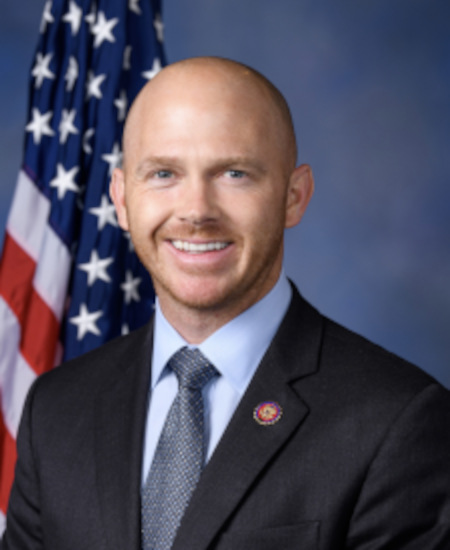
Rep. William R. Timmons IV
Sponsored bills
Maddy summaryThe Nitrous Oxide Safety Act of 2026 would classify consumer products containing nitrous oxide as banned hazardous items under federal law, except for specific exceptions. The bill prohibits the sale of nitrous oxide products for recreational use while allowing continued sales for medical and dental treatments, food production in commercial kitchens, research and development activities, and food propellant applications. This legislation directly affects manufacturers, retailers, and consumers by restricting access to nitrous oxide in consumer products after 180 days from enactment. The law defines nitrous oxide as the gas known as laughing gas or whippits and specifies which entities and activities are exempt from the ban.
Maddy summaryThe TRAPS Act establishes a federal Task Force on Payment Scams, chaired by the Treasury Secretary, to coordinate efforts across agencies like the FTC, Federal Reserve, and consumer groups. The Task Force will study current scam tactics (such as fake text messages or fraudulent payment platforms), evaluate prevention strategies, and develop recommendations to help consumers avoid and report scams. It must submit an initial report within one year and annual updates, focusing on improving federal-state coordination and education programs. This bill directly affects government agencies and stakeholders participating in the Task Force, with the goal of protecting consumers from evolving payment scams.
Maddy summaryHR 1653, the Civil Investigative Demand Reform Act of 2025, amends rules for the Consumer Financial Protection Bureau's (CFPB) information requests (civil investigative demands or CIDs) under the Consumer Financial Protection Act of 2010. It directly affects financial institutions and businesses under CFPB investigation by requiring CIDs to specify particular facts, extending the violation window to six years, and adding a process for attorneys to seek clarifications from the CFPB within 20 days. Key provisions include clearer legal grounds for challenging CIDs (such as undue burden or duplication) and allowing judicial review if the CFPB denies a request to modify or dismiss a CID. The bill aims to make the CID process more transparent and predictable for regulated entities.
Maddy summaryThis bill requires all new passenger vehicles manufactured for sale in the U.S. to include AM radio as standard equipment (not an optional add-on) by 2027-2028, depending on manufacturer size. It mandates that AM radio receivers must be easily accessible to drivers and allows compliance through digital AM broadcast technology. During a transition period, manufacturers must clearly label vehicles without AM radio but cannot charge extra for this feature. The bill also mandates a GAO study on AM radio's role in emergency alerts and includes a 10-year sunset provision for the rule. It preempts state laws regarding AM radio access in vehicles.
Maddy summaryHR 1869 creates a new DOJ task force within the Criminal Division to investigate and prosecute international trade crimes, such as customs evasion, smuggling, and trade-based money laundering. It requires the DOJ to hire specialized prosecutors, coordinate with agencies like U.S. Customs and Border Protection, and focus on specific violations covered under statutes like 18 U.S.C. §§ 541-546 and 21 U.S.C. § 331. The bill authorizes $20 million in funding for fiscal year 2026 (with 80% dedicated to criminal prosecutions), mandates annual reports to Congress on enforcement activities, and requires the DOJ to develop multi-agency partnerships to address these crimes. This directly affects federal prosecutors, border enforcement agencies, and industries impacted by trade violations.
Maddy summaryHR 5267, the American Franchise Act, clarifies when franchisors can be considered joint employers of franchisee employees under federal labor laws. It defines "substantial direct and immediate control" over essential employment terms like wages, benefits, hours, hiring, and discipline - requiring franchisors to actively set these terms to be deemed joint employers. The bill explicitly excludes routine brand standards, training, or minimal safety requirements from constituting such control. This directly affects franchisors and franchisees by limiting joint employer liability to cases where franchisors exert significant, ongoing influence over core employment decisions. The law applies prospectively to new cases after enactment, not past disputes.
Maddy summaryThe SNAP Fraud Accountability Act amends the Food and Nutrition Act of 2008 to lower the financial threshold for certain fraud violations from $5,000 to $1,000. This change directly affects individuals or entities suspected of committing fraud within the Supplemental Nutrition Assistance Program by making it easier for authorities to pursue enforcement actions against smaller-scale offenses.
Maddy summaryThis bill clarifies that certain personal services entities owned by registered stockbrokers are not automatically considered "brokers" under securities law, if specific conditions are met. It directly affects registered representatives who own personal services entities (like independent contractor firms) and their brokers. Key provisions require brokers to control payment details, prevent entities from advertising as brokers, maintain written agreements, restrict ownership to the representative or immediate family, and preserve required records for oversight. The change aims to eliminate regulatory confusion for small, representative-owned entities without altering core broker-dealer rules.
Maddy summaryHR 7008, the Stop Insider Trading Act, restricts Members of Congress, their spouses, and dependent children from purchasing certain investments like stocks in publicly traded companies. It requires 7-14 days' advance public notice before selling any such investment, including the sale date, description, and number of shares. Exceptions apply for work-related transactions (e.g., employer compensation) and reinvesting dividends. Violations trigger a fee of $2,000 or 10% of the investment’s value (whichever is greater), plus any net gain, paid from personal funds - not congressional allowances or campaign donations. The bill aims to prevent conflicts of interest by increasing transparency around congressional financial dealings.