

In committee Sep 24, 2026
1 co-sponsor
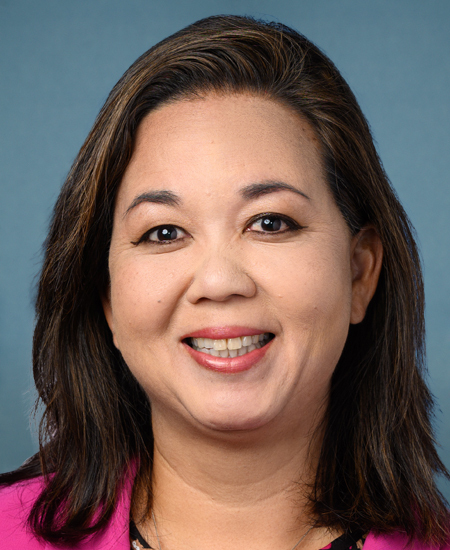
Rep. Jill N. Tokuda
Total votes
1,879
all sessions
Attendance
99%
13 missed
Higher than 92% of chamber peers
With party
98%
of cast votes
Higher than 91% of chamber peers
Bipartisan score
1%
crosses aisle rarely
Lower than 92% of chamber peers
Sponsored
1,816
bills & resolutions
Higher than 96% of chamber peers
Committees
6
assignments
1,816 bills and resolutions
Sponsored bills
Total
1,816
Primary
77
Co-sponsor
1,739
This page
1,816
matching current filters
In committee Sep 24, 2026
1 co-sponsor
In committee Sep 24, 2026
1 co-sponsor
In committee Sep 24, 2026
1 co-sponsor
In committee Sep 24, 2026
1 co-sponsor
Lindsey O. Graham Sanctioning Russia and Iran Act of 2026
Maddy summaryHR 5334, the SEED Act of 2025, expands the existing educator expense deduction under federal tax law to explicitly include early childhood educators. It revises the Internal Revenue Code to cover expenses for "early childhood educators" and broadens the educational levels affected to include "pre-kindergarten through grade 12." This change allows early childhood educators (such as preschool teachers) to deduct work-related expenses like classroom supplies and professional development costs, which they previously could not claim under the existing deduction for "kindergarten through grade 12" teachers. The amendment applies to expenses incurred in taxable years beginning after December 31, 2024.
Budget & TaxesSupports Budget & TaxesExpands tax deduction for early childhood educators, providing tax relief for lower/middle-income educators under IRS code, aligning with support indicators for tax relief.
EducationSupports EducationExpands tax deduction for early childhood educators' work expenses, directly supporting teachers by reducing out-of-pocket costs for supplies and professional development.
Labor & EmploymentSupports Labor & EmploymentBill expands tax deductions for early childhood educators, supporting worker benefits and financial relief for educators.
Signed into law Sep 18, 2026
1 co-sponsor
Recognizing September 17, 2026, as National Teach Ag Day.
Maddy summaryThis House resolution designates September 17, 2026, as National Teach Ag Day to highlight the contributions of agricultural educators and the National FFA Organization. It formally recognizes the role these groups play in preparing students for leadership and career success in the agriculture sector. The bill also acknowledges the work of over 11,000 educators across the United States and its territories who teach about food and natural resources.
In committee Sep 17, 2026
1 co-sponsor
In committee Sep 17, 2026
1 co-sponsor
Expressing the sense of the House of Representatives that the People's Republic of China has engaged in the arbitrary or wrongful detention of American academics and has otherwise harmed the prospects for scientific collaboration and people-to-people exchanges between the United States and the People's Republic of China.
Maddy summaryThis House resolution formally condemns China's practice of detaining American academics and urges the U.S. government to prioritize securing their release, specifically highlighting the cases of Dr. Youlin Chen and Min Zin. It calls on the Secretary of State to consider raising the travel advisory level for China from Level 2 to Level 3 and to add a specific warning indicator regarding wrongful detention risks. Additionally, the bill requests a review of whether China meets the criteria for designation as a state sponsor of wrongful detention under existing federal law.
In committee Sep 16, 2026
1 co-sponsor
Food for Thought Act of 2026
Maddy summaryThe Food for Thought Act of 2026 establishes a competitive grant program administered by the Department of Agriculture to provide free meals and snacks to low-income college students at eligible institutions, including community colleges, historically Black colleges and universities, and other minority-serving schools. To qualify, an institution must have at least 20 percent of its undergraduate students eligible for Federal Pell Grants, and grants are awarded for a maximum duration of two years with funds restricted to meal preparation, outreach, and limited equipment purchases. Recipients are required to prioritize students who receive Pell Grants or report food insecurity, while also evaluating institutional policies that may create barriers to enrollment and referring students to other federal benefit programs like SNAP. The bill authorizes appropriations for fiscal years 2027 through 2032 and mandates that the Secretary of Agriculture submit reports to Congress on the program's impact on student retention and completion rates.
In committee Sep 16, 2026
1 co-sponsor
Ask Maddy
·
AI policy assistant
Ask Maddy about Jill N. Tokuda
Scope: west-virginia
Hi! I can help you understand Jill N. Tokuda's legislative record. What would you like to know?
Try one of these
i
Maddy answers using official bill text and legislative records. Always verify before sharing.
Sources cited inline