Maddy summaryHB 2239 allows Washington property owners to establish family burial grounds on their private land for interring remains of family members. It requires a 25-foot setback from property lines, prohibits burial within 150 feet of critical areas or 50 feet of public rights-of-way, and limits burial areas to 10% of the parcel. The bill prohibits selling burial plots or charging fees for interments, mandates reporting each burial to the state and county with specific details, and sets rules for relocating remains with family consent. This directly affects private landowners and families seeking burial options on their own property, while ensuring environmental and community safeguards.

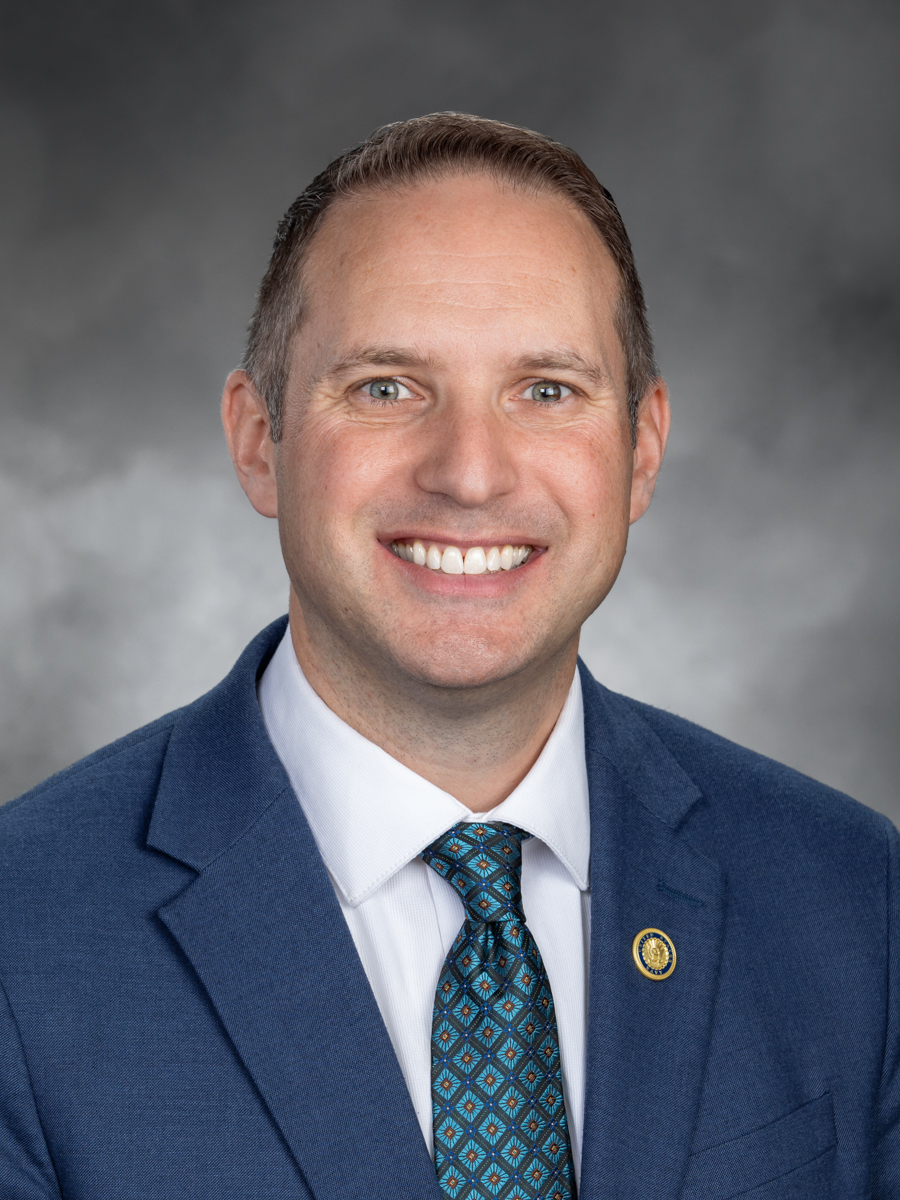
Rep. Hunter Abell
Sponsored bills
Maddy summaryHB 2114 changes Washington's license plate replacement policy for defective plates. It eliminates all fees and taxes for replacements within 24 months of original issuance when plates become illegible due to manufacturing defects (e.g., peeling paint or unreadable numbers). For replacements requested between 24 months and five years after issuance, only the cost of the plate itself is charged - not full fees or taxes. This directly affects Washington drivers who receive faulty plates that deteriorate faster than expected, ensuring they aren't charged for the same fees paid at initial purchase.
Maddy summaryHB 2179 allows port workers already enrolled in federal railroad retirement plans, union-sponsored defined benefit retirement plans, or private employer pension plans to join Washington's public employees' retirement system. It removes an existing exclusion in the law that previously prevented these workers from participating in the state retirement system. The bill specifically amends RCW 41.40.023 to clarify that port workers covered by these alternative plans are not barred from public retirement membership. This change ensures port workers can access the state retirement system without losing benefits from their current retirement arrangements.
Maddy summaryHB 2178 updates Washington state court rules and procedures for civil infractions (noncriminal violations like traffic tickets). It expands the definition of "physical damage" to include digital records and computer systems, and clarifies requirements for civil infraction notices, including mandatory content about penalties and response deadlines. The bill sets specific monetary penalties for different classes of infractions (e.g., up to $500 for certain littering or firearm violations) and details how courts must handle payment plans or collection. These changes directly affect courts, enforcement officers issuing notices, and individuals cited for civil infractions.
Maddy summaryThis bill is a House resolution that formally recognizes Representative Virginia "Jenny" Graham for her public service in the Washington State House of Representatives. It highlights her eight-year tenure, her advocacy for public safety, and her work on community safety and veterans' issues. The resolution does not create new laws or policies but serves as an official acknowledgment of her contributions and legacy.
Maddy summaryThis bill is a House resolution that formally honors John Michael Sattgast for his 35 years of dedicated service as a communications professional for the House Republican Caucus in the Washington State Legislature. It recognizes his work producing over 4,000 radio stories and coordinating media coverage for state representatives, as well as his leadership roles with the National Conference of State Legislatures. The resolution acknowledges his contributions to sharing legislative history and public information, noting his receipt of the 2023 Legislative Staff Achievement Award. This measure serves as a commemorative tribute rather than establishing new policy or affecting government operations.
Maddy summaryThis bill formally acknowledges the service of Representative Steve Tharinger to his district and the Washington state legislature. It recognizes his long career in public service, including his time as a Clallam County Commissioner, his work on the House Capital Budget Committee, and his advocacy for environmental protection and healthcare. The resolution serves as a commemorative tribute to his contributions and personal qualities rather than establishing new laws or policies.
Maddy summaryHB 2158 allows Washington State notaries to perform remote notarizations using video technology for individuals not physically present. It requires notaries to verify the identity of remote users through at least two methods (like identity documents or witness verification), create audiovisual recordings of the process, and retain these recordings for at least 10 years. The bill specifically permits remote notarization for individuals outside the U.S. only if the document relates to U.S. matters (like property or court filings) and isn’t prohibited by the foreign location. This update modernizes Washington’s notary laws to accommodate digital transactions while maintaining security and record-keeping standards.
Maddy summaryHB 2113 updates Washington State's supervision rules for diagnostic radiologic technologists, therapeutic radiologic technologists, and magnetic resonance imaging (MRI) technologists. It allows these professionals to perform certain injections (like IV contrast) under virtual supervision via real-time video (excluding audio-only) or direct supervision by physicians, advanced nurses, or physician assistants. The bill also requires trained clinical staff to be present during IV contrast administration to handle potential adverse reactions. These changes specifically affect technologists working under physician oversight in medical settings.
Maddy summaryHB 1541 modifies the composition of the Washington State Veterans Affairs Advisory Committee, which advises the Governor and the Director of the Department of Veterans Affairs. It changes the representation from state veterans' homes from one to two members and revises the criteria for ten other members. The bill expands representation to include veterans from federally recognized Indian tribes, current or former National Guard members, justice-involved or formerly incarcerated veterans, and veterans with specific lived experiences such as housing barriers or substance use disorder. It also clarifies nomination processes and ensures that no organization has more than one official representative on the committee.