Maddy summaryHB 1960 aims to encourage renewable energy development in Washington by changing the tax structure for large-scale solar and wind energy facilities. The bill exempts personal property used for renewable energy generation and storage in qualified facilities from property taxation. In its place, it establishes a new annual excise tax on these facilities, with rates varying based on the energy type, operational date, and capacity of the generation and storage systems. This new tax directly affects operators of significant solar and wind energy projects and their associated storage systems across the state.

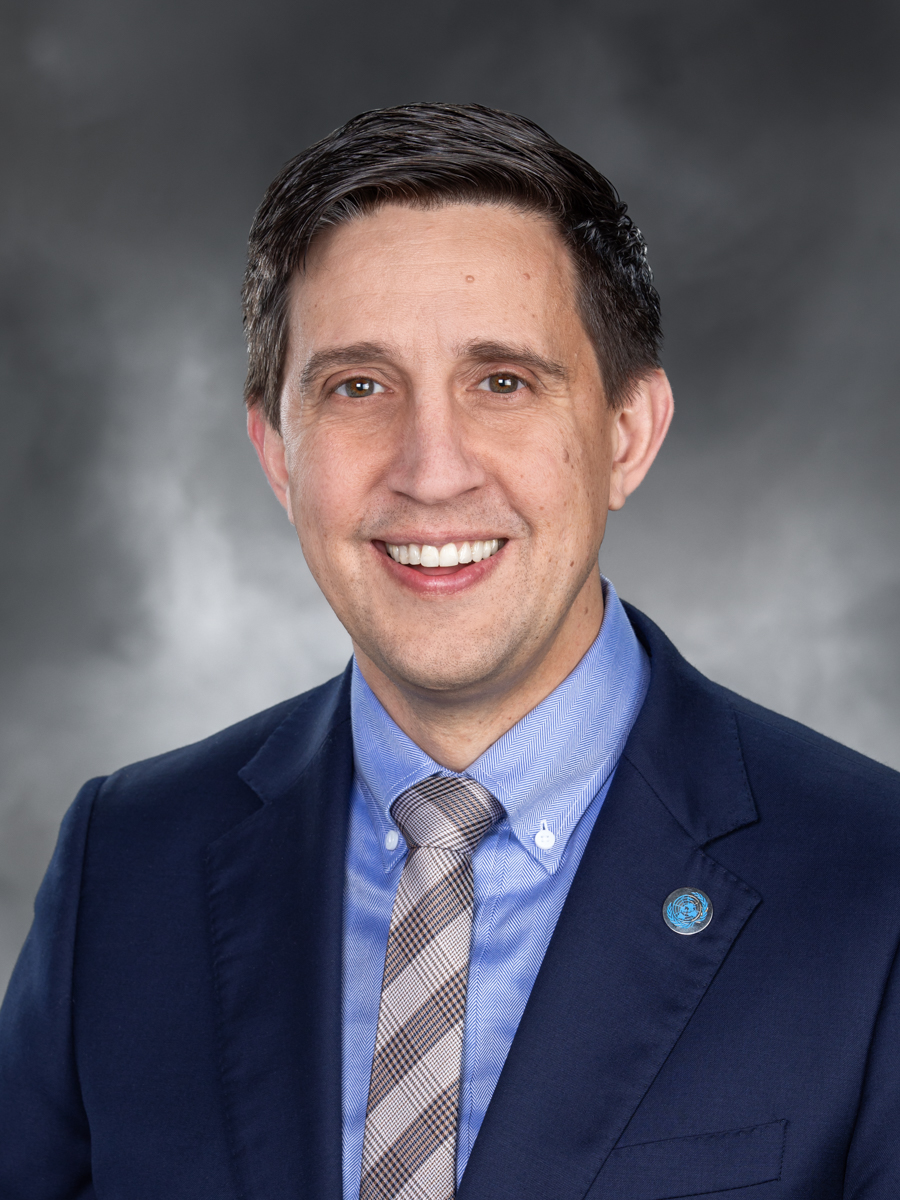
Rep. Alex Ramel
Sponsored bills
Maddy summaryHB 2496 requires Washington's Energy Facility Site Evaluation Council to conduct direct government-to-government consultation with federally recognized tribes whenever energy facility projects may affect tribal resources, rights, or cultural sites protected by treaty or law. It mandates early notification of tribes during the review process and requires the council to summarize consultation outcomes in its report to the governor, giving tribes 30 days to review and request corrections. The bill applies to projects like transmission lines, biofuel facilities, and clean energy manufacturing that could impact tribal interests. This policy change strengthens tribal input in energy project reviews without altering project approval standards.
Maddy summaryHB 2411 expands Washington state employees' shared leave eligibility to include victims of hate crimes and situations involving immigration enforcement actions affecting the employee or their relative. It adds two specific qualifying reasons to existing shared leave provisions: (1) being a victim of a hate crime, and (2) needing time off due to immigration enforcement actions like detention, deportation, or related family separation. The bill includes strict protections, requiring employers to accept written statements or documentation from advocates (not disclosing immigration status) and prohibiting the sharing of personally identifiable immigration information. This policy change directly affects state employees facing these specific circumstances, allowing them to use shared leave without pay while maintaining confidentiality about immigration status.
Maddy summaryHB 2105 requires Washington employers to notify workers within 72 hours if federal agencies plan I-9 form or worker record inspections. It mandates posting notices in five common non-English languages at workplaces, sending written notices to workers' last known addresses, and sharing federal inspection results with affected workers. The law directly affects all Washington employers and immigrant workers who may face federal immigration verification checks. Key provisions include multilingual notice requirements, timelines for employer communication, and a template for compliance developed by the Attorney General. This bill creates a formal process for transparency during federal I-9 audits, aiming to protect workers' rights during inspections.
Maddy summaryHB 1903 establishes a statewide low-income energy assistance program to reduce high energy costs for Washington households. It directly affects low-income residents who struggle with energy burdens, defined as spending a significant portion of income on energy bills. Key provisions include allowing all eligible households to apply directly or through utilities (with self-attestation for income), requiring tiered assistance based on need, and mandating utilities to provide upfront energy bill discounts with reimbursement from the state. The program also requires multilingual outreach, trauma-informed support, and an advisory group including low-income residents to ensure equitable access. The program must begin by July 1, 2026, with funding intended to cover the $270 million+ annual energy burden.
Maddy summaryHB 2266 requires Washington cities and counties to permit permanent supportive housing, transitional housing, indoor emergency shelters, and indoor emergency housing in any zoning district where hotels or residential development is allowed, without imposing stricter rules than those for standard hotels or homes. It standardizes permitting processes, prohibits local governments from restricting these housing types to industrial zones, and mandates that cities/counties meet projected housing needs for emergency shelters. For indoor emergency shelters, the bill requires sponsors to provide written certification of community notification (within 500 feet), one community meeting, a point of contact, and operational policies - without additional requirements. The bill directly affects local governments (by changing zoning rules), housing providers (by streamlining approvals), and people experiencing homelessness (by increasing housing access), aiming to address Washington’s housing crisis through regulatory reform.
Maddy summaryHB 2442 allows Washington counties and cities to impose specific real estate excise taxes to fund local capital projects and affordable housing. It authorizes a 0.25% tax on real property sales for general capital projects (like streets, parks, and sewer systems), with strict usage rules requiring projects to align with comprehensive plans. Additionally, it creates a separate 0.5% tax exclusively for affordable housing development, including acquisition, construction, and maintenance for low- and moderate-income residents. Local governments must document funding plans for future projects and follow voter approval processes for new taxes, while funds must be managed through competitive grant processes for housing initiatives. The bill directly affects local governments by expanding their tax tools for infrastructure and housing priorities.
Maddy summaryHB 1750 creates clear guidelines for addressing voter suppression and vote dilution claims under Washington’s Voting Rights Act. It prohibits local governments (counties, cities, school districts, etc.) from implementing election policies that create material disparate burdens on voters in protected classes (race, color, or language minorities), as defined by federal law. The bill establishes that such policies are illegal unless the government proves they are necessary to serve a compelling interest with no less burdensome alternative, and it removes the requirement to prove discriminatory intent in claims. This amendment replaces outdated provisions and aligns Washington’s standards with federal voting rights protections.
Maddy summaryHB 1710 requires certain local governments (designated as "covered jurisdictions" due to documented voting rights issues) to obtain pre-approval before implementing specific voting changes. These changes include altering election methods, redrawing district boundaries, restricting language access for voters, or modifying early voting sites. Before any such "covered practice" takes effect, the local government must either seek a court declaration or get certification from the Attorney General that the change won’t diminish minority voting access. This applies to jurisdictions with a history of voting discrimination or current disparities in voter registration, participation, or other metrics affecting protected groups. The bill aims to enforce compliance with Washington’s Voting Rights Act of 2018 by adding a pre-clearance step for high-impact voting decisions.
Maddy summaryHB 2532 makes it a gross misdemeanor to sell, distribute, or give away nitrous oxide in containers like canisters or tanks (including flavored versions), except for specific exempt uses. The law specifically targets recreational nitrous oxide sales by criminalizing these transactions, with penalties including up to 364 days in jail. Key exemptions include licensed medical, dental, or veterinary use; nitrous oxide used as a food propellant; and industrial or automotive applications. The bill does not ban nitrous oxide itself but regulates its sale in consumer containers for non-exempt purposes.