Maddy summaryHB 2445 amends Washington's probate code to limit profit-seeking in estate management. It requires applicants to document their search for heirs and assets, restricts appointment of for-profit service providers to two cases per year, and prohibits them from purchasing or profiting from estate assets. The bill also mandates bonds for certain appointees and caps compensation for non-family estate managers at court-approved rates. These changes primarily affect for-profit estate management companies and courts handling probate cases.

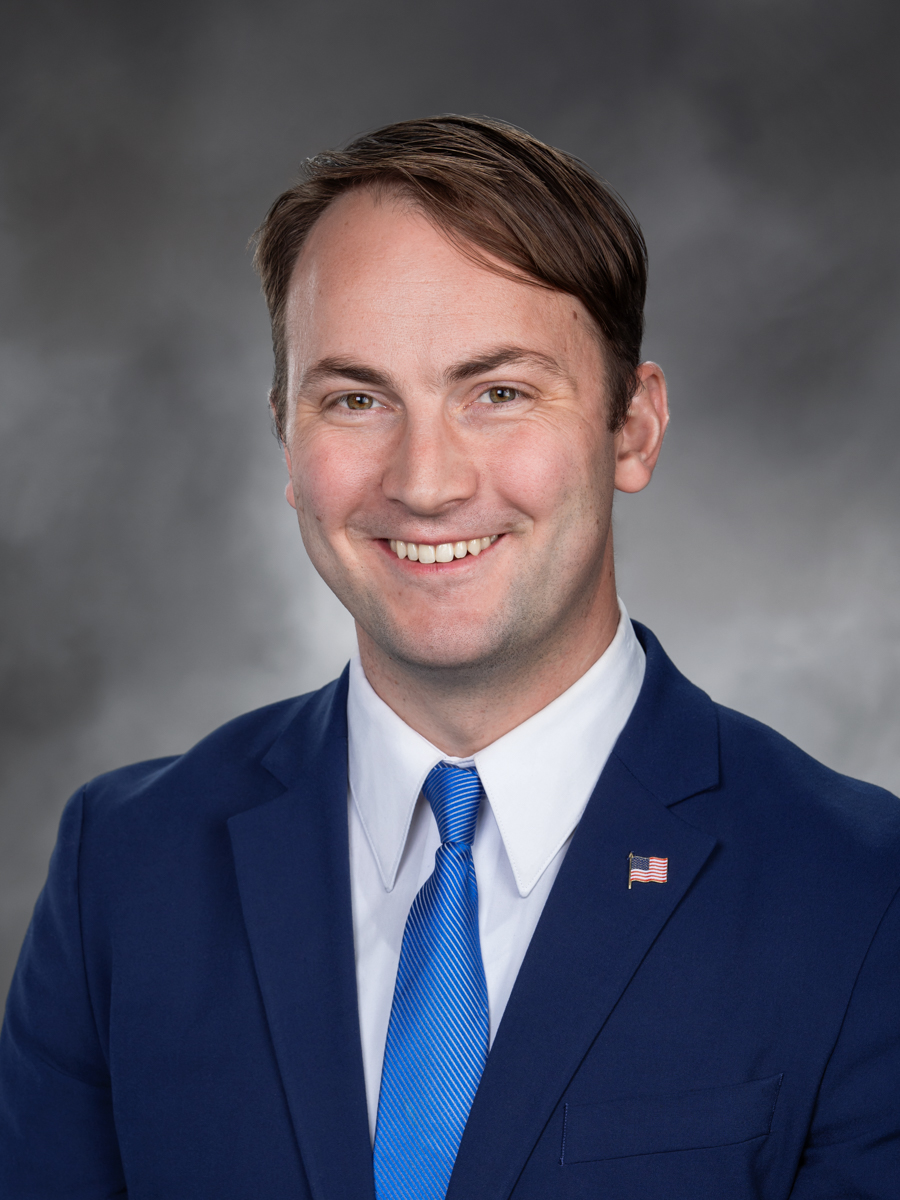
Rep. Adison Richards
Sponsored bills
Maddy summaryHB 1909 establishes a court unification task force to study Washington’s fragmented court system. The task force will analyze disparities in local court rules, technology adoption, and funding that create barriers for people seeking legal help - especially those in rural areas, low-income communities, and underserved populations. It will identify inefficiencies and inequities in court operations and explore potential solutions through a diverse group including judges, court clerks, legal aid representatives, and community advocates with lived experience. The bill does not implement changes but directs the task force to provide recommendations for improving consistency and access to justice. This study aims to inform future policy decisions, not alter current court structures.
Maddy summaryHB 2452 requires landlords in manufactured and mobile home communities to provide tenants with a standardized notice for rent increases, detailing the exact percentage and dollar amount of the increase. The notice must also explain if the increase exceeds Washington’s 5% annual limit and include supporting documentation for any claimed exemptions (such as community purchases or public housing programs). This applies specifically to tenants in manufactured/mobile home communities, not all rental properties. The bill amends existing laws to ensure transparency and compliance with rent increase rules.
Maddy summaryHB 2104 makes permanent a 2023 pilot program providing financial assurance for local and tribal fire departments in Washington to use certified aircraft (like planes dropping water or fire retardant) during the initial response to wildland fires. It removes the program’s expiration date, ensuring ongoing state funding to help fire departments deploy aviation resources quickly without waiting for state mobilization. This directly affects local fire departments by guaranteeing they can afford aircraft use when needed, especially during high-risk summer conditions with dry fuels. The bill requires that aviation deployment be directed by trained air operations commanders and aims to prevent small fires from growing large, protecting communities, natural resources, and air quality.
Maddy summaryHB 2604 simplifies the process for transferring vehicle ownership to an insurer after a total loss or destruction, directly affecting vehicle owners, insurers, and the Washington State Department of Licensing. The bill requires owners and insurers to report destruction/total loss within 15 days using electronic systems, simplified documents (like an affidavit marked "DESTROYED"), or a standard settlement form, eliminating the need for notarized signatures on related paperwork. It establishes a $6,790 market value threshold for six-year-old or older vehicles (adjusted annually based on regional used car prices) to determine if a value statement is required. The law streamlines administrative steps for insurers and owners while ensuring clear documentation standards for title transfers.
Maddy summaryThis bill is a House resolution that formally recognizes Representative Virginia "Jenny" Graham for her public service in the Washington State House of Representatives. It highlights her eight-year tenure, her advocacy for public safety, and her work on community safety and veterans' issues. The resolution does not create new laws or policies but serves as an official acknowledgment of her contributions and legacy.
Maddy summaryThis bill is a House resolution that formally honors John Michael Sattgast for his 35 years of dedicated service as a communications professional for the House Republican Caucus in the Washington State Legislature. It recognizes his work producing over 4,000 radio stories and coordinating media coverage for state representatives, as well as his leadership roles with the National Conference of State Legislatures. The resolution acknowledges his contributions to sharing legislative history and public information, noting his receipt of the 2023 Legislative Staff Achievement Award. This measure serves as a commemorative tribute rather than establishing new policy or affecting government operations.
Maddy summaryThis bill formally acknowledges the service of Representative Steve Tharinger to his district and the Washington state legislature. It recognizes his long career in public service, including his time as a Clallam County Commissioner, his work on the House Capital Budget Committee, and his advocacy for environmental protection and healthcare. The resolution serves as a commemorative tribute to his contributions and personal qualities rather than establishing new laws or policies.
Maddy summaryHB 1175 requires cities in Washington to permit neighborhood stores (like mini-markets selling food, drinks, or household items) and neighborhood cafés (with at least 500 square feet) in residential zones, provided cafés serve food if they offer alcohol. Cities may still regulate parking (if feasible), operating hours (cafés must operate at least 12 consecutive hours), and maximum building size. The bill applies to all cities and code cities, mandating implementation by 2027 for cities updating comprehensive plans or within two years for others. It directly affects small business owners seeking to operate in residential areas and local governments managing zoning rules.
Maddy summaryHouse Bill 1923, known as the "Mosquito Fleet Act," aims to increase the availability of passenger-only ferry services in Washington state. The bill expands the types of local governmental entities, such as counties, port districts, and public transportation benefit areas, that can establish passenger-only ferry service districts. These districts would be empowered to establish, finance, and operate passenger-only ferry services, including purchasing or leasing vessels and dock facilities. Before providing service, each district must develop an investment plan detailing proposed services, projected costs, and funding sources, ultimately impacting residents who rely on ferry transportation.