Maddy summaryWashington State's HB 2525 establishes a heritage orchard program managed by Washington State University to conserve rare and historical apple varieties. The program requires WSU to maintain a registry of orchards meeting specific criteria (either containing at least five trees over 74 years old or one tree of a rare/lost variety) and to track documented rare apple types. This initiative directly affects Washington orchard owners with heritage trees or rare varieties, aiming to preserve agricultural history. The program becomes effective only if dedicated funding is secured by June 30, 2026, as specified in the bill.

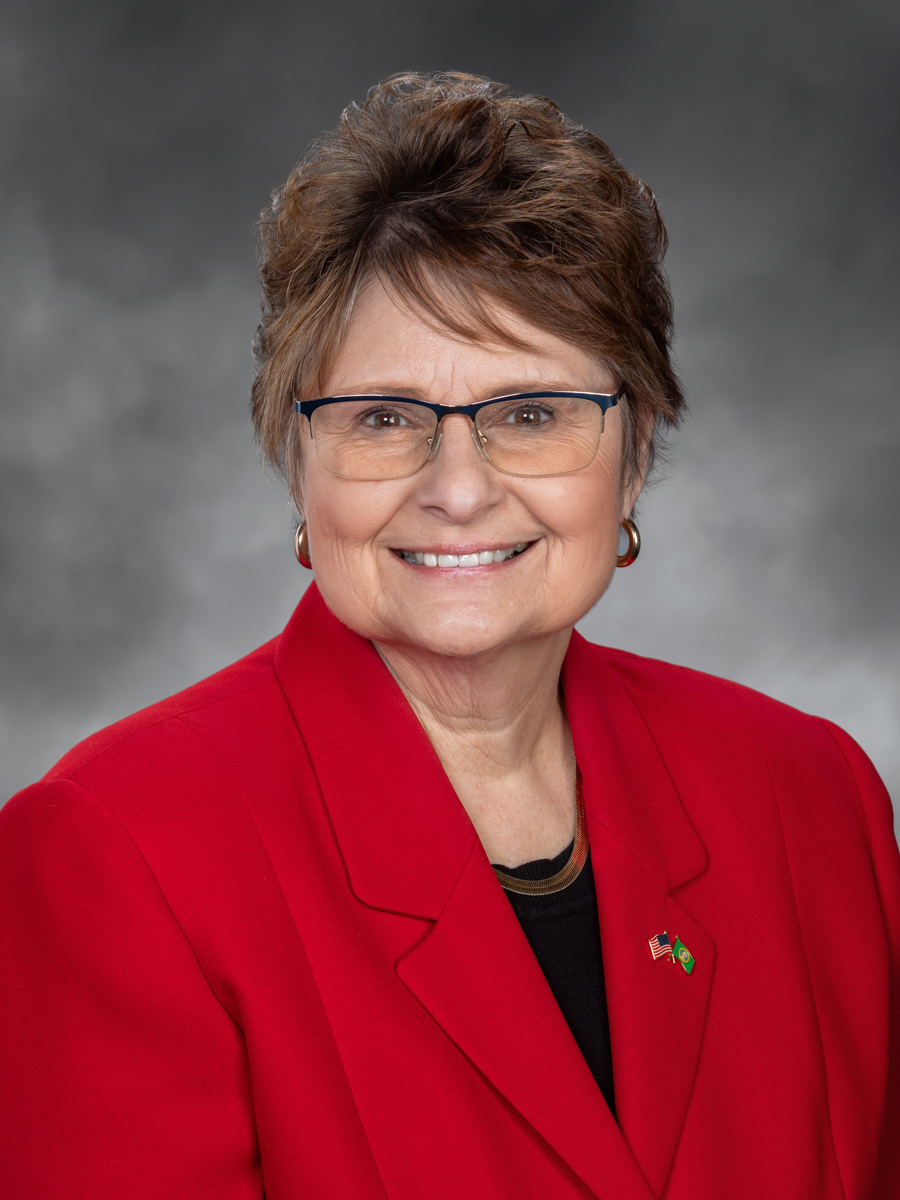
Rep. Deb Manjarrez
Sponsored bills
Maddy summaryThis bill is a House resolution that formally recognizes Representative Virginia "Jenny" Graham for her public service in the Washington State House of Representatives. It highlights her eight-year tenure, her advocacy for public safety, and her work on community safety and veterans' issues. The resolution does not create new laws or policies but serves as an official acknowledgment of her contributions and legacy.
Maddy summaryThis bill is a House resolution that formally honors John Michael Sattgast for his 35 years of dedicated service as a communications professional for the House Republican Caucus in the Washington State Legislature. It recognizes his work producing over 4,000 radio stories and coordinating media coverage for state representatives, as well as his leadership roles with the National Conference of State Legislatures. The resolution acknowledges his contributions to sharing legislative history and public information, noting his receipt of the 2023 Legislative Staff Achievement Award. This measure serves as a commemorative tribute rather than establishing new policy or affecting government operations.
Maddy summaryThis bill formally acknowledges the service of Representative Steve Tharinger to his district and the Washington state legislature. It recognizes his long career in public service, including his time as a Clallam County Commissioner, his work on the House Capital Budget Committee, and his advocacy for environmental protection and healthcare. The resolution serves as a commemorative tribute to his contributions and personal qualities rather than establishing new laws or policies.
Maddy summaryHB 2113 updates Washington State's supervision rules for diagnostic radiologic technologists, therapeutic radiologic technologists, and magnetic resonance imaging (MRI) technologists. It allows these professionals to perform certain injections (like IV contrast) under virtual supervision via real-time video (excluding audio-only) or direct supervision by physicians, advanced nurses, or physician assistants. The bill also requires trained clinical staff to be present during IV contrast administration to handle potential adverse reactions. These changes specifically affect technologists working under physician oversight in medical settings.
Maddy summaryHB 2151 requires Washington state to adopt national safety standards for factory-built housing and commercial structures, specifically aligning with International Code Council (ICC) guidelines for design, construction, and inspections. It directs the Department of Labor & Industries to enforce rules ensuring structural safety and compliance with plumbing, electrical, and energy codes, while allowing qualified inspection agencies (like ICC-certified firms) to conduct inspections. This bill directly affects builders, inspectors, and local enforcement agencies by replacing current state-specific requirements with nationally recognized standards. The law also establishes fee schedules for enforcement and permits fee waivers during emergencies.
Maddy summaryHB 2168 creates a real-time overdose mapping system to help prevent opioid overdoses in Washington. It requires emergency medical services (like ambulances and aid services) to submit anonymized data - such as location, time, whether reversal medication was used, and fatality status - within 24 hours of treating an overdose to a centralized program. This data helps health and public safety agencies quickly identify overdose hotspots and deploy targeted prevention efforts, like public education or treatment resources, without using the information for law enforcement. The bill explicitly prohibits using the data for criminal investigations or identifying individuals, ensuring privacy protections for those seeking care.
Maddy summaryThis bill requires Washington's health care board to measure and report on primary care spending, aiming to increase it to 12 percent of total health care expenditures. It mandates annual reports detailing how much is spent on primary care by different insurance carriers and providers, along with recommendations for overcoming data barriers. The legislation also directs the board to study the costs of preceptorships used to train primary care physicians in hospitals and clinical settings, with a final report due by December 2027. These actions are intended to address the shortage of primary care providers in rural and underserved areas while ensuring the data collection does not create excessive administrative burdens.
Maddy summaryHB 2746 reduces Washington State's 2028 property tax levy by $2.1 billion, specifically by lowering the "part I highest lawful levy" amount used in tax calculations for that year. This adjustment directly affects all Washington property owners through the state's property tax system, as it modifies how tax rates are applied to assessed property values. The bill amends existing tax law (RCW 84.52.065) to implement this specific reduction for 2028, while maintaining the $3.60 per $1,000 assessed value cap for future years. It does not change current tax rates or provide immediate relief, only setting a defined reduction for the 2028 tax collection period.
Maddy summaryHB 2742 creates an annual sales and use tax holiday in Washington for qualifying items priced at $500 or less per item. It exempts these items from both sales tax (under RCW 82.08) and use tax (under RCW 82.12) during a four-day period each year, specifically from 12:00 a.m. on the Friday after Thanksgiving through 11:59 p.m. on the Monday after Thanksgiving. The tax holiday directly affects all Washington residents purchasing qualifying items during this window, providing temporary financial relief on everyday goods like clothing, school supplies, or electronics. The Department of Revenue must establish administrative rules and provide taxpayer guidance to implement the holiday, consistent with existing tax agreements.