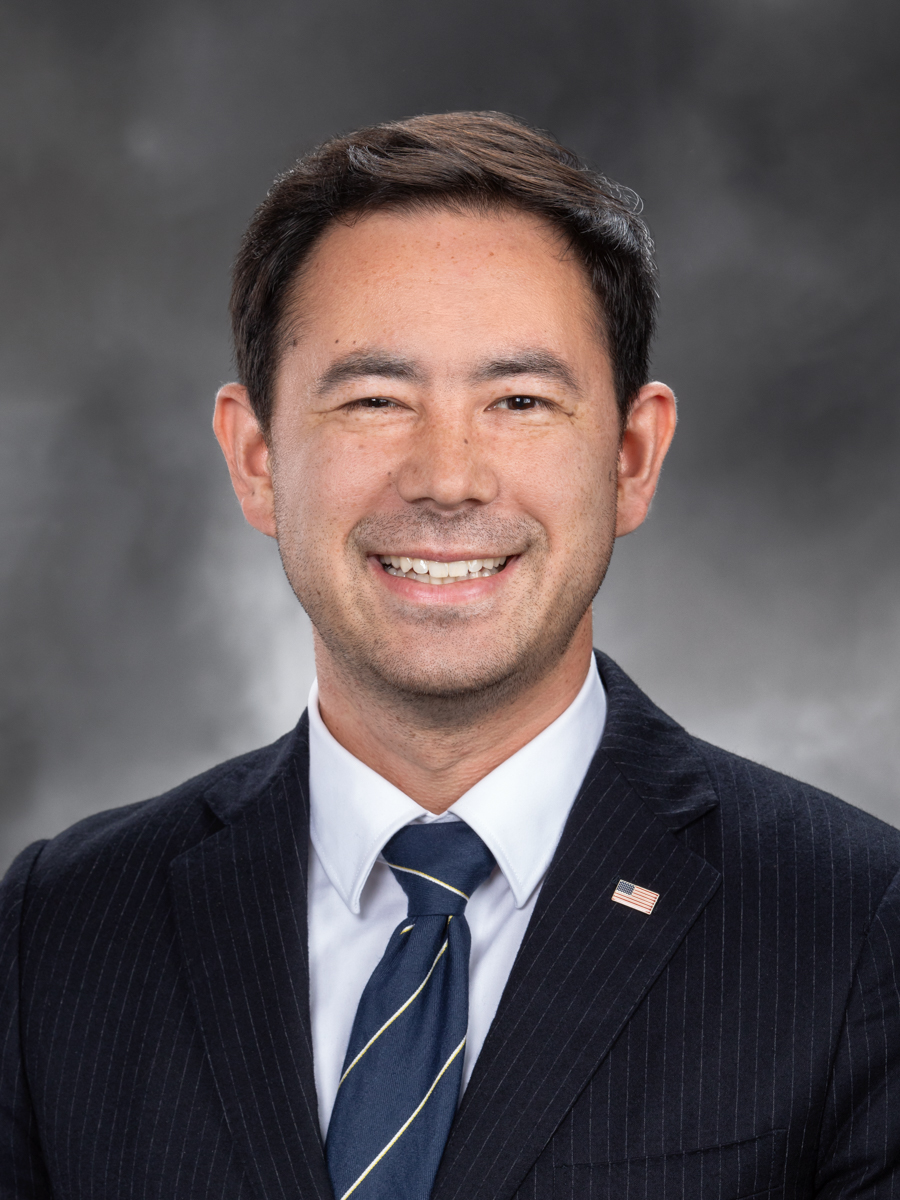
Photo of Clyde Shavers
D Washington House · District 10 On the 2026 ballot

Rep. Clyde Shavers

Compare
Total votes
2,532
all sessions
Attendance
100%
1 missed
Higher than 81% of chamber peers
With party
88%
of cast votes
Lower than 96% of chamber peers
Bipartisan score
6%
crosses aisle rarely
Higher than 94% of chamber peers
Sponsored
283
bills & resolutions
Near the chamber average
Committees
3
assignments
283 bills and resolutions

Sponsored bills

Total
283
Primary
55
Co-sponsor
228
This page
283
matching current filters
Co-sponsor HB 1906
Signed into law · Washington House · Co-sponsor
Increasing transparency and consumer protection in water system rates.

Maddy summaryHB 1906 requires water systems in Washington to share detailed capital improvement plans and cost information with the Utilities and Transportation Commission (UTC) when seeking rate increases. This ensures the UTC can better review whether proposed costs are properly justified and rates are fair, while also mandating that consumers receive clearer notice about planned investments and their expected rate impacts. The bill directly affects water utilities, the UTC (the regulatory agency), and ratepayers (water customers). It amends state law to create structure for rate reviews, addressing gaps where current processes lacked standards for evaluating capital costs tied to public health requirements.

Signed into law Mar 28, 2026 1 co-sponsor
Co-sponsor HB 2325
Signed into law · Washington House · Co-sponsor
Establishing a tourism self-supported assessment program to fund statewide tourism promotion.

Maddy summaryHB 2325 establishes a self-funded tourism assessment program where qualifying tourism businesses pay an annual fee based on gross revenue to support statewide tourism promotion. It directly affects businesses like hotels, restaurants (with $5M+ annual revenue), attractions, and recreation operators that derive significant revenue from tourism. The program requires business sector ratification before assessments begin, with a ratepayer oversight board - appointed by businesses - to manage funds, approve budgets, and report annually. The fee structure, revenue thresholds, and program design must be approved by affected businesses through a referendum process before implementation.

Signed into law Mar 26, 2026 1 co-sponsor
Co-sponsor HB 2416
Signed into law · Washington House · Co-sponsor
Concerning fair treatment of waste to energy facilities under the climate commitment act.

Maddy summaryHB 2416 adjusts Washington's climate emissions program to fairly treat the state's only waste-to-energy facility under the Climate Commitment Act. It requires the state's Department of Ecology to recognize in the emissions reporting system that this facility produces fewer greenhouse gases than landfilling its waste, as confirmed by a 2024 department study. The bill amends emissions reporting rules (RCW 70A.65.080) to create special provisions for this facility, ensuring its unique status is reflected in the state's cap-and-invest program. This directly affects the facility's municipal solid waste management system and ensures it is not unfairly burdened compared to other waste management methods under the climate law.

Signed into law Mar 25, 2026 1 co-sponsor
Co-sponsor HB 2225
Signed into law · Washington House · Co-sponsor
Concerning regulation of artificial intelligence companion chatbots.

Maddy summaryThis Washington bill requires AI companion chatbots that simulate human relationships to clearly disclose they are artificial at the start of use, every three hours, and at new sessions. For minors (under 18), it mandates hourly reminders about the artificial nature of the chatbot, blocks sexually explicit content, and prohibits manipulative tactics like fake emotional distress or excessive praise to foster dependency. It excludes customer service bots, in-game assistants, and educational tools from these rules. The law aims to prevent emotional dependency and ensure psychological safety while allowing responsible AI development.

Signed into law Mar 24, 2026 1 co-sponsor
Primary HB 1170
Signed into law · Washington House · Lead sponsor
Informing users when content is developed or modified by artificial intelligence.

Maddy summaryHB 1170 requires large artificial intelligence providers (with over 1 million monthly users) to disclose when content they generate is AI-made. It mandates two types of disclosures: clear, visible labels ("manifest") and hidden metadata ("latent") identifying the AI system, creator, and timestamp. The bill also requires free, accessible AI detection tools for users to verify content origin, while prohibiting providers from collecting personal data through these tools. Excluded are video games, movies, and streaming content, focusing the rule on generative AI services like text or image tools.

Signed into law Mar 24, 2026 0 co-sponsors
Co-sponsor HB 1634
Signed into law · Washington House · Co-sponsor
Providing school districts and public schools with assistance to coordinate comprehensive behavioral health supports for students.

Maddy summaryHB 1634 establishes regional school safety centers in Washington state to help public school districts coordinate behavioral health support for students. The centers will provide training for school staff on suicide prevention, facilitate partnerships between schools and community health providers, offer Medicaid billing assistance, and support school-based threat assessment programs. This bill directly affects all public school districts, their staff (including counselors and psychologists), and students needing behavioral health services by improving access to existing resources through coordinated planning. It amends state law to require these centers to work with tribes and community partners to ensure culturally responsive support. The bill focuses on strengthening existing systems rather than creating new programs.

Signed into law Mar 23, 2026 1 co-sponsor
Co-sponsor HB 1128
Signed into law · Washington House · Co-sponsor
Establishing a child care workforce standards board.

Maddy summaryHB 1128 creates a Washington state Child Care Workforce Standards Board to set minimum compensation and employment standards for child care workers. The board, composed of nine members including worker representatives (from family child care, center workers, and school-age programs), employer representatives, parent advocates, and state agency officials, will address low pay and poor working conditions that contribute to workforce instability. It requires the board to hold public hearings, establish standards with a six-member vote, and protect workers from retaliation for participating in the process. The law aims to improve child care quality and affordability by ensuring fair compensation and stable employment for workers directly serving children.

Signed into law Mar 23, 2026 1 co-sponsor
Co-sponsor HB 2104
Signed into law · Washington House · Co-sponsor
Concerning aviation assurance funding in response to wildland fires.

Maddy summaryHB 2104 makes permanent a 2023 pilot program providing financial assurance for local and tribal fire departments in Washington to use certified aircraft (like planes dropping water or fire retardant) during the initial response to wildland fires. It removes the program’s expiration date, ensuring ongoing state funding to help fire departments deploy aviation resources quickly without waiting for state mobilization. This directly affects local fire departments by guaranteeing they can afford aircraft use when needed, especially during high-risk summer conditions with dry fuels. The bill requires that aviation deployment be directed by trained air operations commanders and aims to prevent small fires from growing large, protecting communities, natural resources, and air quality.

Signed into law Mar 20, 2026 1 co-sponsor
Co-sponsor HB 1570
Signed into law · Washington House · Co-sponsor
Concerning collective bargaining for certain employees who are enrolled in academic programs at public institutions of higher education.

Maddy summaryHB 1570 grants collective bargaining rights to student employees (those enrolled in academic or certificate programs) at Central Washington University, Eastern Washington University, Western Washington University, and The Evergreen State College. It defines specific bargaining topics, including tuition remission and waivers, while excluding issues like academic calendars, tuition amounts, student admissions, and termination based on academic performance. Compensation agreements must align with legislative budget limits, though institutions may offer additional pay beyond these limits. The bill applies only to employees not already covered by other collective bargaining laws at these institutions.

Signed into law Mar 18, 2026 1 co-sponsor
Primary HB 2431
Signed into law · Washington House · Lead sponsor
Increasing the maximum annual limit for regularly scheduled fundraising activities for the nonprofit public assembly halls and meeting places property tax exemption.

Maddy summaryHB 2431 increases the annual limit for regularly scheduled fundraising events on property exempt under RCW 84.36.037 (farmers market-related exemptions) from 15 to 50 days per year. This change directly affects nonprofits operating public assembly halls or meeting places that qualify for property tax exemptions under this specific provision. The bill modifies existing rules to allow more time for fundraising activities without risking loss of tax exemption status. The key provision extends the allowable days for nonprofit fundraising events from 15 to 50 annually, while maintaining other requirements like income use for property maintenance or improvements. This is a technical adjustment to existing tax code, not a new exemption.

Signed into law Mar 16, 2026 0 co-sponsors
Showing 1 to 10 of 283 bills
1 2 3 29 Next