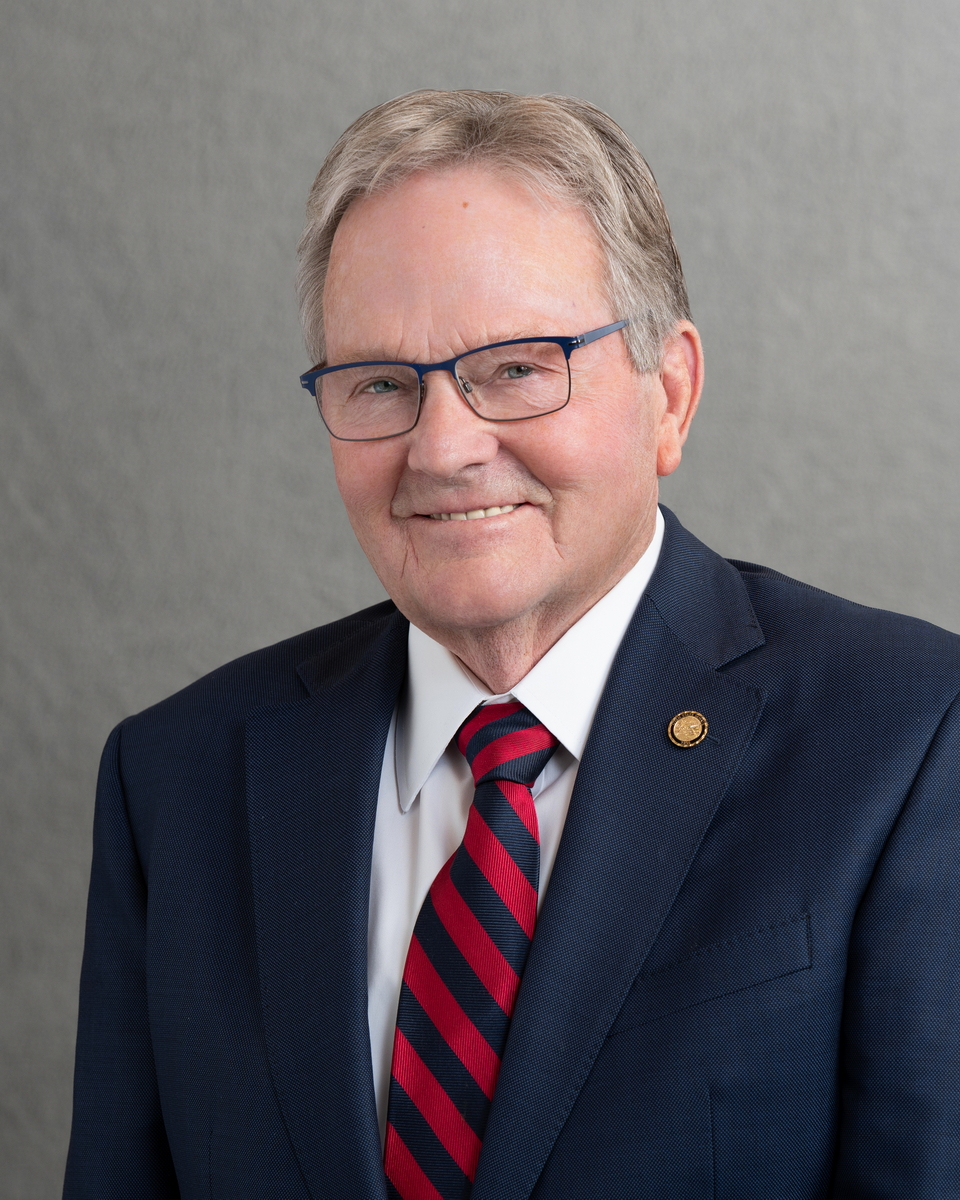
Photo of Jerry Stevenson
R Utah Senate · District 6

Sen. Jerry Stevenson

Compare
Total votes
6,285
all sessions
Attendance
59%
471 missed
Lower than 100% of chamber peers
With party
98%
of cast votes
Near the chamber average
Bipartisan score
1%
crosses aisle rarely
Near the chamber average
Sponsored
84
bills & resolutions
Lower than 100% of chamber peers
Committees
8
assignments
84 bills and resolutions

Sponsored bills

Total
84
Primary
43
Co-sponsor
41
This page
84
matching current filters
Primary SB 3
Vetoed · Utah Senate · Lead sponsor
Appropriations Adjustments

Maddy summarySB 3 adjusts state budget allocations for fiscal years 2025 and 2026, directly affecting Utah state agencies, public education programs, and higher education institutions. It reallocates existing funds to cover operational needs, including specific programs like inmate reentry services and correctional drug enforcement. The bill modifies previous appropriations through both increases and decreases across multiple funding sources without creating new programs. These adjustments apply to the 2024-2025 and 2025-2026 fiscal years, as detailed in the bill's budget tables.

Vetoed Mar 27, 2025 0 co-sponsors
Co-sponsor HB 3
Vetoed · Utah House · Co-sponsor
Current Fiscal Year Supplemental Appropriations

Maddy summaryHB 3 is a supplemental appropriations bill for Utah's fiscal year 2025 (July 1, 2024-June 30, 2025), allocating $1.22 billion in operating, capital, and restricted funds to support state government operations. It directly affects state agencies, higher education institutions, and specific programs like criminal justice services and indigent defense. Key provisions include authorizing non-lapsing funds for the Commission on Criminal and Juvenile Justice (up to $6.1 million for grants and operations) and the Attorney General's office (up to $3 million for administration). The bill supplements existing budgets rather than creating new policies, with funding drawn from multiple state funds including the General Fund and Income Tax Fund.

Vetoed Mar 27, 2025 1 co-sponsor
Co-sponsor HB 437
Signed into law · Utah House · Co-sponsor
Interdicted Person Amendments

Maddy summaryHB 437 designates individuals convicted of extreme DUI (Driving Under the Influence) as "interdicted persons," prohibiting them from purchasing alcohol for a set period determined by the court. It requires courts to automatically apply this status for extreme DUI convictions, mandates the Department of Alcoholic Beverage Services to train staff on verifying interdicted status (using ID or driver’s license), and requires interdicted persons to obtain a special license or ID card with security features. The bill does not create new penalties but adds administrative requirements to enforce existing DUI-related alcohol restrictions. This directly affects Utah residents convicted of extreme DUI offenses, impacting their ability to legally buy alcohol during the designated interdiction period.

Signed into law Mar 27, 2025 1 co-sponsor
Primary SB 62
Signed into law · Utah Senate · Lead sponsor
Spaceport Exploration Committee

Maddy summarySB 62 creates Utah's Spaceport Exploration Committee to study the feasibility of establishing a state spaceport. The committee, composed of 12 members including legislators, state agency directors, military liaisons, and aerospace industry representatives, must conduct a feasibility study and siting assessment to evaluate potential locations, economic impacts, and regulatory requirements. The bill appropriates $1 million for the committee's operations in fiscal year 2026 to fund this analysis. The committee will report findings and recommendations to the legislature on whether building a spaceport aligns with Utah's interests, without authorizing construction. The bill was signed into law by the governor on March 27, 2025.

Signed into law Mar 27, 2025 0 co-sponsors
Primary SB 316
Signed into law · Utah Senate · Lead sponsor
Military Installation Development Authority and Other Development Zone Amendments

Maddy summarySB 316 clarifies how sales tax revenue from construction materials sold within designated "qualified development zones" near military installations is distributed. It allows eligible basic special districts (created before 2011 and issuing bonds in 2024) to use this tax revenue for approved projects, such as infrastructure, after local municipality or county approval. The bill also updates rules for distributing resort tax revenue and permits the Military Installation Development Authority to partner with state agencies. These changes affect local governments and development authorities managing zones around military sites, with no new funding appropriated. The law takes effect in 2026.

Signed into law Mar 27, 2025 0 co-sponsors
Co-sponsor HB 248
Signed into law · Utah House · Co-sponsor
Veteran Protections Amendments

Maddy summaryHB 248 amends Utah law to strengthen protections for veterans seeking VA benefits. It assigns enforcement of civil penalties for unlawful assistance to the Division of Consumer Protection and clarifies prohibited conduct (like deceptive practices) when individuals help veterans navigate VA benefit applications. The bill directly affects individuals or businesses providing such assistance, not veterans themselves. It makes no new financial commitments and focuses on regulatory clarity and enforcement mechanisms within existing consumer protection frameworks.

Signed into law Mar 26, 2025 1 co-sponsor
Co-sponsor HB 323
Signed into law · Utah House · Co-sponsor
Correctional Drug Enforcement Amendments

Maddy summaryHB 323 requires Utah's Department of Corrections to establish a dedicated drug abuse and trafficking unit. This unit must develop strategies to combat drug use and trafficking among inmates in correctional facilities, individuals working with offenders, and those on probation or parole. It also mandates enhanced coordination and information sharing between the Department and state law enforcement agencies. The bill takes effect on May 7, 2025, and does not appropriate new funding. This directly affects correctional facilities, probation/parole systems, and law enforcement agencies working with offenders.

Signed into law Mar 26, 2025 1 co-sponsor
Primary SB 241
Signed into law · Utah Senate · Lead sponsor
Limited Purpose Local Government Amendments

Maddy summarySB 241 modifies rules for Utah special districts, directly affecting property owners and local governments managing public infrastructure. It authorizes basic special districts to create public infrastructure districts for funding facilities and affordable housing projects, and allows property owner districts to pledge impact fees toward bond payments. The bill also requires board approval for using public infrastructure district property tax revenue and updates procedures for board elections, annexations, and bond issuance. These changes apply to existing and new special districts under Utah law, focusing on financial flexibility and governance clarity.

Signed into law Mar 26, 2025 0 co-sponsors
Primary SB 187
Signed into law · Utah Senate · Lead sponsor
Throughput Infrastructure Funding Amendments

Maddy summarySB 187 amends Utah's Throughput Infrastructure Fund rules to expand eligibility for funding. It updates the definition of "throughput infrastructure project" to include hydrogen production facilities, mining operations, pipelines, and other critical infrastructure. The bill allows the state board to provide loans or grants to local governments and mining projects for qualifying infrastructure development. No new funding is added - this bill only modifies how existing fund resources are administered and distributed.

Signed into law Mar 26, 2025 0 co-sponsors
Primary SB 2
Signed into law · Utah Senate · Lead sponsor
New Fiscal Year Supplemental Appropriations Act

Maddy summarySB 2 is a budget bill that allocates supplemental funding for Utah's 2025-2026 fiscal year (July 1, 2025-June 30, 2026). It appropriates a total of $1.79 billion for operating/capital budgets, $164.7 million in expendable funds, and $101.3 million for business-like activities across state agencies and institutions of higher education. The bill adjusts existing appropriations through specific budget increases and decreases, including $1.98 million from the General Fund for jail reimbursement and $249,900 from the General Fund for criminal justice advisory programs. It does not create new policies but provides funding mechanisms for current state operations and reporting requirements for agencies like the Governor’s Office and Indigent Defense Commission. The bill takes effect July 1, 2025.

Signed into law Mar 25, 2025 0 co-sponsors
Showing 1 to 10 of 84 bills
1 2 3 9 Next