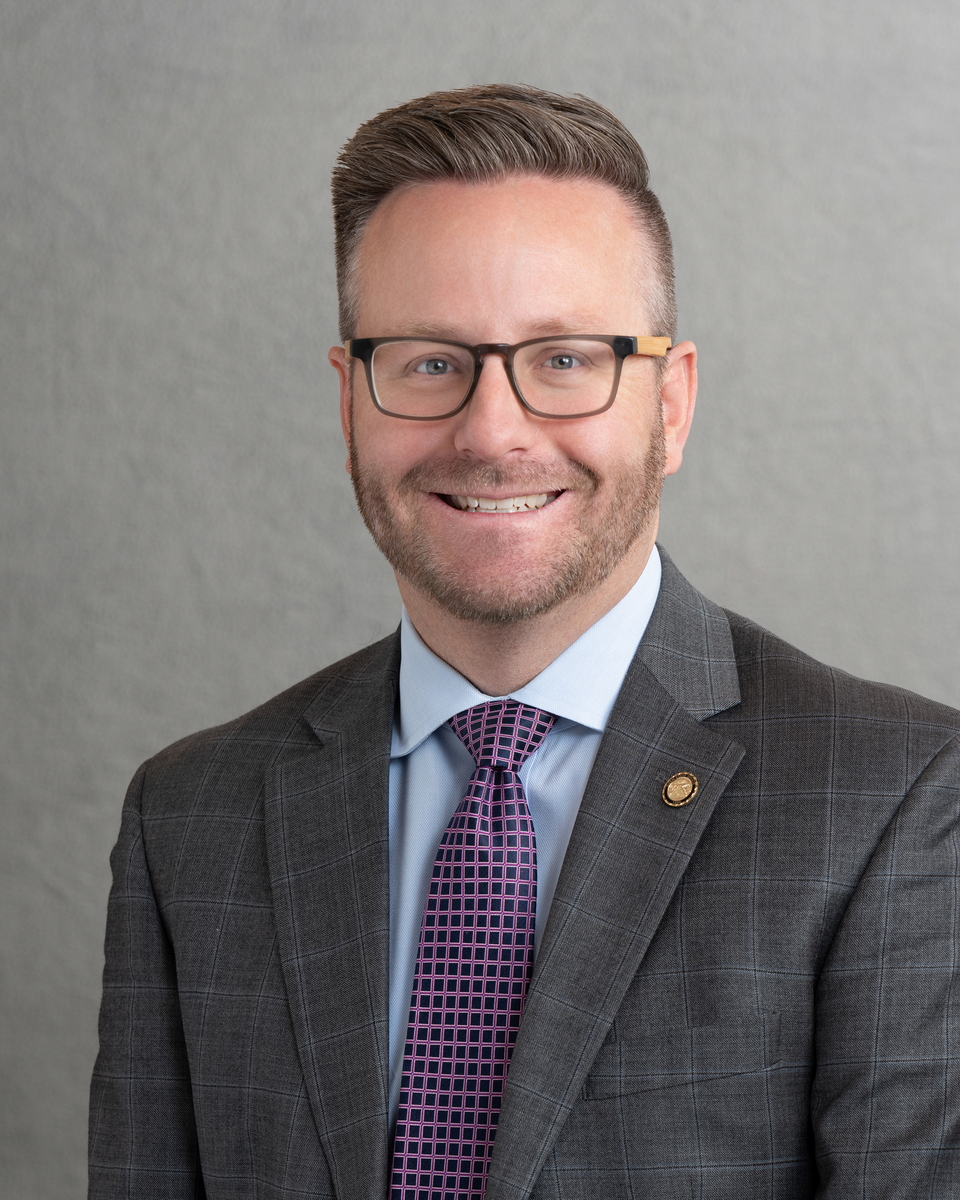
Photo of Brady Brammer
R Utah Senate · District 21 On the 2026 ballot

Sen. Brady Brammer

Compare
Total votes
4,957
all sessions
Attendance
91%
394 missed
Near the chamber average
With party
95%
of cast votes
Lower than 83% of chamber peers
Bipartisan score
3%
crosses aisle rarely
Near the chamber average
Sponsored
186
bills & resolutions
Higher than 96% of chamber peers
Committees
9
assignments
186 bills and resolutions

Sponsored bills

Total
186
Primary
80
Co-sponsor
106
This page
186
matching current filters
Primary SB 234
Signed into law · Utah Senate · Lead sponsor
Rulemaking Amendments

Maddy summarySB 234 amends Utah's rulemaking laws to require state agencies to base environmental health and waste management rules on scientific evidence and prevent them from creating rules stricter than federal standards. It defines key terms like "best available science" and "weight of scientific evidence," and specifies that rules affecting drinking water, air quality, hazardous waste, or solid waste handling must align with federal regulations. The bill directly affects Utah state agencies responsible for drafting and implementing environmental regulations, such as the Department of Environmental Quality. It does not appropriate funds or create new taxes, focusing solely on procedural requirements for rulemaking.

Signed into law Mar 26, 2026 0 co-sponsors
Co-sponsor HB 259
Signed into law · Utah House · Co-sponsor
Parental Access to Children's Medical Records Amendments

Maddy summaryThis bill requires Utah healthcare facilities to provide parents or legal guardians full access to minors' electronic medical records, unless exceptions apply (such as a minor's consent for specific treatments, a court order, or if the parent isn't legally authorized under state/federal law). It mandates electronic health record vendors to ensure systems support this access and authorizes the attorney general to enforce compliance with fines up to $10,000 per day. Facilities must also provide paper records free of charge upon request if electronic access is restricted. The law takes effect May 6, 2026, and aligns with federal privacy standards.

Signed into law Mar 26, 2026 1 co-sponsor
Co-sponsor HB 52
Signed into law · Utah House · Co-sponsor
Tribal Endorsement of Utah Driver License Amendments

Maddy summaryHB 52 allows Utah driver license and ID card applicants who are enrolled members of a federally recognized Indian tribe to request a "Native American" notation on their license or ID. It specifies that applicants must provide accepted tribal documents (like a tribal ID card, certificate of Indian blood, or Bureau of Indian Affairs affidavit) as proof of enrollment. The notation may not identify a specific tribe or include additional personal details beyond the "Native American" label. This change applies to new applications and renewals starting July 1, 2026, with no new costs.

Signed into law Mar 26, 2026 1 co-sponsor
Co-sponsor HB 540
Signed into law · Utah House · Co-sponsor
Judicial Transparency and Information Access Amendments

Maddy summaryHB 540 requires Utah's Judicial Council to create a single online portal for all public court records, improving public access to case files and audio recordings of court proceedings. It also mandates the Judicial Council to establish rules for judicial financial disclosures and report findings to the Judiciary Interim Committee. The bill affects courts, judges, and the public by standardizing how court records are stored, accessed, and charged for, while clarifying which records remain private under existing law. It makes no changes to fees or funding, as no money is appropriated.

Signed into law Mar 25, 2026 1 co-sponsor
Co-sponsor HB 539
Signed into law · Utah House · Co-sponsor
Public Safety Modifications

Maddy summaryHB 539 amends Utah's public safety laws to strengthen protections for domestic violence victims and clarify legal procedures. It expands the definition of domestic violence offenses, clarifies the term "cohabitant" for victim mitigation, and modifies bail requirements for domestic violence cases. The bill also updates protective order rules, prohibits parents from waiving jail release conditions when a child is the alleged victim, and ensures individuals arrested for domestic violence can communicate with children in specific circumstances. These changes directly affect domestic violence victims, defendants, law enforcement, and courts handling related cases.

Signed into law Mar 25, 2026 1 co-sponsor
Co-sponsor HB 520
Signed into law · Utah House · Co-sponsor
Higher Education Student Housing Study

Maddy summaryHB 520 requires the governor's office to complete a feasibility study examining how student housing near colleges affects home ownership in surrounding communities, including costs and impacts. The study must propose state or institutional actions to address these effects, such as creating dedicated housing on public land or partnering with developers. An employee with housing expertise, working with the higher education commissioner, must report findings to the Higher Education Appropriations Subcommittee by November 1, 2026. This bill directly affects communities near Utah's colleges and universities by initiating a process to assess housing impacts and potential solutions. The study has no funding appropriation and focuses solely on analysis, not immediate policy changes.

Signed into law Mar 25, 2026 1 co-sponsor
Co-sponsor HB 591
Signed into law · Utah House · Co-sponsor
Nuisance Amendments

Maddy summaryHB 591 reorganizes Utah's nuisance laws by ending the ability to sue for nuisances under common law (except for the Attorney General) and creating new statutory procedures. It affects anyone who might file a nuisance lawsuit (e.g., property owners or neighbors) by replacing common law claims with specific legal processes. The bill renumbers existing statutes, clarifies definitions for public/private nuisances, and establishes new rights of action under Title 78B, Chapter 6a. No new funding is involved, and the changes focus solely on restructuring how nuisance cases are handled legally.

Signed into law Mar 25, 2026 1 co-sponsor
Co-sponsor HB 204
Signed into law · Utah House · Co-sponsor
Higher Education Student Belief Accommodation

Maddy summaryHB 204 requires Utah colleges and universities to reasonably accommodate students' sincerely held religious or conscience-based requests, such as excusing absences from exams or offering alternative assignments. It mandates institutions to establish clear policies for handling these requests, including requiring prior notice from students, maintaining confidentiality, and designating neutral reviewers for denied requests. Accommodations cannot fundamentally alter course requirements or negatively impact academic standards. The bill also requires institutions to publish their policies online and coordinate with related legislation (S.B. 207).

Signed into law Mar 25, 2026 1 co-sponsor
Co-sponsor HB 243
Signed into law · Utah House · Co-sponsor
Gambling Revisions

Maddy summaryHB 243 clarifies Utah's gambling laws by defining key terms in the state code, specifically stating that "proposition bets" (like wagers on specific game outcomes) are considered gambling. It updates definitions for "amusement devices" (e.g., claw machines, video games, pinball) and "fringe gambling" to distinguish legal entertainment activities from illegal gambling. The bill directly affects businesses operating arcades, amusement facilities, and promotional activities (like contests tied to purchases), ensuring they comply with the clarified boundaries. It makes technical changes to Utah Code Section 76-9-1401 but does not alter existing gambling prohibitions or funding.

Signed into law Mar 25, 2026 1 co-sponsor
Co-sponsor HB 72
Signed into law · Utah House · Co-sponsor
Criminal Use of Cryptocurrency Amendments

Maddy summaryHB 72 requires Utah law enforcement to complete cryptocurrency investigation training and mandates prosecuting agencies to certify at least one digital asset specialist. It imposes licensing, registration, and consumer protection rules on virtual currency kiosk operators, including daily transaction limits of $1,000 per customer, a 3% fee cap, mandatory blockchain fraud analysis, and clear disclosure requirements. Kiosks must display multilingual fraud warnings and provide detailed transaction receipts in the customer’s chosen language. The bill also requires law enforcement agencies to report cryptocurrency investigation data to a state commission, which must publish annual legislative summaries.

Signed into law Mar 25, 2026 1 co-sponsor
Showing 1 to 10 of 186 bills
1 2 3 19 Next