

In committee Sep 24, 2026
1 co-sponsor
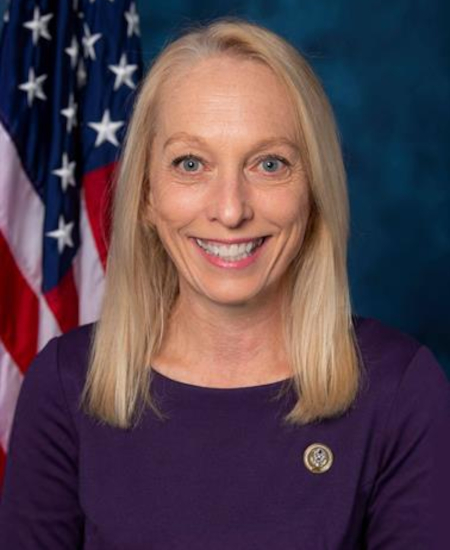
Rep. Mary Gay Scanlon
Total votes
2,837
all sessions
Attendance
97%
73 missed
Near the chamber average
With party
98%
of cast votes
Higher than 82% of chamber peers
Bipartisan score
1%
crosses aisle rarely
Lower than 82% of chamber peers
Sponsored
1,730
bills & resolutions
Higher than 79% of chamber peers
Committees
5
assignments
1,730 bills and resolutions
Sponsored bills
Total
1,730
Primary
79
Co-sponsor
1,651
This page
1,730
matching current filters
In committee Sep 24, 2026
1 co-sponsor
In committee Sep 24, 2026
1 co-sponsor
In committee Sep 17, 2026
0 co-sponsors
National Fossil Act of 2026
Maddy summaryThis bill designates the American mastodon as the national fossil mammal and the Tyrannosaurus rex as the national fossil dinosaur for the United States. It achieves this by amending Title 36 of the U.S. Code to officially recognize these specific species within the legal framework for national symbols. The changes update the relevant chapter heading to include "fossil" and add a new section to formally establish these designations.
Passed Sep 17, 2026
1 co-sponsor
Housing Tariff Exclusion Act
Maddy summaryThe Housing Tariff Exclusion Act directs the Secretary of Commerce to create a process allowing U.S. companies to request exemptions from tariffs on building materials that are not produced in sufficient quantities domestically. The bill specifically targets products used in residential construction, such as lumber, cement, and fixtures, while excluding rare earth elements and antidumping duties. Requests for "critical homebuilding products" must be decided within 15 days, while other covered articles have a 60-day review period, with all decisions published online for transparency. The legislation includes retroactive provisions to refund overpaid tariffs on goods imported before an exemption is granted and sets a sunset date of October 1, 2029, after which no new exclusions can be issued.
In committee Sep 16, 2026
1 co-sponsor
AM Radio for Every Vehicle Act of 2025
Maddy summaryThis bill requires all new passenger vehicles manufactured for sale in the U.S. to include AM radio as standard equipment (not an optional add-on) by 2027-2028, depending on manufacturer size. It mandates that AM radio receivers must be easily accessible to drivers and allows compliance through digital AM broadcast technology. During a transition period, manufacturers must clearly label vehicles without AM radio but cannot charge extra for this feature. The bill also mandates a GAO study on AM radio's role in emergency alerts and includes a 10-year sunset provision for the rule. It preempts state laws regarding AM radio access in vehicles.
Passed Sep 16, 2026
1 co-sponsor
Proposing an amendment to the Constitution of the United States to prohibit the use of slavery and involuntary servitude as a punishment for a crime.
Maddy summaryH.J. Res. 216 proposes a constitutional amendment to eliminate the exception in the Thirteenth Amendment that currently permits slavery and involuntary servitude as punishment for a crime. The resolution would amend the Constitution to explicitly state that neither slavery nor involuntary servitude may be imposed on anyone as a penalty for criminal conduct. This change would directly affect incarcerated individuals by prohibiting forced labor practices within the criminal justice system, while clarifying that voluntary work programs and community service alternatives remain permissible.
Criminal JusticeSupports Criminal JusticeProposes constitutional amendment to ban involuntary servitude as punishment, directly advancing criminal justice reform and protecting inmate rights.
Labor & EmploymentSupports Labor & EmploymentThe bill prohibits involuntary servitude and forced labor for prisoners, directly strengthening protections against exploitative labor practices.
In committee Sep 15, 2026
1 co-sponsor
WIC for Kids Act
Maddy summaryThe WIC for Kids Act expands eligibility for the Special Supplemental Nutrition Program for Women, Infants, and Children (WIC) to include children in households receiving Head Start services, food assistance on Indian reservations, or nutrition block grants in Puerto Rico, American Samoa, and the Northern Mariana Islands. The bill extends the standard certification period for WIC-eligible children from one year to two years and allows state agencies to align recertification dates for all eligible family members within a household. Additionally, it requires states to automatically certify infants born to participating mothers without requiring a new application and grants automatic eligibility to children in kinship care arrangements.
EducationSupports EducationThe bill expands WIC eligibility to children in Head Start, which is an early childhood education program. This indirectly supports educational access for young children.
HealthcareSupports HealthcareThe bill expands eligibility for the WIC program, which provides nutrition assistance, directly supporting public health and access to healthcare-related benefits for children.
In committee Sep 15, 2026
1 co-sponsor
Providing for congressional disapproval under chapter 8 of title 5, United States Code, of the rule submitted by U.S. Immigration and Customs Enforcement of the Department of Homeland Security relating to "Establishing a Fixed Time Period of Admission and an Extension of Stay Procedure for Nonimmigrant Academic Students, Exchange Visitors, and Representatives of Foreign Information Media".
Maddy summaryThis joint resolution seeks to overturn a Department of Homeland Security rule that would establish fixed time periods for admission and specific extension procedures for nonimmigrant academic students, exchange visitors, and representatives of foreign information media. If enacted, the bill would prevent this immigration regulation from taking effect, thereby maintaining the existing framework for how these individuals manage their stay in the United States. The measure directly affects international students, cultural exchange participants, and foreign journalists by blocking changes to their visa duration limits and renewal processes.
In committee Sep 14, 2026
1 co-sponsor
Ask Maddy
·
AI policy assistant
Ask Maddy about Mary Gay Scanlon
Scope: utah
Hi! I can help you understand Mary Gay Scanlon's legislative record. What would you like to know?
Try one of these
i
Maddy answers using official bill text and legislative records. Always verify before sharing.
Sources cited inline