

Maddy summaryHR 5267, the American Franchise Act, clarifies when franchisors can be considered joint employers of franchisee employees under federal labor laws. It defines "substantial direct and immediate control" over essential employment terms like wages, benefits, hours, hiring, and discipline - requiring franchisors to actively set these terms to be deemed joint employers. The bill explicitly excludes routine brand standards, training, or minimal safety requirements from constituting such control. This directly affects franchisors and franchisees by limiting joint employer liability to cases where franchisors exert significant, ongoing influence over core employment decisions. The law applies prospectively to new cases after enactment, not past disputes.
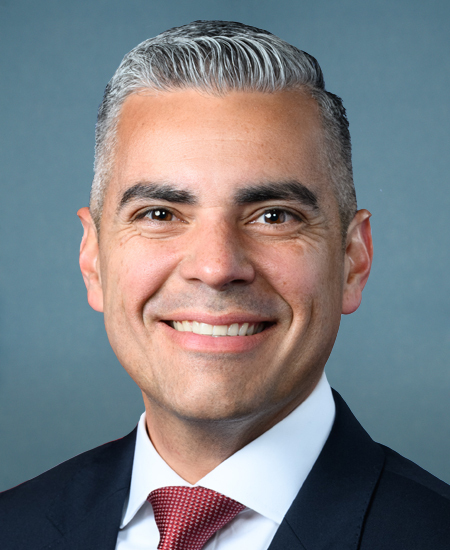
Rep. Juan Ciscomani
Sponsored bills
Maddy summaryThis bill, known as Kayleigh's Law Act of 2026, requires federal courts to issue permanent restraining orders against defendants convicted of certain serious crimes, prohibiting them from contacting their victims for the rest of their lives. The law applies specifically to individuals convicted of violent felonies or felony offenses involving sexual acts, including crimes like child exploitation and human trafficking. Courts must include these orders in sentencing, and violations are treated as contempt of court, while the only way to lift the order is if the conviction is overturned or pardoned. The bill also ensures that victims cannot be charged any fees for obtaining these protective orders and clarifies that the restrictions apply regardless of state laws.
Maddy summaryHR 1869 creates a new DOJ task force within the Criminal Division to investigate and prosecute international trade crimes, such as customs evasion, smuggling, and trade-based money laundering. It requires the DOJ to hire specialized prosecutors, coordinate with agencies like U.S. Customs and Border Protection, and focus on specific violations covered under statutes like 18 U.S.C. §§ 541-546 and 21 U.S.C. § 331. The bill authorizes $20 million in funding for fiscal year 2026 (with 80% dedicated to criminal prosecutions), mandates annual reports to Congress on enforcement activities, and requires the DOJ to develop multi-agency partnerships to address these crimes. This directly affects federal prosecutors, border enforcement agencies, and industries impacted by trade violations.
Maddy summaryThis House resolution commemorates the fifth anniversary of the U.S. military withdrawal from Afghanistan and honors veterans who served during the Gulf War era. It recognizes the approximately 8.4 million living veterans from this period, which includes service in operations such as Desert Shield, Desert Storm, Enduring Freedom, Iraqi Freedom, and Inherent Resolve. The bill also acknowledges the sacrifices of armed forces members and allies, including those killed during the Afghanistan evacuation.
National Law Enforcement Officers Remembrance, Support and Community Outreach Act. [ sic ] This bill temporarily directs the Department of the Interior to award a grant to the National Law Enforcement Officers Memorial Fund for the expenses associated with operating and enhancing the community outreach, public education, and officer safety and wellness programs of the National Law Enforcement Museum.
Maddy summaryThe Earn to Learn Act establishes a federal demonstration grant program that provides low-income students with matched savings accounts to help pay for postsecondary education. Under this mechanism, states or nonprofit organizations receive grants to match student contributions at a rate of $8 for every $100 deposited, while also providing financial literacy training and success coaching. The bill explicitly ensures that participation in the program does not reduce a student's eligibility for Federal Pell Grants or other federal student aid. It authorizes $100 million annually for five years to fund these grants, which are capped at $10 million per recipient, and requires the Department of Education to report on the program's impact on savings rates and educational retention.
Maddy summaryHR 7008, the Stop Insider Trading Act, restricts Members of Congress, their spouses, and dependent children from purchasing certain investments like stocks in publicly traded companies. It requires 7-14 days' advance public notice before selling any such investment, including the sale date, description, and number of shares. Exceptions apply for work-related transactions (e.g., employer compensation) and reinvesting dividends. Violations trigger a fee of $2,000 or 10% of the investment’s value (whichever is greater), plus any net gain, paid from personal funds - not congressional allowances or campaign donations. The bill aims to prevent conflicts of interest by increasing transparency around congressional financial dealings.
Maddy summaryThis bill designates the U.S. Postal Service facility at 13355 North Lon Adams Road in Marana, Arizona, as the "Mayor Ed Honea Memorial Post Office." It changes all official federal references to this location to reflect the new name, honoring Mayor Ed Honea through a commemorative designation. The bill has no policy or funding provisions - it is purely a naming change for the post office.
Maddy summaryHR 3393 designates the U.S. Postal Service facility at 12208 North 19th Avenue in Phoenix, Arizona, as the "Officer Zane T. Coolidge Post Office." The bill updates all official references to this location to reflect the new name. This is a commemorative act honoring Officer Zane T. Coolidge, with no substantive policy changes or direct impact on citizens or regulations. The designation applies only to the specific postal facility and its official records.
Chiricahua National Park Act This bill redesignates the Chiricahua National Monument in Arizona as the Chiricahua National Park. The bill directs the National Park Service (NPS) to (1) ensure the protection of traditional cultural and religious sites in the park, and (2) provide access to those sites by members of Indian tribes for traditional cultural and customary uses. Upon the request of an Indian tribe, the NPS may temporarily close to general public use one or more specific areas of the park to protect traditional cultural and customary uses in the area by members of the tribe. The closure must be limited to the smallest practicable area for the minimum period necessary for the traditional cultural and religious activities.