Maddy summaryThis House resolution formally mourns the passing of Dolly Parton and honors her extensive contributions to American music, philanthropy, and public service. It highlights her establishment of key organizations such as Dollywood and the Imagination Library, which have significantly impacted education, health care, and disaster relief in Tennessee. The bill recognizes specific achievements, including her support for pediatric medical research and wildlife conservation efforts. By acknowledging these accomplishments, the resolution aims to celebrate her legacy and encourage continued community service across the United States.

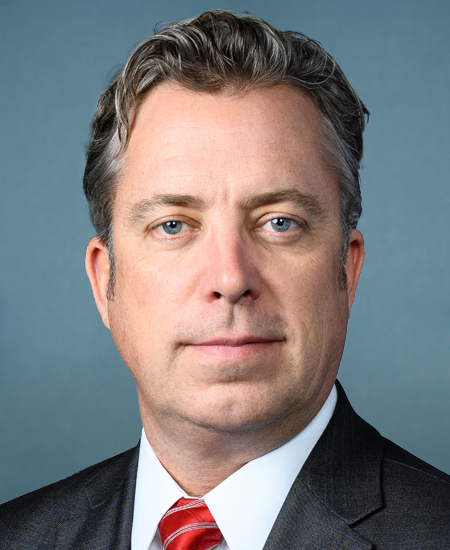
Rep. Andrew Ogles
Sponsored bills
Maddy summaryThe Consumer Financial Protection Accountability and Reform Act of 2026 significantly restructures the Bureau of Consumer Financial Protection by subjecting it to the regular federal appropriations process and establishing an independent Inspector General appointed by the President. The bill restricts the Bureau's supervisory authority over banks and credit unions with assets under $30 billion, allowing these institutions to elect to remain under their existing prudential regulators instead. It also introduces a safe harbor for small-dollar loans of $3,500 or less that meet specific structural requirements, shielding compliant lenders from civil money penalties and private damages. Additionally, the legislation creates federal standards for earned wage access services, requiring providers to offer a no-cost option for early wage access and prohibiting them from treating these services as credit or debt under federal law.
Maddy summaryHR 7008, the Stop Insider Trading Act, restricts Members of Congress, their spouses, and dependent children from purchasing certain investments like stocks in publicly traded companies. It requires 7-14 days' advance public notice before selling any such investment, including the sale date, description, and number of shares. Exceptions apply for work-related transactions (e.g., employer compensation) and reinvesting dividends. Violations trigger a fee of $2,000 or 10% of the investment’s value (whichever is greater), plus any net gain, paid from personal funds - not congressional allowances or campaign donations. The bill aims to prevent conflicts of interest by increasing transparency around congressional financial dealings.
Maddy summaryThis bill designates the U.S. Postal Service facility at 417 West 7th Street in Columbia, Tennessee, as the "Pharmacist’s Mate First Class John Harlan Willis Post Office Building." It updates all official references (including laws, maps, and documents) to reflect this new name. The bill affects the specific post office location and any federal records mentioning it, without altering postal services or creating new policies. This is a ceremonial naming bill with no substantive policy changes.
Maddy summaryThis bill renames a specific United States Postal Service facility in Knoxville, Tennessee, located at 300 Macedonia Lane, as the "Reverend Harold Middlebrook Post Office Building." It directly affects the USPS location by changing its official name and requires all federal references to the building (in laws, maps, documents, etc.) to reflect the new name. The key provision is the formal designation and updating of all official records to use the new name. This is a ceremonial naming bill with no substantive policy changes.
Maddy summaryThis resolution formally impeaches Allison Dale Burroughs, a federal judge in Massachusetts, for high crimes and misdemeanors. The primary provision alleges that she violated federal law and a Supreme Court ruling by issuing a stay on the President's decision to end temporary protected status for Somalia. The text claims her actions ignored congressional intent regarding judicial review and improperly usurped executive authority. If adopted by the House, this resolution would refer the article of impeachment to the Senate for a trial.
Maddy summaryThis bill, titled the Permanent CBDC Ban Act, aims to permanently prohibit the Federal Reserve from issuing a central bank digital currency. It achieves this by amending the Federal Reserve Act to remove the specific legal authority that allows the Reserve to create such a digital currency. The legislation directly affects the Federal Reserve by stripping away its power to launch a digital version of the dollar. By deleting the relevant subsection of the law, the bill ensures that the Reserve cannot issue a CBDC in the future.
Maddy summaryThe Opening Programs to Organic Farms Act requires the Secretary of Agriculture to conduct a study on the obstacles preventing certified organic farms and those transitioning to organic production from participating in federal programs. Within 180 days of enactment, the Department must publish a report detailing specific barriers related to eligibility, payment rates, application processes, and staff knowledge across various agricultural initiatives. The report will also include data on farm participation levels and outline administrative actions the Secretary intends to take to address these issues. Additionally, the law mandates annual updates for three years to track progress in removing these barriers and to provide any necessary recommendations for statutory changes.
Maddy summaryThe Preventing Forced Abortions Act of 2026 prohibits federal courts from enforcing any part of a surrogacy agreement that forces a surrogate mother to have an abortion. Instead, the law mandates that courts must uphold the financial compensation promised to the surrogate, even if the contract includes penalties or reduced payments for refusing an abortion. This legislation grants federal district courts specific authority to hear civil cases involving surrogacy contracts and defines key terms such as "abortion" and "surrogate mother" to clarify the scope of the protections.
Maddy summaryThe Main Street Capital Access Act reduces regulatory burdens for smaller banks, particularly those with less than $10 billion in assets. Key provisions include a 3-year phase-in period for new banks to meet capital requirements, lower leverage ratio requirements for rural banks (7.5% for the first 2 years), and a 30-day review process for business plan deviations. The bill also establishes an Office of Independent Examination Review, sets specific timelines for examinations (270 days) and reports (90 days), and creates a "least cost exception" for bank resolutions to prevent excessive concentration of the banking system. These changes aim to promote new bank formation, improve regulatory efficiency, and support community banking while maintaining financial stability.