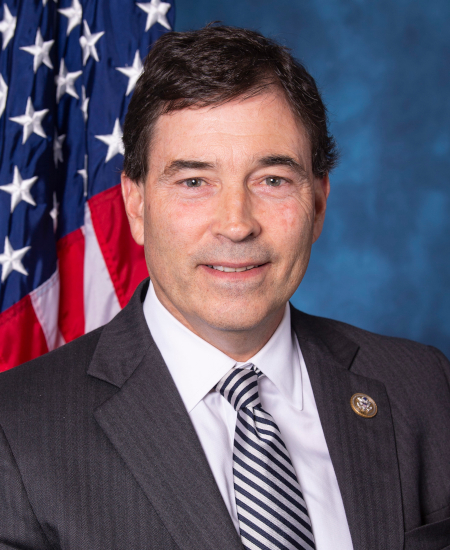
Photo of Troy Balderson
R United States House · District 12 · Ohio On the 2026 ballot

Rep. Troy Balderson

Compare
Total votes
2,818
all sessions
Attendance
99%
20 missed
Near the chamber average
With party
96%
of cast votes
Near the chamber average
Bipartisan score
2%
crosses aisle rarely
Near the chamber average
Sponsored
795
bills & resolutions
Lower than 76% of chamber peers
Committees
4
assignments
795 bills and resolutions

Sponsored bills

Total
795
Primary
52
Co-sponsor
743
This page
795
matching current filters
Co-sponsor HR 8781
In committee · Texas House · Co-sponsor
Title IX Clarification Act of 2026

Maddy summaryThe Title IX Clarification Act of 2026 amends federal education law to explicitly define the terms "sex," "female," and "male" based on biological characteristics. Specifically, it states that "sex" refers to an individual's biologically determined status as male or female, while "female" and "male" are defined by the presence of specific reproductive systems capable of producing ova or sperm, respectively. These definitions apply to all education programs and activities that receive federal financial assistance starting on the date the bill becomes law. The legislation aims to clarify existing statutes by removing ambiguity around biological sex definitions in the context of Title IX protections.

In committee Sep 8, 2026 1 co-sponsor
Co-sponsor HR 7502
In committee · Texas House · Co-sponsor
Recycled Materials Attribution Act of 2026

Maddy summaryThe Recycled Materials Attribution Act of 2026 allows companies to use mass balance accounting to support claims about recycled content in their products, provided they follow independent third-party certification rules. This method lets manufacturers mix recycled materials with conventional ones in the same supply chain while still crediting the final product with a specific amount of recycled content based on documented inputs. The Federal Trade Commission will update its existing environmental marketing guidelines to reflect these new standards and will enforce the rules against misleading recycled content claims. Additionally, the law prevents states from passing their own conflicting regulations on how recycled content claims are made or enforced.

In committee Sep 1, 2026 1 co-sponsor
Co-sponsor HR 4635
Passed · Texas House · Co-sponsor
To designate the facility of the United States Postal Service located at 890 East 152nd Street in Cleveland, Ohio, as the Technical Sergeant Alma Gladys Minter Post Office Building.

Maddy summaryThis bill (HR 4635) designates the U.S. Postal Service facility at 890 East 152nd Street in Cleveland, Ohio, as the "Technical Sergeant Alma Gladys Minter Post Office Building." It updates all official references to the location to use this new name, with no policy changes or direct impact on residents or services beyond the ceremonial renaming.

Passed Aug 6, 2026 1 co-sponsor
Co-sponsor HRES 1475
In committee · Texas House · Co-sponsor
Expressing support for the designation of the first week of August as "National Community Health Center Week", and encouraging all Americans to participate by visiting their local community health center and celebrating the important partnership between health centers and the communities they serve.

Maddy summaryThis resolution expresses support for designating the first week of August as National Community Health Center Week to honor the contributions of these facilities. It encourages all Americans to visit their local health centers during this time to celebrate the partnership between these organizations and the communities they serve. The bill highlights how community health centers provide affordable, comprehensive care to millions of people, particularly in rural and underserved areas, while integrating services like dental care, behavioral health, and pharmacy support. By recognizing these centers, the resolution aims to raise awareness of their role in improving public health outcomes and supporting local economies.

In committee Aug 3, 2026 1 co-sponsor
Primary HR 9332
In committee · Texas House · Lead sponsor
Load Forecasting Enhancement Act

Maddy summaryThe Load Forecasting Enhancement Act requires the Federal Energy Regulatory Commission to create regional joint boards made up of state commission representatives and a commission member to study how electric utilities predict energy demand. These boards will investigate methods to improve the accuracy and transparency of these forecasts to ensure reliable and affordable electricity service, then report their findings to Congress within a year. Once the report is submitted, the law mandates that state regulators incorporate these recommended forecasting standards into their oversight of electric utilities, while exempting nonregulated utilities from certain requirements. Additionally, the bill updates existing energy laws to include procedures for improving the accuracy and transparency of load forecasting in state energy conservation plans.

In committee Jul 21, 2026 0 co-sponsors
Primary HR 3747
Passed · Texas House · Lead sponsor
Accelerating Access to Dementia and Alzheimer’s Provider Training Act

Maddy summaryThe AADAPT Act reauthorizes and expands Project ECHO grants to improve Alzheimer’s and dementia care through technology-enabled training. It specifically funds grants for healthcare providers in rural, frontier, or medically underserved areas to enhance early diagnosis, quality care, and provider retention for dementia patients. The bill authorizes $1 million annually (2027-2032) for these dementia-focused training programs, requiring funds to supplement - not replace - existing resources. This directly supports primary care providers licensed to serve underserved communities, using collaborative online learning to address care gaps.

Passed Jul 21, 2026 0 co-sponsors
Co-sponsor HR 2004
In committee · Texas House · Co-sponsor
Tyler’s Law

Maddy summaryHR 2004, titled "Tyler’s Law," requires the Secretary of Health and Human Services to study how often hospital emergency departments test for fentanyl during overdose cases (beyond standard drug tests), including associated costs, patient benefits/risks, and impacts on privacy and patient-physician relationships. The study must be completed within one year of the bill's enactment. Based on the study results, the Secretary must issue guidance within six months on whether emergency departments should routinely test for fentanyl, how to inform clinicians about test contents, and how such testing may affect future overdose risks and health outcomes. This bill directly affects hospital emergency departments and patients experiencing overdoses by shaping future testing protocols.

In committee Jul 21, 2026 1 co-sponsor
Co-sponsor HR 1266
In committee · Texas House · Co-sponsor
Combating Illicit Xylazine Act

Maddy summaryHR 1266, the Combating Illicit Xylazine Act, adds xylazine - a veterinary sedative increasingly found in illicit drug mixtures - to Schedule III of the Controlled Substances Act, regulating its use and trafficking. It directly affects veterinarians, animal owners, and manufacturers by allowing xylazine to be legally dispensed for animal use under specific veterinary prescriptions, while prohibiting non-veterinary human use. The bill includes transition periods (60 days for practitioners, 1 year for labeling) to ease compliance for manufacturers and practitioners, and requires the DEA and FDA to expedite necessary applications. It also mandates two congressional reports on xylazine's illicit use and trafficking patterns, and directs the Sentencing Commission to review penalties for offenses involving xylazine.

In committee Jul 21, 2026 1 co-sponsor
Co-sponsor HR 9641
In committee · Texas House · Co-sponsor
Essential Caregivers Act of 2026

Maddy summaryThe Essential Caregivers Act of 2026 requires nursing homes, long-term care hospitals, rehabilitation facilities, and intermediate care facilities to allow two chosen family members or friends to visit residents during times when regular visitation is suspended. These essential caregivers must agree to follow the facility's existing safety and infection control rules, which are no more restrictive than those applied to staff. While facilities can limit access for the first seven days of a suspension or deny entry if a caregiver shows symptoms of a serious infectious disease, they cannot block visits for end-of-life care. Additionally, the bill mandates that complaints about denied access to essential caregivers be investigated and resolved within three days.

In committee Jul 15, 2026 1 co-sponsor
Showing 1 to 10 of 795 bills
1 2 3 80 Next