Maddy summaryThe Nitrous Oxide Safety Act of 2026 would classify consumer products containing nitrous oxide as banned hazardous items under federal law, except for specific exceptions. The bill prohibits the sale of nitrous oxide products for recreational use while allowing continued sales for medical and dental treatments, food production in commercial kitchens, research and development activities, and food propellant applications. This legislation directly affects manufacturers, retailers, and consumers by restricting access to nitrous oxide in consumer products after 180 days from enactment. The law defines nitrous oxide as the gas known as laughing gas or whippits and specifies which entities and activities are exempt from the ban.

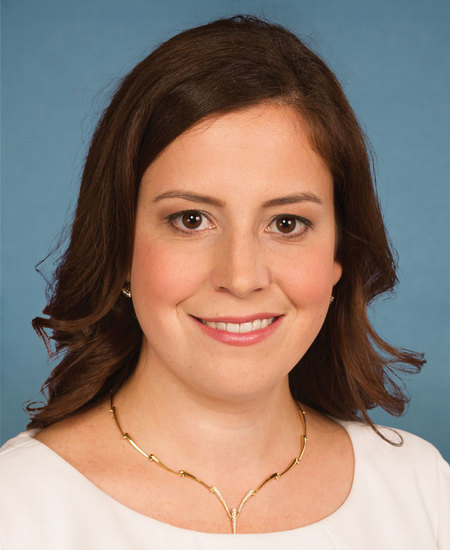
Rep. Elise M. Stefanik
Sponsored bills
Maddy summaryThis bill amends the existing Northern Border Security Review Act to update deadlines and requirements for border security assessments. It requires the Department of Homeland Security Secretary to submit a northern border threat analysis by September 2, 2026, and every two years after, with strategy updates due 90 days after each analysis. The bill also mandates classified briefings to congressional committees 30 days after each threat analysis and directs the development of performance measures for Air and Marine Operations within six months of enactment. These changes directly affect the DHS Secretary, congressional committees, and U.S. Customs and Border Protection's operations along the northern border.
Maddy summaryThe BOP Direct-Hire Authority Act allows the Bureau of Prisons (BOP) Director to directly hire qualified candidates for competitive service positions at BOP facilities without following standard federal hiring rules, such as competitive exams or public announcements. This change applies only to BOP facilities and aims to speed up staffing for critical roles. The authority expires once 96% of the competitive positions (as of the bill’s enactment date) are filled. The bill directly affects BOP hiring processes and does not alter existing pay or benefits for positions.
Maddy summaryThis bill requires all new passenger vehicles manufactured for sale in the U.S. to include AM radio as standard equipment (not an optional add-on) by 2027-2028, depending on manufacturer size. It mandates that AM radio receivers must be easily accessible to drivers and allows compliance through digital AM broadcast technology. During a transition period, manufacturers must clearly label vehicles without AM radio but cannot charge extra for this feature. The bill also mandates a GAO study on AM radio's role in emergency alerts and includes a 10-year sunset provision for the rule. It preempts state laws regarding AM radio access in vehicles.
Maddy summaryThe Pray Safe Act of 2025 establishes a federal Clearinghouse within the Department of Homeland Security to provide houses of worship, faith-based organizations, and nonprofit groups at risk of threats with evidence-based safety resources. The Clearinghouse will publish online best practices for security planning, facility safety, and incident response, while listing existing federal and state grant programs to help these organizations implement these measures. It requires annual updates based on user feedback and includes a centralized resource section for contacts like Protective Security Advisors and Fusion Centers. The program expires four years after enactment and does not create new funding but coordinates existing federal and state safety resources.
Maddy summaryHR 1869 creates a new DOJ task force within the Criminal Division to investigate and prosecute international trade crimes, such as customs evasion, smuggling, and trade-based money laundering. It requires the DOJ to hire specialized prosecutors, coordinate with agencies like U.S. Customs and Border Protection, and focus on specific violations covered under statutes like 18 U.S.C. §§ 541-546 and 21 U.S.C. § 331. The bill authorizes $20 million in funding for fiscal year 2026 (with 80% dedicated to criminal prosecutions), mandates annual reports to Congress on enforcement activities, and requires the DOJ to develop multi-agency partnerships to address these crimes. This directly affects federal prosecutors, border enforcement agencies, and industries impacted by trade violations.
Maddy summaryHR 1706 designates the U.S. Postal Service facility at 1200 William Street, Room 200, in Buffalo, New York, as the "William J. Donovan Post Office Building." The bill updates all federal references in laws, maps, and documents to use this new name for the building. This is a ceremonial naming bill with no policy changes or direct impact on citizens or programs. It solely honors William J. Donovan, a notable historical figure, through official renaming of the post office location.
Maddy summaryThis bill designates the U.S. Postal Service facility at 86 Main Street in Haverstraw, New York, as the "Paul Piperato Post Office Building." It updates all official references - such as maps, documents, and records - to reflect this new name. The change directly affects the postal facility and any official communications or records mentioning its location. No policy changes or new requirements are introduced; it is solely a commemorative naming action.
Maddy summaryThis bill names a U.S. Postal Service facility at 298 Route 292 in Holmes, New York, as the "Sheriff Adrian 'Butch' Anderson Post Office Building." It updates all official references in federal documents, maps, and records to reflect this new name for the location. The bill has no policy provisions or direct impact on constituents beyond commemoration.
Maddy summaryThis bill renames a U.S. Postal Service facility at 80 Prospect Street in Avon, New York, as the "Officer Anthony Mazurkiewicz Memorial Post Office Building" to honor the late officer. It updates all official government references, documents, and records to use the new name. The bill has no policy impact beyond this ceremonial designation, directly affecting only the postal facility's official identification.