Maddy summaryThis bill requires the Federal Energy Regulatory Commission (FERC) to submit annual reports to Congress about pending hydropower license applications. Specifically, FERC must report on licenses where licensees notified them at least 3 years prior but haven't received new licenses yet, including details like notification dates, docket numbers, application status, and upcoming proceedings. The reports aim to increase transparency in the relicensing process for existing hydropower facilities. This directly affects FERC (which must provide the reports) and Congress (which receives them), with no direct impact on hydropower operators or the licensing outcome itself.

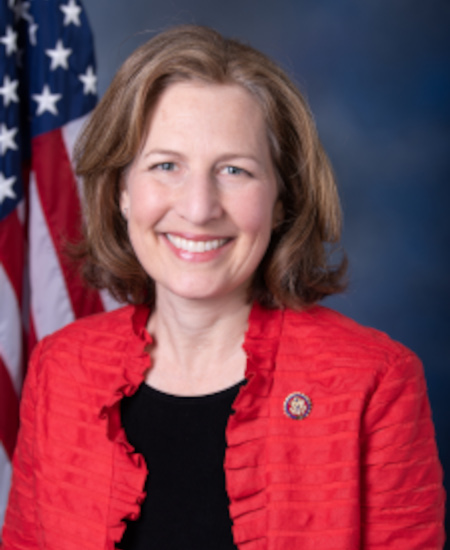
Rep. Kim Schrier
Sponsored bills
Maddy summaryThe Affordable Innovation for the Grid Act directs the Department of Energy to study how artificial intelligence and high-performance computing can improve the reliability and efficiency of the national power grid. This assessment will specifically examine how these technologies can speed up the process of connecting new power sources to the grid and identify any technical or cybersecurity barriers to their use. Within one year of passing, the Department of Energy must submit a report to Congress outlining its findings and offering recommendations to overcome identified limitations and encourage wider adoption of these tools. The bill primarily affects federal agencies responsible for energy oversight and the electric power industry, aiming to gather data rather than immediately changing laws.
Maddy summaryThis bill requires the Congressional Budget Office (CBO) to identify potential budget savings from preventive health care in its scoring of proposed legislation. Specifically, it directs the CBO Director to describe and estimate reductions in future federal spending resulting from preventive health interventions - such as screenings or vaccinations - when requested by congressional budget committee leaders. These savings would be included as supplementary information in budget projections, but not used to meet budget enforcement rules. The bill does not change actual health programs or funding; it only modifies how the CBO accounts for potential long-term savings from preventive care in budget analysis.
Maddy summaryHR 2004, titled "Tyler’s Law," requires the Secretary of Health and Human Services to study how often hospital emergency departments test for fentanyl during overdose cases (beyond standard drug tests), including associated costs, patient benefits/risks, and impacts on privacy and patient-physician relationships. The study must be completed within one year of the bill's enactment. Based on the study results, the Secretary must issue guidance within six months on whether emergency departments should routinely test for fentanyl, how to inform clinicians about test contents, and how such testing may affect future overdose risks and health outcomes. This bill directly affects hospital emergency departments and patients experiencing overdoses by shaping future testing protocols.
Maddy summaryHR 1266, the Combating Illicit Xylazine Act, adds xylazine - a veterinary sedative increasingly found in illicit drug mixtures - to Schedule III of the Controlled Substances Act, regulating its use and trafficking. It directly affects veterinarians, animal owners, and manufacturers by allowing xylazine to be legally dispensed for animal use under specific veterinary prescriptions, while prohibiting non-veterinary human use. The bill includes transition periods (60 days for practitioners, 1 year for labeling) to ease compliance for manufacturers and practitioners, and requires the DEA and FDA to expedite necessary applications. It also mandates two congressional reports on xylazine's illicit use and trafficking patterns, and directs the Sentencing Commission to review penalties for offenses involving xylazine.
Maddy summaryThis bill requires all new passenger vehicles manufactured for sale in the U.S. to include AM radio as standard equipment (not an optional add-on) by 2027-2028, depending on manufacturer size. It mandates that AM radio receivers must be easily accessible to drivers and allows compliance through digital AM broadcast technology. During a transition period, manufacturers must clearly label vehicles without AM radio but cannot charge extra for this feature. The bill also mandates a GAO study on AM radio's role in emergency alerts and includes a 10-year sunset provision for the rule. It preempts state laws regarding AM radio access in vehicles.
Maddy summaryThis House resolution expresses support for designating the week of September 19 through September 26, 2026, as National Estuaries Week to raise public awareness about the importance of these coastal ecosystems. The bill highlights that estuaries support a significant portion of the U.S. population and economy while providing critical services such as flood control, water filtration, and habitat for fish and wildlife. It acknowledges ongoing threats to estuary health, including pollution and sea level changes, and recognizes the efforts of government agencies, organizations, and individuals working to protect and restore these areas.
Maddy summaryThe 9-8-8 Crisis Response Act expands federal funding for mental health crisis response and broadens Medicaid coverage to include regional lifeline call centers and crisis stabilization facilities. The bill increases the annual budget for the Mental Health Crisis Response Partnership Pilot Program from $10 million to $100 million for fiscal years 2027 through 2029. It also allows states to use Medicaid funds to pay for these new services, with the federal government covering 85 percent of the costs. To qualify, crisis stabilization facilities must provide 24-hour care without rejecting patients based on their ability to pay or other factors, and they must maintain an average patient stay of less than 150 hours.
Maddy summaryThe 9-8-8 Implementation Act of 2026 expands federal funding and mandates insurance coverage for behavioral health crisis services, directly affecting individuals experiencing mental health or substance use emergencies as well as the providers who serve them. The bill authorizes grants to upgrade local lifeline call centers, build new crisis stabilization facilities, and train a larger workforce of behavioral health professionals. It requires Medicare, Medicaid, private group health plans, TRICARE, and other federal insurance programs to cover crisis response services with financial terms no more restrictive than standard medical care. Additionally, the legislation establishes a federal panel to develop training protocols for 9-1-1 dispatchers to better connect callers to appropriate crisis care rather than law enforcement responses.
Maddy summaryThe INSULIN Act of 2026 mandates that group and individual health insurance plans cap out-of-pocket costs for selected insulin products at $35 per 30-day supply, effective for plan years beginning on or after January 1, 2028. This cost limit applies to a variety of insulin types and delivery devices, with the cap set at the lesser of $35 or 25 percent of the negotiated price net of concessions. The bill also prohibits insurers from imposing deductibles or prior authorization requirements for these covered products unless clinically justified for safety reasons. Additionally, the legislation directs the Department of Health and Human Services to fund a resource center and hotline to help uninsured individuals find affordable insulin assistance programs, while requiring the Government Accountability Office to study the demographics of uninsured insulin users. Finally, it creates an expedited review process for biosimilar insulin applications when the Secretary determines there is inadequate competition in the market.