Maddy summaryThis House resolution supports designating the week of September 20 through September 26, 2026, as "Gold Star Families Remembrance Week." It aims to honor the families of service members and veterans who have died in the line of duty. The bill encourages Americans to observe this annual week by performing acts of community service and celebrating the lives of those who made the ultimate sacrifice.

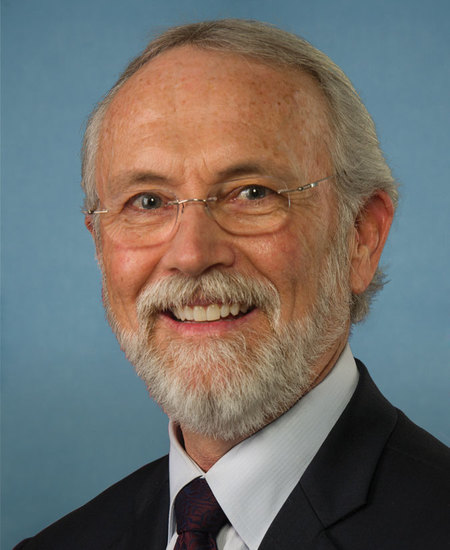
Rep. Dan Newhouse
Sponsored bills
Maddy summaryThis bill amends the existing Northern Border Security Review Act to update deadlines and requirements for border security assessments. It requires the Department of Homeland Security Secretary to submit a northern border threat analysis by September 2, 2026, and every two years after, with strategy updates due 90 days after each analysis. The bill also mandates classified briefings to congressional committees 30 days after each threat analysis and directs the development of performance measures for Air and Marine Operations within six months of enactment. These changes directly affect the DHS Secretary, congressional committees, and U.S. Customs and Border Protection's operations along the northern border.
Save Our Sequoias Act This bill provides for the conservation of giant sequoia trees ( Sequoiadendron giganteum ) in California. Specifically, it provides statutory authority for the Giant Sequoia Lands Coalition and outlines the coalition's duties. The coalition must submit a Giant Sequoia Health and Resiliency Assessment and annually update it. The information from the assessment must be made available so the information can be integrated into certain other plans. The coalition must also create and maintain a website that contains the assessment, educational materials, searchable information about individual giant sequoia groves, and a searchable database to track the status and costs of reforestation and rehabilitation activities. In addition, the bill declares an emergency on certain public lands and allows officials to carry out protection plans during the emergency to respond to the threat of wildfires, insects, and drought. The emergency expires after seven years. The Department of the Interior must develop and implement a Giant Sequoia Reforestation and Rehabilitation Strategy. Finally, the bill establishes a variety of programs and funds to support the conservation of giant sequoias.
Maddy summaryThis bill requires all new passenger vehicles manufactured for sale in the U.S. to include AM radio as standard equipment (not an optional add-on) by 2027-2028, depending on manufacturer size. It mandates that AM radio receivers must be easily accessible to drivers and allows compliance through digital AM broadcast technology. During a transition period, manufacturers must clearly label vehicles without AM radio but cannot charge extra for this feature. The bill also mandates a GAO study on AM radio's role in emergency alerts and includes a 10-year sunset provision for the rule. It preempts state laws regarding AM radio access in vehicles.
Maddy summaryThis bill establishes a framework for the Department of the Interior to work with Indian Tribes and Tribal organizations to restore and manage buffalo populations on Indian lands. It authorizes the Secretary of the Interior to provide contracts, grants, and technical assistance to support tribal buffalo restoration programs, commercial buffalo activities, and mobile meat processing facilities. The legislation also requires ongoing consultation between the Department and tribes on buffalo management initiatives and ensures that culturally sensitive tribal information remains confidential. Additionally, the bill allows for the transfer of surplus buffalo from federal lands to Indian lands and explicitly preserves existing treaty rights of Indian Tribes, with all provisions set to expire seven years after enactment.
Maddy summaryThis House resolution supports designating the week of September 14 through September 18, 2026, as National Clean Energy Week to highlight the growth of zero- and low-emission energy sources. The bill cites a Department of Energy report stating that the U.S. energy sector employed approximately 8.5 million people at the end of 2024 and emphasizes that clean energy jobs are local and cannot be outsourced. It encourages federal, state, and private entities to invest in affordable clean technologies and specifically applauds the work of Department of Energy National Laboratories across multiple states.
Maddy summaryHR 1869 creates a new DOJ task force within the Criminal Division to investigate and prosecute international trade crimes, such as customs evasion, smuggling, and trade-based money laundering. It requires the DOJ to hire specialized prosecutors, coordinate with agencies like U.S. Customs and Border Protection, and focus on specific violations covered under statutes like 18 U.S.C. §§ 541-546 and 21 U.S.C. § 331. The bill authorizes $20 million in funding for fiscal year 2026 (with 80% dedicated to criminal prosecutions), mandates annual reports to Congress on enforcement activities, and requires the DOJ to develop multi-agency partnerships to address these crimes. This directly affects federal prosecutors, border enforcement agencies, and industries impacted by trade violations.
Maddy summaryHR 5267, the American Franchise Act, clarifies when franchisors can be considered joint employers of franchisee employees under federal labor laws. It defines "substantial direct and immediate control" over essential employment terms like wages, benefits, hours, hiring, and discipline - requiring franchisors to actively set these terms to be deemed joint employers. The bill explicitly excludes routine brand standards, training, or minimal safety requirements from constituting such control. This directly affects franchisors and franchisees by limiting joint employer liability to cases where franchisors exert significant, ongoing influence over core employment decisions. The law applies prospectively to new cases after enactment, not past disputes.
Maddy summaryThis House resolution marks the 25th anniversary of the September 11, 2001 terrorist attacks by formally honoring the memory of the nearly 3,000 victims and recognizing the sacrifices made by first responders, military personnel, and the passengers of United Airlines Flight 93. The bill acknowledges the ongoing health challenges faced by survivors and responders, highlighting the role of the World Trade Center Health Program in providing long-term medical support. It also credits charitable organizations and community groups that have continued to assist victims' families and veterans over the past two decades. Finally, the resolution urges the American public to observe the anniversary with ceremonies and reaffirms Congress's commitment to remembering the events and lessons of that day.
Maddy summaryThe Freedom to Home Distill Act would allow individuals to legally produce small amounts of alcohol at home for personal use without paying federal excise taxes or facing criminal penalties. To qualify, a household could distill up to 10 proof gallons per year if it has one adult, or 20 proof gallons if it has two or more adults, provided the spirits are never sold or transferred to others. The bill exempts home distillers from standard business requirements such as registering their equipment and paying taxes, but it mandates that any stills purchased for this purpose must have specific safety features like pressure release valves and a capacity of no more than 50 gallons. These changes would take effect for spirits produced after December 31, 2026.