Maddy summaryThis House resolution expresses support for designating September 22, 2026, as "National Hispanic Nurses Day" to honor the contributions of Hispanic nurses to the U.S. healthcare system. It specifically recognizes the National Association of Hispanic Nurses as the leading organization representing and advocating for this group of professionals. The bill encourages the public to observe the day with ceremonies and activities that highlight the role of these nurses in reducing health disparities and providing culturally competent care.

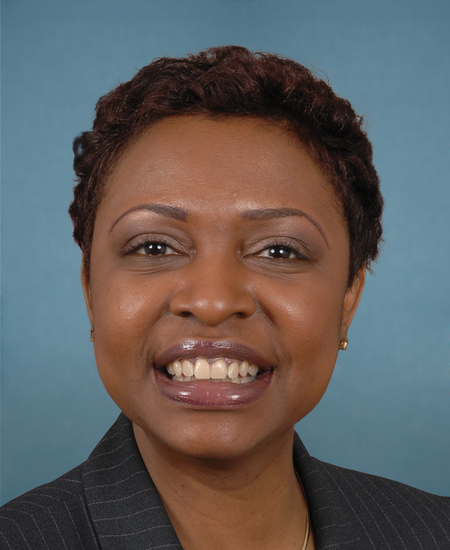
Rep. Yvette D. Clarke
Sponsored bills
Maddy summaryThis House resolution expresses support for recognizing Nigerian Heritage Month to celebrate the history, culture, and contributions of Nigerians and Nigerian Americans in the United States. It highlights the strong bilateral relationship between the two nations and notes that Nigerian Americans are a highly educated immigrant group making significant impacts in fields such as medicine, technology, and business. The bill encourages federal, state, and local governments, along with educational institutions, to observe this month through programs and ceremonies that highlight Nigerian heritage.
Maddy summaryThe Debt-Free College Act of 2026 establishes a state-federal partnership that provides federal grants to states to cover the unmet financial need of eligible students attending in-state public colleges, effectively making tuition debt-free for those who qualify. To participate, states must commit to capping tuition increases at inflation levels, maintaining their current level of funding for higher education, and implementing student success programs that support low-income and underserved populations. The bill also creates a separate five-year grant program for specific minority-serving institutions and tribal colleges to help them cover student costs, while simultaneously expanding federal financial aid eligibility to include "Dreamer students" who entered the United States as minors under certain conditions.
Maddy summaryThe Stop Corporate Takeovers of Physicians Act of 2026 prohibits non-physician entities from owning, controlling, or employing licensed medical professionals, requiring that medical practices be majority-owned and controlled by the clinicians who work there. The bill grants physicians and other advanced practice providers protections against non-compete agreements and bans health care providers from interfering with clinical judgment through administrative controls such as limiting patient visit times or dictating diagnostic codes. Additionally, it imposes strict restrictions on management services organizations to prevent them from exercising de facto control over medical practices, including prohibitions on controlling hiring, compensation, and billing decisions. Enforcement is handled by the Federal Trade Commission, which can treat violations as unfair business practices, while individuals and state attorneys general are also granted the right to sue for damages and injunctive relief.
Maddy summaryThe Backlog Justice Act of 2026 aims to reduce the backlog of untested sexual assault evidence kits by requiring the Attorney General to create a public database tracking inventory levels and laboratory processing times across state and local jurisdictions. To address staffing shortages, the bill authorizes the FBI to develop training programs for forensic analysts and DNA technical leaders, allowing states and localities to hire individuals who have completed this federal training. Additionally, it funds a program for the FBI to collaborate with state and local providers on validating new DNA processing technologies and sharing related protocols. The legislation also provides increased grant funding to states that implement electronic tracking systems allowing sexual assault survivors to monitor the status of their evidence kits from collection through final disposition.
Maddy summaryThe Equity in Research Act directs the National Science Foundation to create a grant program that provides financial assistance to specific institutions of higher education for improving their research capabilities. These grants, ranging from $1 million to $5 million per institution, can be used to upgrade building infrastructure, purchase materials and equipment, and cover personnel costs related to research activities. The bill targets a defined group of schools, including Historically Black Colleges and Universities, Hispanic-serving institutions, Tribal colleges, and various other minority-serving and land-grant universities. To fund this initiative, the legislation authorizes $50 million in appropriations for fiscal year 2027 and each subsequent year.
Maddy summaryThe Food for Thought Act of 2026 establishes a competitive grant program administered by the Department of Agriculture to provide free meals and snacks to low-income college students at eligible institutions, including community colleges, historically Black colleges and universities, and other minority-serving schools. To qualify, an institution must have at least 20 percent of its undergraduate students eligible for Federal Pell Grants, and grants are awarded for a maximum duration of two years with funds restricted to meal preparation, outreach, and limited equipment purchases. Recipients are required to prioritize students who receive Pell Grants or report food insecurity, while also evaluating institutional policies that may create barriers to enrollment and referring students to other federal benefit programs like SNAP. The bill authorizes appropriations for fiscal years 2027 through 2032 and mandates that the Secretary of Agriculture submit reports to Congress on the program's impact on student retention and completion rates.