

In committee Sep 24, 2026
1 co-sponsor
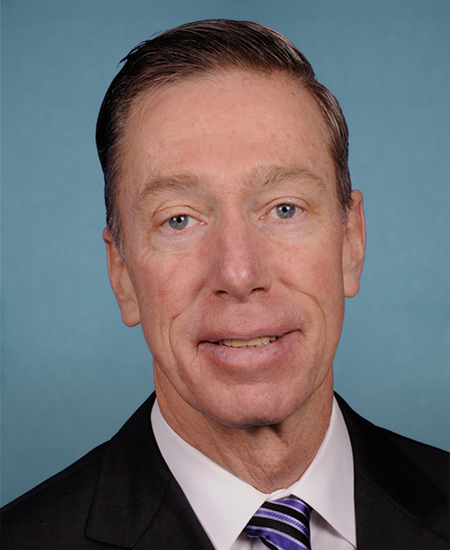
Rep. Stephen F. Lynch
Total votes
2,837
all sessions
Attendance
98%
68 missed
Lower than 81% of chamber peers
With party
97%
of cast votes
Near the chamber average
Bipartisan score
2%
crosses aisle rarely
Near the chamber average
Sponsored
1,646
bills & resolutions
Higher than 84% of chamber peers
Committees
7
assignments
1,646 bills and resolutions
Sponsored bills
Total
1,646
Primary
61
Co-sponsor
1,585
This page
1,646
matching current filters
In committee Sep 24, 2026
1 co-sponsor
In committee Sep 21, 2026
1 co-sponsor
Expressing the sense of the House of Representatives that the United States Postal Service should issue a commemorative postage stamp honoring Lewis Howard Latimer, in recognition of his distinctive life, scientific achievements, and his civic contributions to technological advancement, to commemorate the 178th year anniversary of his birth and that the Citizens Stamp Advisory Committee should recommend to the Postmaster General that such a stamp be issued.
Maddy summaryThis resolution expresses the sense of the House of Representatives that the United States Postal Service should issue a commemorative postage stamp honoring Lewis Howard Latimer, an African-American scientist and inventor who lived from 1848 to 1928. The bill highlights his significant contributions to technology, including improvements to carbon filament manufacturing for light bulbs and the development of early air conditioning systems. It also recognizes his role as a social justice advocate and his collaboration with prominent inventors such as Thomas Edison and Alexander Graham Bell. The resolution specifically requests that the Citizens Stamp Advisory Committee recommend this stamp to the Postmaster General in commemoration of the 178th anniversary of Latimer's birth.
In committee Sep 17, 2026
1 co-sponsor
Expressing support for designation of the week of September 13 through 19, 2026, as "National Adult Education and Family Literacy Week".
Maddy summaryThis House resolution expresses support for designating the week of September 13 through 19, 2026, as National Adult Education and Family Literacy Week to raise public awareness about these programs. The bill cites data showing that a significant portion of U.S. adults lack basic literacy, numeracy, or English proficiency skills, which are described as essential for economic competitiveness and national security. It encourages partnerships among educators, employers, and community organizations to expand access to training in areas such as digital literacy and workforce preparation. Additionally, the resolution calls on public, private, and nonprofit entities to support these initiatives to help individuals achieve economic mobility and strengthen their families and communities.
In committee Sep 16, 2026
1 co-sponsor
Expressing the sense of the House of Representatives that the People's Republic of China has engaged in the arbitrary or wrongful detention of American academics and has otherwise harmed the prospects for scientific collaboration and people-to-people exchanges between the United States and the People's Republic of China.
Maddy summaryThis House resolution formally condemns China's practice of detaining American academics and urges the U.S. government to prioritize securing their release, specifically highlighting the cases of Dr. Youlin Chen and Min Zin. It calls on the Secretary of State to consider raising the travel advisory level for China from Level 2 to Level 3 and to add a specific warning indicator regarding wrongful detention risks. Additionally, the bill requests a review of whether China meets the criteria for designation as a state sponsor of wrongful detention under existing federal law.
In committee Sep 16, 2026
0 co-sponsors
Justice for Ukrainian Children Act
Maddy summaryThe Justice for Ukrainian Children Act directs the U.S. government to support efforts to locate and rescue Ukrainian children forcibly transferred by Russia, while imposing mandatory sanctions on foreign individuals who facilitate these transfers. The bill authorizes at least $15 million annually from fiscal years 2027 through 2032 to fund evidence collection, maintain a centralized database, and assist in the rehabilitation of affected children. It requires the President to block the assets and revoke the visas of any foreign person found to have knowingly participated in the abduction or indoctrination of Ukrainian minors, with limited exceptions for humanitarian aid and national security needs. Additionally, the legislation allocates $10 million annually to expand U.S. media broadcasting services in Ukraine and neighboring regions to counter disinformation.
Budget & TaxesSupports Budget & TaxesThe bill authorizes at least $15 million annually from fiscal years 2027 through 2032, directly impacting government spending and appropriations for a specific program.
Criminal JusticeSupports Criminal JusticeThe bill supports international efforts to address crimes against children, which aligns with broader criminal justice principles of accountability and victim support, although it is not domestic criminal justice reform.
In committee Sep 16, 2026
1 co-sponsor
Backlog Justice Act of 2026
Maddy summaryThe Backlog Justice Act of 2026 aims to reduce the backlog of untested sexual assault evidence kits by requiring the Attorney General to create a public database tracking inventory levels and laboratory processing times across state and local jurisdictions. To address staffing shortages, the bill authorizes the FBI to develop training programs for forensic analysts and DNA technical leaders, allowing states and localities to hire individuals who have completed this federal training. Additionally, it funds a program for the FBI to collaborate with state and local providers on validating new DNA processing technologies and sharing related protocols. The legislation also provides increased grant funding to states that implement electronic tracking systems allowing sexual assault survivors to monitor the status of their evidence kits from collection through final disposition.
In committee Sep 16, 2026
1 co-sponsor
Food for Thought Act of 2026
Maddy summaryThe Food for Thought Act of 2026 establishes a competitive grant program administered by the Department of Agriculture to provide free meals and snacks to low-income college students at eligible institutions, including community colleges, historically Black colleges and universities, and other minority-serving schools. To qualify, an institution must have at least 20 percent of its undergraduate students eligible for Federal Pell Grants, and grants are awarded for a maximum duration of two years with funds restricted to meal preparation, outreach, and limited equipment purchases. Recipients are required to prioritize students who receive Pell Grants or report food insecurity, while also evaluating institutional policies that may create barriers to enrollment and referring students to other federal benefit programs like SNAP. The bill authorizes appropriations for fiscal years 2027 through 2032 and mandates that the Secretary of Agriculture submit reports to Congress on the program's impact on student retention and completion rates.
In committee Sep 16, 2026
1 co-sponsor
ASAP Act
Maddy summaryThis bill would require Medicare to cover early detection screening tests for Alzheimer's disease and related dementias starting January 1, 2028. It defines eligible tests as FDA-cleared genomic blood tests, blood product analyses, or equivalent medical imaging methods (like protein expression or whole genome sequencing) that detect pre-symptomatic or early-stage conditions. Medicare beneficiaries would receive this coverage without cost-sharing for these specific screenings. The bill amends Medicare coverage rules to explicitly include these tests under Section 1861(nnn) of the Social Security Act.
In committee Sep 16, 2026
1 co-sponsor
Ask Maddy
·
AI policy assistant
Ask Maddy about Stephen F. Lynch
Scope: south-dakota
Hi! I can help you understand Stephen F. Lynch's legislative record. What would you like to know?
Try one of these
i
Maddy answers using official bill text and legislative records. Always verify before sharing.
Sources cited inline