This bill designates the facility of the United States Postal Service located at 501 West Memorial Drive in Muncie, Indiana, as the "Officer Blake A. Reynolds Post Office Building".

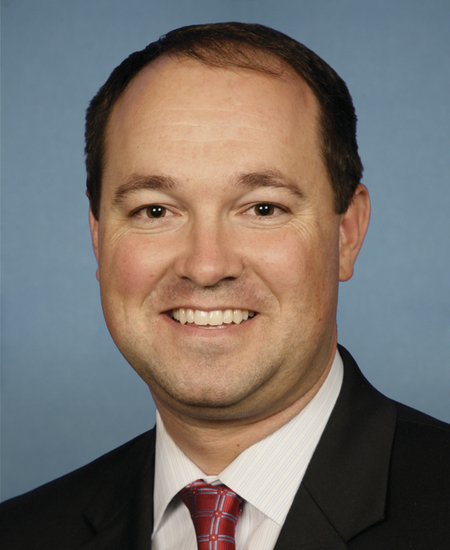
Rep. Marlin A. Stutzman
Sponsored bills
Maddy summaryThe Consumer Financial Protection Accountability and Reform Act of 2026 significantly restructures the Bureau of Consumer Financial Protection by subjecting it to the regular federal appropriations process and establishing an independent Inspector General appointed by the President. The bill restricts the Bureau's supervisory authority over banks and credit unions with assets under $30 billion, allowing these institutions to elect to remain under their existing prudential regulators instead. It also introduces a safe harbor for small-dollar loans of $3,500 or less that meet specific structural requirements, shielding compliant lenders from civil money penalties and private damages. Additionally, the legislation creates federal standards for earned wage access services, requiring providers to offer a no-cost option for early wage access and prohibiting them from treating these services as credit or debt under federal law.
Maddy summaryHR 8278, the "Fostering the Use of Technology to Uphold Regulatory Effectiveness in Supervision Act," requires several federal financial regulatory agencies to assess their technological capabilities and procurement practices. These agencies, including the Federal Reserve, FDIC, and CFPB, must evaluate how their current technology impacts their ability to supervise financial institutions in real-time and identify opportunities to streamline how they acquire new systems. The bill mandates that these agencies then jointly submit a report to Congress every five years. This report will detail their technology use, procurement processes, workforce capabilities, and plans for future tech upgrades to enhance financial system oversight.
Maddy summaryHR 2978, the GUARD Act, allows state, local, and tribal law enforcement agencies to use existing federal grant funds for investigating elder financial fraud, "pig butchering" investment scams, and general financial fraud. The bill directs these funds toward hiring specialized staff, training on blockchain tools and transnational fraud, purchasing investigative software, improving data collection, and creating financial sector liaisons to coordinate with banks. It requires annual reports from law enforcement on fund usage and outcomes, and mandates federal agencies to submit comprehensive reports to Congress on scam statistics, enforcement actions, and funding allocation. The legislation directly affects law enforcement agencies and aims to strengthen efforts against fraud targeting vulnerable populations, particularly elderly individuals.
Maddy summaryThe Make Apportionment Great Again Act would change how U.S. House seats are distributed among states by excluding noncitizens from the population count used for apportionment. It requires the Secretary of Commerce to recalculate state populations using existing federal and state government records, without conducting a new census, and mandates that future censuses include a question on citizenship status. The bill establishes a legal presumption that any resulting changes in seat allocation are valid, allowing courts to overturn them only with clear evidence of statutory or constitutional violations. Additionally, it creates an expedited judicial process for legal challenges, requiring cases to be heard by three-judge panels and permitting direct appeal to the Supreme Court.
Maddy summaryThis bill, known as Kayleigh's Law Act of 2026, requires federal courts to issue permanent restraining orders against defendants convicted of certain serious crimes, prohibiting them from contacting their victims for the rest of their lives. The law applies specifically to individuals convicted of violent felonies or felony offenses involving sexual acts, including crimes like child exploitation and human trafficking. Courts must include these orders in sentencing, and violations are treated as contempt of court, while the only way to lift the order is if the conviction is overturned or pardoned. The bill also ensures that victims cannot be charged any fees for obtaining these protective orders and clarifies that the restrictions apply regardless of state laws.
Maddy summaryThis House resolution marks the 25th anniversary of the September 11, 2001 terrorist attacks by formally honoring the memory of the nearly 3,000 victims and recognizing the sacrifices made by first responders, military personnel, and the passengers of United Airlines Flight 93. The bill acknowledges the ongoing health challenges faced by survivors and responders, highlighting the role of the World Trade Center Health Program in providing long-term medical support. It also credits charitable organizations and community groups that have continued to assist victims' families and veterans over the past two decades. Finally, the resolution urges the American public to observe the anniversary with ceremonies and reaffirms Congress's commitment to remembering the events and lessons of that day.
Maddy summaryThis bill clarifies that certain personal services entities owned by registered stockbrokers are not automatically considered "brokers" under securities law, if specific conditions are met. It directly affects registered representatives who own personal services entities (like independent contractor firms) and their brokers. Key provisions require brokers to control payment details, prevent entities from advertising as brokers, maintain written agreements, restrict ownership to the representative or immediate family, and preserve required records for oversight. The change aims to eliminate regulatory confusion for small, representative-owned entities without altering core broker-dealer rules.
Maddy summaryThis bill, titled the Permanent CBDC Ban Act, aims to permanently prohibit the Federal Reserve from issuing a central bank digital currency. It achieves this by amending the Federal Reserve Act to remove the specific legal authority that allows the Reserve to create such a digital currency. The legislation directly affects the Federal Reserve by stripping away its power to launch a digital version of the dollar. By deleting the relevant subsection of the law, the bill ensures that the Reserve cannot issue a CBDC in the future.
Maddy summaryThis bill, known as the No Leniency for Fentanyl Dealers Act, aims to increase penalties for trafficking fentanyl and other synthetic opioids while enhancing detection efforts by the U.S. Postal Service. It lowers the quantity thresholds required for federal felony charges and mandates that sentencing guidelines be updated to reflect these stricter penalties. Additionally, the legislation directs the Postmaster General to purchase more chemical screening devices and hire scientists to identify illegal drugs in mail shipments, authorizing $9 million in funding to support these interdiction activities.