

In committee Sep 24, 2026
1 co-sponsor
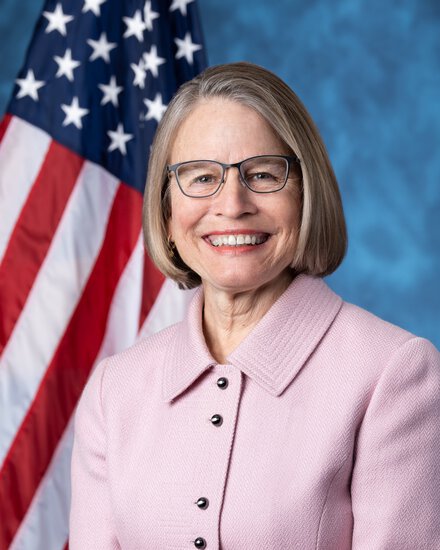
Rep. Mariannette Miller-Meeks
Total votes
2,837
all sessions
Attendance
97%
72 missed
Near the chamber average
With party
93%
of cast votes
Near the chamber average
Bipartisan score
4%
crosses aisle rarely
Near the chamber average
Sponsored
1,360
bills & resolutions
Near the chamber average
Committees
6
assignments
1,360 bills and resolutions
Sponsored bills
Total
1,360
Primary
131
Co-sponsor
1,229
This page
1,360
matching current filters
Critical Infrastructure Manufacturing Feasibility Act
Maddy summaryThis bill directs the Secretary of Commerce to conduct a study on critical infrastructure manufacturing in the U.S. It requires identifying products currently imported due to domestic manufacturing gaps, analyzing the job impacts and costs of making them domestically, and assessing feasibility for rural areas or industrial parks. The study must be completed within one year, with a public report to Congress within 18 months containing findings and recommendations. The bill does not create new regulations or funding - it only mandates a study to inform future policy decisions about reshoring critical infrastructure products.
Passed Sep 24, 2026
0 co-sponsors
Expressing support for the designation of the week of September 21, 2026, as the "Ray Gaesser Memorial Farm Safety Week" to recognize the life and legacy of Ray Gaesser, who passed away in a tragic farming accident, and promote farm safety in the honor of Ray Gaesser.
Maddy summaryThis House resolution supports designating the week of September 21, 2026, as the Ray Gaesser Memorial Farm Safety Week to honor the memory of an Iowa farmer who died in a work accident. The bill recognizes Gaesser's leadership roles in soybean associations and highlights the significant physical risks associated with agricultural labor. It cites statistics indicating that agriculture is one of the most dangerous industries for workers, with thousands of injuries and hundreds of deaths occurring annually. By promoting this designation, the House aims to raise awareness about farm safety education and accident prevention measures.
In committee Sep 16, 2026
1 co-sponsor
REVEAL Act
Maddy summaryThe REVEAL Act prohibits federal officials, including Members of Congress, the President, and political appointees, from trading on prediction markets or directly owning most stocks, commodities, and derivatives while in office. To comply with these restrictions, covered individuals must divest their existing financial assets within 180 days of the law's enactment or 90 days after assuming a new position, though certain exceptions apply for diversified funds, government bonds, and specific family trusts. The bill establishes a penalty system that requires violators to pay a fee equal to 10 percent of the transaction value and disgorge any profits earned from prohibited trades. These penalties must be paid from personal funds rather than official government accounts, and ethics offices are required to publicly publish details about each fine assessed.
In committee Sep 16, 2026
0 co-sponsors
Memory Chip Competitiveness Assessment Act of 2026
Maddy summaryThe Memory Chip Competitiveness Assessment Act of 2026 directs the Secretary of Commerce to conduct a comprehensive study on the market for advanced memory technology, including demand, supply constraints, and impacts on consumer costs. The study must examine capital investment cycles, supply chain dependencies on non-U.S. suppliers, and legal or regulatory barriers that limit domestic supply. The Secretary is required to consult with federal agencies and industry stakeholders, such as manufacturers and major customers, before publishing the findings. A final report must be submitted to congressional committees and made public within 270 days of enactment, following a period for public comment.
In committee Sep 16, 2026
0 co-sponsors
BRACE Act
Maddy summaryThe BRACE Act updates federal regulations to improve how lithium-ion batteries are managed and recycled in the United States. It requires facilities that store these batteries before recycling them to follow stricter safety and record-keeping rules similar to those for large industrial waste handlers. Additionally, the bill modernizes existing laws by replacing outdated references with current environmental protection standards. These changes directly impact businesses and organizations involved in the collection, storage, and recycling of lithium-ion batteries.
Passed Sep 16, 2026
0 co-sponsors
American Reserve Modernization Act of 2026
Maddy summaryThe American Reserve Modernization Act of 2026 directs the U.S. Treasury to create two new accounts: a Strategic Bitcoin Reserve for Bitcoin acquired through government forfeiture and a Digital Asset Stockpile for other digital assets. The bill mandates that all Bitcoin held in the reserve be kept for at least 20 years, with strict rules against selling or disposing of these assets during that time. It also establishes a transparency system requiring quarterly public reports and third-party audits to verify the government's holdings and management of these digital assets.
In committee Sep 16, 2026
1 co-sponsor
PACK Act
Maddy summaryThe Packaging and Claims Knowledge Act of 2025 requires companies to ensure that recyclable, compostable, and reusable claims on consumer product packaging are accurate and supported by third-party certification. The bill mandates that recyclable claims must include information about local recycling availability, while compostable claims must be backed by scientific evidence and clearly explain disposal limitations. Companies must also provide actual reuse systems or products for reusable packaging claims, and the Federal Trade Commission will issue guidance on compliance without creating binding regulations.
In committee Sep 16, 2026
1 co-sponsor
ASAP Act
Maddy summaryThis bill would require Medicare to cover early detection screening tests for Alzheimer's disease and related dementias starting January 1, 2028. It defines eligible tests as FDA-cleared genomic blood tests, blood product analyses, or equivalent medical imaging methods (like protein expression or whole genome sequencing) that detect pre-symptomatic or early-stage conditions. Medicare beneficiaries would receive this coverage without cost-sharing for these specific screenings. The bill amends Medicare coverage rules to explicitly include these tests under Section 1861(nnn) of the Social Security Act.
In committee Sep 16, 2026
1 co-sponsor
Preventive Health Savings Act
Maddy summaryThis bill requires the Congressional Budget Office (CBO) to identify potential budget savings from preventive health care in its scoring of proposed legislation. Specifically, it directs the CBO Director to describe and estimate reductions in future federal spending resulting from preventive health interventions - such as screenings or vaccinations - when requested by congressional budget committee leaders. These savings would be included as supplementary information in budget projections, but not used to meet budget enforcement rules. The bill does not change actual health programs or funding; it only modifies how the CBO accounts for potential long-term savings from preventive care in budget analysis.
Budget & TaxesSupports Budget & TaxesRequires CBO to identify preventive health savings in budget scoring, promoting fiscal responsibility by highlighting cost reductions from screenings/vaccinations in future spending projections.
HealthcareSupports HealthcareDirects CBO to include preventive care savings in budget scoring, promoting cost-effective healthcare initiatives like screenings and vaccinations.
In committee Sep 16, 2026
1 co-sponsor
Ask Maddy
·
AI policy assistant
Ask Maddy about Mariannette Miller-Meeks
Scope: south-dakota
Hi! I can help you understand Mariannette Miller-Meeks's legislative record. What would you like to know?
Try one of these
i
Maddy answers using official bill text and legislative records. Always verify before sharing.
Sources cited inline