

0 co-sponsors
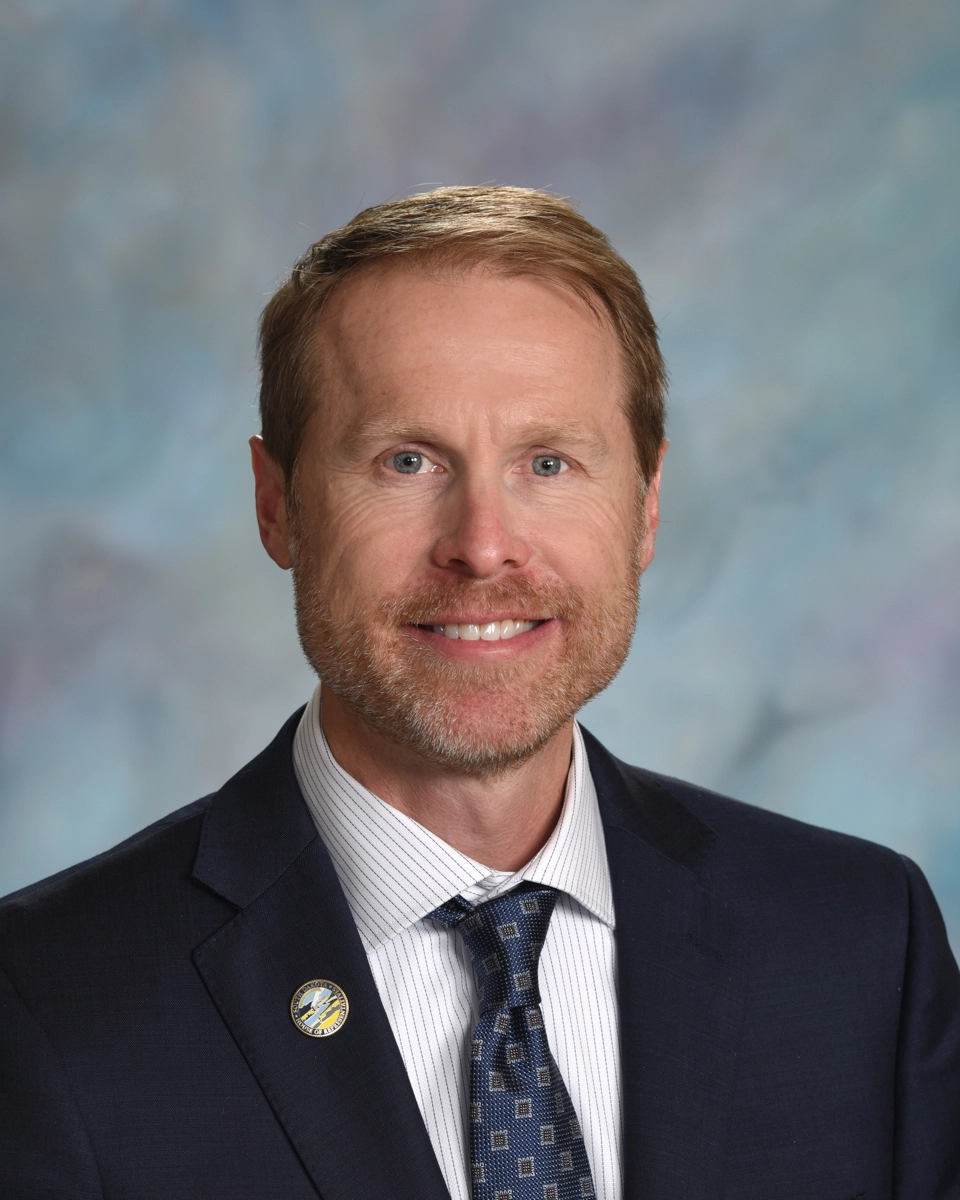
Rep. Scott Odenbach
Total votes
2,459
all sessions
Attendance
100%
of floor votes
Higher than 80% of chamber peers
With party
84%
of cast votes
Near the chamber average
Bipartisan score
10%
crosses aisle rarely
Near the chamber average
Sponsored
153
bills & resolutions
Near the chamber average
Committees
6
assignments
153 bills and resolutions
Sponsored bills
Total
153
Primary
153
Co-sponsor
0
This page
153
matching current filters
make an appropriation for eligible water, wastewater, storm water, and riparian buffer initiative projects and to declare an emergency.
Maddy summarySB 222 appropriates $10 million from South Dakota's general fund to the Department of Agriculture and Natural Resources for grants supporting water, wastewater, storm water, and nonpoint source pollution projects. It directly affects municipalities and water systems serving residents, with funding calculated as a percentage of project costs based on population: up to 80% for systems serving ≤1,000 people (capped at $9,000/person), 50% for 1,001-2,500 people ($7,000/person), and 30% for >2,500 people ($3,000/person). Projects addressing regionalization, drought resiliency, or environmental compliance may exceed these caps, and engineering studies for long-term water issues can receive up to 100% funding. The bill declares an emergency to expedite funding and requires projects to align with the state water plan.
Budget & TaxesSupports Budget & TaxesAppropriates $10M from general fund for water infrastructure grants, directly increasing state budget allocation for public services per budget topic definition.
EnvironmentSupports EnvironmentFunds pollution control (nonpoint source) and water management projects via grants, directly advancing environmental protection through riparian buffers and wastewater initiatives.
Signed into law Mar 30, 2026
0 co-sponsors
require education in prenatal human growth and development.
Maddy summaryThis bill requires South Dakota public schools to teach prenatal human growth and development in health or science classes using specific materials. It mandates that schools use resources recommended by the state Board of Education, including at least three minutes of high-definition ultrasound videos showing organ development or computer-generated animations of prenatal growth from fertilization to birth. The law prohibits using any materials from entities that perform, promote, or refer to abortion services. This directly affects K-12 public school curricula in South Dakota, altering required health/science content.
Signed into law Mar 30, 2026
0 co-sponsors
modify the distributions of revenues collected from severance taxation on new permits.
Maddy summaryHB 1089 modifies how South Dakota distributes severance tax revenue from precious metals mining. It changes the rules for permits issued on or after July 1, 2026: 80% of the tax revenue goes to the state general fund, while 20% is sent to the county where mining occurs. Unlike previous rules, this 20% county share cannot be reduced if a mining company is acquired. The bill also maintains that revenue from mining on state-owned land must go to the common school permanent fund. This directly affects new mining permit holders after 2026 and the counties where they operate.
Budget & TaxesSupports Budget & TaxesBill directs severance tax revenue to state general fund (80%), counties (20% protected), and common school fund, ensuring specific funding streams for budget allocation.
EducationSupports EducationBill mandates severance tax revenue from state-owned mining land to common school permanent fund, directly funding K-12 education.
Signed into law Mar 30, 2026
0 co-sponsors
modify the distribution of gaming revenues.
Maddy summarySB 102 modifies how South Dakota distributes gaming revenues after the City of Deadwood receives $6.8 million annually from the Gaming Commission fund. It shifts the allocation over time: starting in 2026, 70% of remaining funds go to the state general fund (reducing to 20% by 2029), while 10% each goes to Lawrence County municipalities (excluding Deadwood) based on population, school districts in Lawrence County based on student enrollment, and Deadwood itself for historic preservation. Deadwood’s share increases from 10% in 2026 to 60% by 2029. The bill directly affects state budgets, Lawrence County communities, local schools, and Deadwood’s historic preservation efforts.
Signed into law Mar 30, 2026
0 co-sponsors
protect residents from increased utility costs and utility shortages caused by data centers and clarify authority to regulate data centers.
Maddy summarySB 135 requires data center operators to pay all electricity costs associated with their facilities, preventing utilities from raising residential rates to cover these expenses (Section 3). It also prohibits tax exemptions for data centers (Section 5) and ensures local governments retain authority to regulate data center development (Section 4). The bill mandates data centers to report projected water usage to local providers and the Board of Water Management before operation, with annual reports on actual consumption (Sections 6-7), ensuring water allocation prioritizes residential and essential services. This directly affects data center operators, utilities, and South Dakota residents by limiting cost-shifting and protecting local resource management.
Budget & TaxesSupports Budget & TaxesProhibits tax exemptions for data centers (Section 5), closing a tax loophole and increasing state revenue, aligning with fiscal responsibility and budget management.
EnergySupports EnergyPrevents utility rate hikes for residents by requiring data centers to cover electricity costs, protecting consumers from increased energy expenses.
TechnologyOpposes TechnologyBill imposes financial burdens (electricity costs, tax exemptions) and regulatory restrictions on data centers, directly limiting their operational flexibility without advancing tech policy goals.
Signed into law Mar 30, 2026
0 co-sponsors
create a taskforce to study the creation of Indian medicaid managed care entities in the state.
Maddy summaryThis bill creates a taskforce to study how South Dakota could establish Medicaid managed care entities specifically serving tribal communities, as defined under federal law. The taskforce includes representatives from all federally recognized South Dakota tribes, state health and social services agencies, healthcare providers, insurance companies, and tribal relations officials. It must gather input from stakeholders and submit findings and potential legislation to the Governor by December 2028. The bill does not implement new programs but sets a process for evaluating this option.
Signed into law Mar 30, 2026
0 co-sponsors
increase the penalty for preventing practice of religion.
Maddy summaryThis bill amends South Dakota law (§ 22-19B-4) to upgrade penalties for preventing someone from practicing their religion through threats or violence. Currently a Class 1 misdemeanor, the offense would become a Class 6 felony under this bill. It directly affects individuals who use intimidation or force to stop others from engaging in legally protected religious activities. The key change is reclassifying the penalty level in the statute, increasing the legal consequences for such conduct.
Signed into law Mar 10, 2026
0 co-sponsors
adjust the assessment methodology for owner-occupied single-family dwellings and nonagricultural property.
Maddy summaryHB 1253 adjusts how property taxes are calculated for owner-occupied single-family homes and nonagricultural land by using a special averaging method. It requires county assessors to set each property's taxable value based on the "Olympic average" (removing the highest and lowest values) of its fair market value over the past eight years, or since a recent change in use or addition. This aims to stabilize tax bills by smoothing out annual value fluctuations. The bill specifically prevents this adjustment from increasing taxes on agricultural properties. It directly affects homeowners and nonagricultural property owners in South Dakota.
Passed Mar 9, 2026
0 co-sponsors
amend the definition of law enforcement officer to include tribal law enforcement officers.
Maddy summaryHB 1007 amends South Dakota's legal definition of "law enforcement officer" to explicitly include tribal law enforcement officers. This change directly affects tribal law enforcement personnel by ensuring they are recognized under the same legal definitions as state and local officers. The bill modifies Section 22-1-2 of state law to add tribal officers to the definition, aligning their status with other law enforcement roles. This is a technical definitional update with no new requirements or funding impacts.
Signed into law Mar 9, 2026
0 co-sponsors
Ask Maddy
·
AI policy assistant
Ask Maddy about Scott Odenbach
Scope: south-dakota
Hi! I can help you understand Scott Odenbach's legislative record. What would you like to know?
Try one of these
i
Maddy answers using official bill text and legislative records. Always verify before sharing.
Sources cited inline