

Maddy summaryThe Foreign Robocall Elimination Act establishes a taskforce to address unlawful robocalls made into the United States from foreign countries. The taskforce, composed of government agency representatives and private sector experts from telecommunications and related industries, must produce a report within 360 days detailing the scale of foreign-originating robocalls, their financial impact, and solutions like improved caller ID authentication technology and international cooperation. The report will specifically study call origins, identity theft losses, enforcement strategies, and incentives for foreign countries to collaborate on combating these calls. This bill directly affects federal agencies (including the FCC, FTC, and Department of Justice) and the telecommunications industry by mandating a collaborative effort to develop actionable recommendations for Congress.
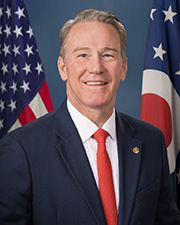
Sen. Jon Husted
Sponsored bills
National Plan for Epilepsy Act This bill requires the Department of Health and Human Services (HHS) to establish a national plan, form an advisory council, and take other actions to address epilepsy. The requirements sunset on December 31, 2035. Specifically, the bill requires HHS to carry out a National Plan for Epilepsy to prevent, diagnose, treat, and cure epilepsy. In carrying out the plan, HHS must implement activities such as coordinating research and services across all federal agencies and soliciting public comments. Also, HHS must establish an Advisory Council on Epilepsy Research, Care, and Services. The advisory council must report to HHS and Congress every two years with an evaluation of federally funded efforts. Additionally, HHS must annually report to Congress with recommended actions based on its assessments of the nation’s progress on epilepsy.
Maddy summaryThis bill amends the Help America Vote Act to require voters casting ballots in person for federal elections to present a valid physical photo identification. It allows individuals who cannot show ID to cast a provisional ballot, provided they either present the ID within three days or submit a state-approved affidavit stating a religious objection to being photographed. The law also mandates that states make digital imaging devices available at public buildings like libraries and police stations so voters can print copies of their IDs for free. Acceptable forms of identification include state-issued driver's licenses, state ID cards, U.S. passports, military IDs, and tribal government IDs with photos. States must also notify all voter registration applicants, including those registering online, about this new requirement before they complete the process.
Maddy summaryThe China AI Power Report Act requires the Secretaries of Commerce and State to submit an annual report to Congress for three years detailing the advanced artificial intelligence capabilities of the People's Republic of China. The legislation mandates a comprehensive assessment of specific sectors, including AI chip designers, semiconductor fabrication facilities, manufacturing equipment producers, and software developers, with a focus on technical specifications and production volumes. It also requires evaluations of Chinese AI models, research funding, humanoid robot manufacturers, and the effectiveness of current U.S. export controls in restricting technology transfer. The report must be submitted in unclassified form with a potential classified annex, and it must compare China's capabilities against those of the United States and partner nations to provide context for national security planning.
Maddy summaryThe ADVERSARIES Act requires the Under Secretary of the Bureau of Industry and Security to conduct a review within 90 days of enactment regarding how U.S.-based affiliates of foreign entities on the Entity List or Military End User List might be acquiring controlled items that their parent companies are restricted from accessing. The review must also assess national security risks posed by foreign adversary exploitation of vulnerabilities in information and communications technology, including whether specific sectors pose undue risk to export control effectiveness. Following the review, officials must submit a report to relevant congressional committees detailing their findings, any planned actions to address identified threats within the next year, and recommendations for changes to U.S. law.
This bill extends from 5 to 10 years the statute of limitations for civil and criminal violations of U.S. export control laws. The bill also specifies that the commencement of an action, suit, or proceeding includes the issuance of a charging letter. (A charging letter is a formal notification by the Department of Commerce's Bureau of Industry and Security that a company or individual is under investigation for an apparent violation of export administration laws or regulations.)
Maddy summaryThe BIS STRENGTH Act allows the Under Secretary of Commerce for Industry and Security to hire up to 25 outside experts for the Bureau of Industry and Security, bypassing standard civil service hiring rules to fill critical skill gaps. These temporary appointments are limited to a maximum of five years per employee, with total annual compensation capped at the Vice President's salary level. The bill requires the Under Secretary to submit annual reports to congressional committees detailing the expertise gaps identified, the qualifications of hired individuals, and their impact on export control missions. This special hiring authority expires five years after the act is enacted, though existing employees may finish out their appointed terms.
Maddy summaryThe New Source Review Permitting Improvement Act amends the Clean Air Act to clarify when industrial facilities must obtain permits for changes that could increase air pollution. It defines a "modification" as a change that raises the maximum hourly emission rate of a pollutant compared to the highest level achievable in the preceding ten years, while explicitly excluding projects designed to improve safety, reliability, or reduce emissions per unit of production unless they pose an adverse health or environmental risk. Additionally, the bill narrows the scope of "construction" to physical work on specific emissions-generating parts of a facility, ensuring that other costly or permanent on-site activities do not automatically trigger permitting requirements if they do not result in a significant increase in actual annual emissions.
Maddy summaryThis resolution designates the week of August 22 through August 30, 2026, as "National Park Week." It directly affects the public by encouraging responsible visits and support for the National Park System, which includes parks, battlefields, and historical sites located across the United States and its territories. The measure serves as a formal declaration to highlight the parks' role in recreation, education, and economic activity without altering any laws or funding.
This bill designates the facility of the United States Postal Service located at 201 East Grant Avenue in Georgetown, Ohio, as the "Ulysses S. Grant Post Office Building".