

In committee Sep 24, 2026
1 co-sponsor
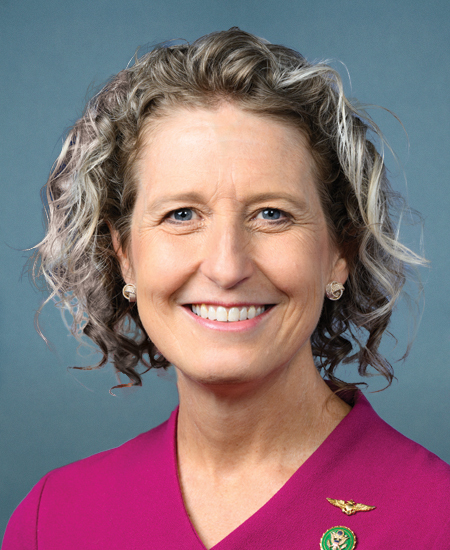
Rep. Jennifer A. Kiggans
Total votes
1,879
all sessions
Attendance
98%
42 missed
Near the chamber average
With party
89%
of cast votes
Near the chamber average
Bipartisan score
6%
crosses aisle rarely
Near the chamber average
Sponsored
782
bills & resolutions
Higher than 77% of chamber peers
Committees
10
assignments
782 bills and resolutions
Sponsored bills
Total
782
Primary
78
Co-sponsor
704
This page
782
matching current filters
Ratepayer Protection Act
Maddy summaryThis bill, known as the Ratepayer Protection Act, modifies federal energy laws to ensure that large industrial customers pay for the specific infrastructure upgrades needed to serve their high electricity demands. It directly affects non-residential facilities with a peak power usage of 100 megawatts or more, requiring utilities to charge these customers the full incremental cost of any necessary generation, transmission, or distribution improvements. Under the new rules, large customers must also provide financial guarantees or contributions before such upgrades are made, ensuring utilities can recover costs even if the customer leaves the contract early. State regulators have two years to implement these standards, though the bill exempts utilities in states that have already enacted similar measures or are actively considering them.
Passed Sep 24, 2026
1 co-sponsor
Veteran Infection Prevention Act
Maddy summaryThe Veteran Infection Prevention Act requires sterile processing technicians in the Veterans Health Administration to obtain certification from an accredited training institution within two years of their appointment, with some exceptions for entry-level positions. Current employees who are not yet certified will have two years from the bill's enactment to become certified, and those who choose to pursue certification will receive a scholarship to help cover training costs. In exchange for the scholarship, recipients must commit to two years of service with the Veterans Health Administration after receiving their certification. This legislation aims to improve infection prevention standards by ensuring all sterile processing technicians meet professional certification requirements.
HealthcareSupports HealthcareBill mandates certification for sterile processing technicians in VA healthcare, improving patient safety and professional standards in healthcare delivery.
VeteransSupports VeteransBill mandates certification for sterile processing technicians in Veterans Health Administration, improving healthcare standards and providing scholarships for training, directly strengthening veteran healthcare services.
In committee Sep 24, 2026
0 co-sponsors
To designate the facility of the United States Postal Service located at 1225 Kempsville Road in Virginia Beach, Virginia, as the "Colonel Edward Shames Post Office Building".
This bill designates the facility of the United States Postal Service located at 1225 Kempsville Road in Virginia Beach, Virginia, as the "Colonel Edward Shames Post Office Building".
Passed Sep 17, 2026
0 co-sponsors
Wintergreen Emergency Egress Act
Wintergreen Emergency Egress Act This bill directs the Department of the Interior to issue a right-of-way through the Blue Ridge Parkway for an additional emergency exit from Wintergreen in Nelson County, Virginia, once certain requirements have been met. Specifically, Interior must grant the right-of-way if it reports to specified congressional committees that the following have been completed: (1) an evaluation of alternatives to the right-of-way for exiting Wintergreen that do not cross federal land, including an evaluation of whether existing trails can be converted to roads; (2) an analysis of expected fire ecology behavior in the event of a fire emergency with respect to the right-of-way; and (3) any required reviews under the National Environmental Policy Act of 1969 and the National Historic Preservation Act.
Passed Sep 17, 2026
1 co-sponsor
Supporting the designation of September 20, 2026, as "Pharmacy Workforce Suicide Awareness Day" to raise awareness of, and promote a national discussion about, pharmacy workforce suicide and to reduce the stigma of mental health conditions, and for other purposes.
Maddy summaryThis House resolution supports designating September 20, 2026, as "Pharmacy Workforce Suicide Awareness Day" to highlight mental health challenges among pharmacists and pharmacy technicians. The bill cites high rates of burnout, stress, and suicide risk within the profession as reasons for the designation. It encourages the President to issue a proclamation calling for national awareness activities and honors those who have died by suicide. Additionally, the resolution recognizes the need for further research into barriers to mental health treatment and strategies to prevent suicide in this workforce.
HealthcareSupports HealthcareBill promotes mental health awareness and reduces stigma for pharmacy professionals, directly supporting mental health services within the healthcare sector.
Labor & EmploymentSupports Labor & EmploymentBill promotes mental health awareness and reduces stigma for pharmacy workers, addressing workplace well-being and safety within the labor force.
In committee Sep 16, 2026
1 co-sponsor
Educating Future Nurses Act
Maddy summaryThe Educating Future Nurses Act establishes a new federal program that reimburses eligible hospitals for the reasonable costs of providing clinical education to advanced practice registered nurses, including nurse practitioners and nurse-midwives. To participate, hospitals must lead regional "Graduate Nurse Education Hubs" that partner with accredited nursing schools and at least two non-hospital community-based care settings, such as rural health clinics or home health agencies. Payments are calculated using a per-student rate adjusted for inflation, but the total reimbursement is capped based on the increase in graduate nurse enrollments compared to a 2024-2025 baseline. The bill requires hospitals to submit annual reports detailing student outcomes and workforce placement, with a 25% payment reduction imposed if reporting requirements are not met.
EducationSupports EducationThe bill establishes a federal program to reimburse hospitals for clinical education costs for advanced practice registered nurses, directly supporting nursing education and expanding educational opportunities.
HealthcareSupports HealthcareThe bill establishes a federal program to reimburse hospitals for clinical education of advanced practice registered nurses, directly supporting the training of healthcare professionals and strengthening the healthcare workforce.
Labor & EmploymentSupports Labor & EmploymentThe bill supports the labor and employment of nurses by establishing a program to reimburse hospitals for clinical education, which can attract and retain advanced practice registered nurses.
In committee Sep 16, 2026
1 co-sponsor
ASAP Act
Maddy summaryThis bill would require Medicare to cover early detection screening tests for Alzheimer's disease and related dementias starting January 1, 2028. It defines eligible tests as FDA-cleared genomic blood tests, blood product analyses, or equivalent medical imaging methods (like protein expression or whole genome sequencing) that detect pre-symptomatic or early-stage conditions. Medicare beneficiaries would receive this coverage without cost-sharing for these specific screenings. The bill amends Medicare coverage rules to explicitly include these tests under Section 1861(nnn) of the Social Security Act.
In committee Sep 16, 2026
1 co-sponsor
TRAPS Act
Maddy summaryThe TRAPS Act establishes a federal Task Force on Payment Scams, chaired by the Treasury Secretary, to coordinate efforts across agencies like the FTC, Federal Reserve, and consumer groups. The Task Force will study current scam tactics (such as fake text messages or fraudulent payment platforms), evaluate prevention strategies, and develop recommendations to help consumers avoid and report scams. It must submit an initial report within one year and annual updates, focusing on improving federal-state coordination and education programs. This bill directly affects government agencies and stakeholders participating in the Task Force, with the goal of protecting consumers from evolving payment scams.
In committee Sep 16, 2026
1 co-sponsor
GUARD Act
Maddy summaryHR 2978, the GUARD Act, allows state, local, and tribal law enforcement agencies to use existing federal grant funds for investigating elder financial fraud, "pig butchering" investment scams, and general financial fraud. The bill directs these funds toward hiring specialized staff, training on blockchain tools and transnational fraud, purchasing investigative software, improving data collection, and creating financial sector liaisons to coordinate with banks. It requires annual reports from law enforcement on fund usage and outcomes, and mandates federal agencies to submit comprehensive reports to Congress on scam statistics, enforcement actions, and funding allocation. The legislation directly affects law enforcement agencies and aims to strengthen efforts against fraud targeting vulnerable populations, particularly elderly individuals.
Criminal JusticeSupports Criminal JusticeFunds specialized law enforcement for financial fraud investigations, strengthening investigative capacity within criminal justice enforcement.
TechnologySupports TechnologyFunds blockchain tools and cybersecurity training for fraud investigations, enhancing digital security measures.
Passed Sep 16, 2026
1 co-sponsor
Ask Maddy
·
AI policy assistant
Ask Maddy about Jennifer A. Kiggans
Scope: south-carolina
Hi! I can help you understand Jennifer A. Kiggans's legislative record. What would you like to know?
Try one of these
i
Maddy answers using official bill text and legislative records. Always verify before sharing.
Sources cited inline