

In committee Sep 24, 2026
1 co-sponsor
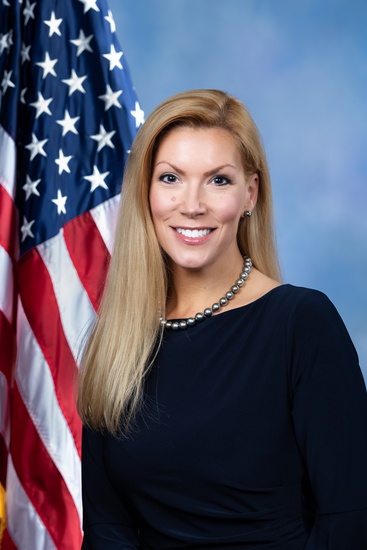
Rep. Beth Van Duyne
Total votes
2,837
all sessions
Attendance
99%
19 missed
Higher than 78% of chamber peers
With party
94%
of cast votes
Near the chamber average
Bipartisan score
3%
crosses aisle rarely
Near the chamber average
Sponsored
913
bills & resolutions
Near the chamber average
Committees
8
assignments
913 bills and resolutions
Sponsored bills
Total
913
Primary
111
Co-sponsor
802
This page
913
matching current filters
In committee Sep 24, 2026
1 co-sponsor
Ratepayer Protection Act
Maddy summaryThis bill, known as the Ratepayer Protection Act, modifies federal energy laws to ensure that large industrial customers pay for the specific infrastructure upgrades needed to serve their high electricity demands. It directly affects non-residential facilities with a peak power usage of 100 megawatts or more, requiring utilities to charge these customers the full incremental cost of any necessary generation, transmission, or distribution improvements. Under the new rules, large customers must also provide financial guarantees or contributions before such upgrades are made, ensuring utilities can recover costs even if the customer leaves the contract early. State regulators have two years to implement these standards, though the bill exempts utilities in states that have already enacted similar measures or are actively considering them.
Passed Sep 24, 2026
1 co-sponsor
National Fossil Act of 2026
Maddy summaryThis bill designates the American mastodon as the national fossil mammal and the Tyrannosaurus rex as the national fossil dinosaur for the United States. It achieves this by amending Title 36 of the U.S. Code to officially recognize these specific species within the legal framework for national symbols. The changes update the relevant chapter heading to include "fossil" and add a new section to formally establish these designations.
Passed Sep 17, 2026
1 co-sponsor
Cybersecurity for Small Businesses Act of 2026
Maddy summaryThe Cybersecurity for Small Businesses Act of 2026 directs the Small Business Administration, in partnership with federal cybersecurity agencies, to create and distribute resources that help small businesses improve their digital security practices. The bill specifically requires the administration to provide guidance on federal cybersecurity compliance standards to small companies seeking government contracts or subcontracting opportunities. This information must be made available through small business development centers, district offices, and the agency's website. Additionally, the Office of Advocacy is required to submit an annual report to Congress detailing how many small businesses have contacted them regarding cybersecurity issues.
In committee Sep 16, 2026
1 co-sponsor
Reshoring American Manufacturing Act of 2026
Maddy summaryThe Reshoring American Manufacturing Act of 2026 directs the Small Business Administration to create a dedicated website helping small businesses bring their manufacturing operations back to the United States. This online resource will provide contact details for relevant government offices and partner organizations, along with other useful information determined by the agency. The law requires the website to be launched within 60 days of enactment and mandates annual reviews to ensure the content remains current and helpful.
In committee Sep 16, 2026
1 co-sponsor
Apples to Apples Comparison Act of 2025
Maddy summaryThe Apples to Apples Comparison Act of 2025 requires the Centers for Medicare & Medicaid Services (CMS) to publish detailed Medicare spending data starting in 2025. It mandates that CMS release machine-readable, county- and Metropolitan Statistical Area-level expenditure information for over 30 distinct beneficiary categories (e.g., Part A-only enrollees, Medicare Advantage members, and those with supplemental coverage) on its public website. The law also requires the Medicare Payment Advisory Commission (MedPAC) to analyze Medicare Advantage vs. traditional Medicare spending patterns beginning in 2026, with public methodology and data transparency. Additionally, the Medicare Trustees must include disaggregated expenditure data in their annual reports starting in 2026. This bill directly affects how CMS and federal agencies collect and share Medicare spending data, not beneficiaries' coverage or costs.
In committee Sep 16, 2026
1 co-sponsor
BOP Direct-Hire Authority Act
Maddy summaryThe BOP Direct-Hire Authority Act allows the Bureau of Prisons (BOP) Director to directly hire qualified candidates for competitive service positions at BOP facilities without following standard federal hiring rules, such as competitive exams or public announcements. This change applies only to BOP facilities and aims to speed up staffing for critical roles. The authority expires once 96% of the competitive positions (as of the bill’s enactment date) are filled. The bill directly affects BOP hiring processes and does not alter existing pay or benefits for positions.
In committee Sep 16, 2026
1 co-sponsor
Combating Illicit Xylazine Act
Maddy summaryHR 1266, the Combating Illicit Xylazine Act, adds xylazine - a veterinary sedative increasingly found in illicit drug mixtures - to Schedule III of the Controlled Substances Act, regulating its use and trafficking. It directly affects veterinarians, animal owners, and manufacturers by allowing xylazine to be legally dispensed for animal use under specific veterinary prescriptions, while prohibiting non-veterinary human use. The bill includes transition periods (60 days for practitioners, 1 year for labeling) to ease compliance for manufacturers and practitioners, and requires the DEA and FDA to expedite necessary applications. It also mandates two congressional reports on xylazine's illicit use and trafficking patterns, and directs the Sentencing Commission to review penalties for offenses involving xylazine.
Passed Sep 16, 2026
1 co-sponsor
MAGA Act
Maddy summaryThe Make Apportionment Great Again Act would change how U.S. House seats are distributed among states by excluding noncitizens from the population count used for apportionment. It requires the Secretary of Commerce to recalculate state populations using existing federal and state government records, without conducting a new census, and mandates that future censuses include a question on citizenship status. The bill establishes a legal presumption that any resulting changes in seat allocation are valid, allowing courts to overturn them only with clear evidence of statutory or constitutional violations. Additionally, it creates an expedited judicial process for legal challenges, requiring cases to be heard by three-judge panels and permitting direct appeal to the Supreme Court.
In committee Sep 15, 2026
1 co-sponsor
Ask Maddy
·
AI policy assistant
Ask Maddy about Beth Van Duyne
Scope: south-carolina
Hi! I can help you understand Beth Van Duyne's legislative record. What would you like to know?
Try one of these
i
Maddy answers using official bill text and legislative records. Always verify before sharing.
Sources cited inline