

In committee Sep 24, 2026
1 co-sponsor
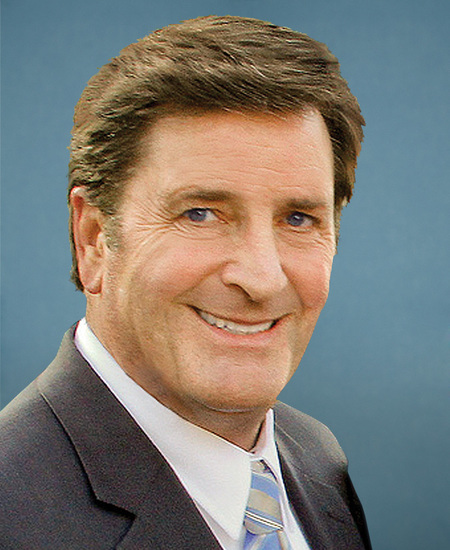
Rep. John Garamendi
Total votes
2,837
all sessions
Attendance
92%
241 missed
Lower than 95% of chamber peers
With party
98%
of cast votes
Higher than 85% of chamber peers
Bipartisan score
1%
crosses aisle rarely
Lower than 85% of chamber peers
Sponsored
1,524
bills & resolutions
Higher than 76% of chamber peers
Committees
8
assignments
1,524 bills and resolutions
Sponsored bills
Total
1,524
Primary
104
Co-sponsor
1,420
This page
1,524
matching current filters
Celebrating the 65th anniversary of the establishment of the Peace Corps, and commending its volunteers and contributions to global peace, friendship, and development.
Maddy summaryThis concurrent resolution commemorates the 65th anniversary of the Peace Corps' establishment in 1961. It formally honors the nearly 250,000 American volunteers who have served in 144 countries to support areas such as education, health, and economic development. The bill also commends the organization for its role in fostering international stability and enhancing global perceptions of the United States through cultural exchange and service.
In committee Sep 21, 2026
0 co-sponsors
Disapproving the proposed civilian nuclear cooperation agreement between the United States and Saudi Arabia submitted to the Congress on September 14, 2026.
Maddy summaryThis joint resolution seeks to disapprove a proposed civilian nuclear cooperation agreement between the United States and Saudi Arabia that was submitted to Congress in September 2026. The bill directly affects U.S.-Saudi diplomatic and energy relations by blocking the formalization of this specific nuclear partnership. It operates as a procedural vote where members of Congress can reject the executive branch's submission under the Atomic Energy Act.
In committee Sep 16, 2026
1 co-sponsor
In committee Sep 16, 2026
1 co-sponsor
ASAP Act
Maddy summaryThis bill would require Medicare to cover early detection screening tests for Alzheimer's disease and related dementias starting January 1, 2028. It defines eligible tests as FDA-cleared genomic blood tests, blood product analyses, or equivalent medical imaging methods (like protein expression or whole genome sequencing) that detect pre-symptomatic or early-stage conditions. Medicare beneficiaries would receive this coverage without cost-sharing for these specific screenings. The bill amends Medicare coverage rules to explicitly include these tests under Section 1861(nnn) of the Social Security Act.
In committee Sep 16, 2026
1 co-sponsor
Save Our Sequoias Act
Save Our Sequoias Act This bill provides for the conservation of giant sequoia trees ( Sequoiadendron giganteum ) in California. Specifically, it provides statutory authority for the Giant Sequoia Lands Coalition and outlines the coalition's duties. The coalition must submit a Giant Sequoia Health and Resiliency Assessment and annually update it. The information from the assessment must be made available so the information can be integrated into certain other plans. The coalition must also create and maintain a website that contains the assessment, educational materials, searchable information about individual giant sequoia groves, and a searchable database to track the status and costs of reforestation and rehabilitation activities. In addition, the bill declares an emergency on certain public lands and allows officials to carry out protection plans during the emergency to respond to the threat of wildfires, insects, and drought. The emergency expires after seven years. The Department of the Interior must develop and implement a Giant Sequoia Reforestation and Rehabilitation Strategy. Finally, the bill establishes a variety of programs and funds to support the conservation of giant sequoias.
Passed Sep 16, 2026
1 co-sponsor
Combating Illicit Xylazine Act
Maddy summaryHR 1266, the Combating Illicit Xylazine Act, adds xylazine - a veterinary sedative increasingly found in illicit drug mixtures - to Schedule III of the Controlled Substances Act, regulating its use and trafficking. It directly affects veterinarians, animal owners, and manufacturers by allowing xylazine to be legally dispensed for animal use under specific veterinary prescriptions, while prohibiting non-veterinary human use. The bill includes transition periods (60 days for practitioners, 1 year for labeling) to ease compliance for manufacturers and practitioners, and requires the DEA and FDA to expedite necessary applications. It also mandates two congressional reports on xylazine's illicit use and trafficking patterns, and directs the Sentencing Commission to review penalties for offenses involving xylazine.
Passed Sep 16, 2026
1 co-sponsor
AM Radio for Every Vehicle Act of 2025
Maddy summaryThis bill requires all new passenger vehicles manufactured for sale in the U.S. to include AM radio as standard equipment (not an optional add-on) by 2027-2028, depending on manufacturer size. It mandates that AM radio receivers must be easily accessible to drivers and allows compliance through digital AM broadcast technology. During a transition period, manufacturers must clearly label vehicles without AM radio but cannot charge extra for this feature. The bill also mandates a GAO study on AM radio's role in emergency alerts and includes a 10-year sunset provision for the rule. It preempts state laws regarding AM radio access in vehicles.
Passed Sep 16, 2026
1 co-sponsor
MTS CYBER Act of 2026
Maddy summaryHR 7625, the MTS CYBER Act of 2026, mandates a Government Accountability Office (GAO) review to assess the U.S. Coast Guard's budget and staffing needs for fulfilling its role as a Sector Risk Management Agency (SRMA) for maritime cybersecurity. The bill requires the GAO to evaluate Coast Guard funding for cybersecurity personnel, training, and enforcement; staff capabilities to monitor industry compliance; and guidance provided to maritime businesses against industry best practices. This review, due within 270 days of the bill’s enactment, aims to determine if current resources allow the Coast Guard to effectively protect the marine transportation system (MTS) - which includes ports, vessels, and waterways supporting $2.1 trillion in economic activity - from cyber threats. The findings will be submitted to relevant congressional committees to inform future funding decisions for the Coast Guard’s cybersecurity responsibilities.
In committee Sep 15, 2026
1 co-sponsor
To amend the National Trails System Act to direct the Secretary of the Interior to conduct a study on the feasibility of designating the Bay Area Ridge National Scenic Trail, and for other purposes.
Maddy summaryHR 7254 requests a study to evaluate designating the Bay Area Ridge Trail as a National Scenic Trail. The bill directs the Secretary of the Interior to complete a feasibility study within one year, consulting with the Bay Area Ridge Trail Council and relevant agencies. The study would assess the 550-mile trail - currently 415 miles completed - connecting over 75 parks and open spaces across the San Francisco Bay Area. This bill does not designate the trail as a National Scenic Trail but initiates a review process to determine its potential for that status. The study would examine the trail’s scenic, historic, and recreational value, including its connections to urban areas and natural features like the Golden Gate Bridge and San Andreas Fault.
In committee Sep 15, 2026
1 co-sponsor
Ask Maddy
·
AI policy assistant
Ask Maddy about John Garamendi
Scope: south-carolina
Hi! I can help you understand John Garamendi's legislative record. What would you like to know?
Try one of these
i
Maddy answers using official bill text and legislative records. Always verify before sharing.
Sources cited inline