Maddy summaryThis House resolution formally supports the recognition of September 27, 2026, through October 3, 2026, as "Asian American and Native American Pacific Islander-Serving Institutions Week." The bill marks the 19th anniversary of Congress first authorizing funding for these specific colleges and universities in 2007. It highlights that these institutions enroll a significant majority of Asian American, Native Hawaiian, and Pacific Islander undergraduate students, many of whom are from low-income or first-generation college families. The resolution encourages these schools to continue securing resources and calls on the public to observe the week with events that demonstrate support for their educational mission.

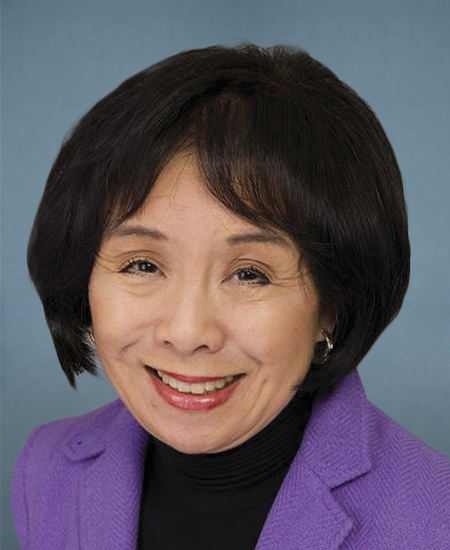
Rep. Doris O. Matsui
Sponsored bills
Reversionary Interest Conveyance Act This bill directs the Bureau of Land Management (BLM) to offer to sell the reversionary interest of the United States in approximately 8.43 acres of land in Sacramento, California, as generally depicted on a specified map dated November 7, 2022. Within two years of receiving a request from the owner of the land, the BLM must offer the reversionary interest and convey the reversionary interest to the buyer upon payment. The payment must be in an amount that is at least the fair market value of the reversionary interest. The buyer must also pay all costs related to the applicable conveyance of the reversionary interest, including all surveys, appraisals, and other administrative costs. The bill subjects the conveyance to valid existing rights. The proceeds from the sale must be deposited into Federal Land Disposal Account.
Maddy summaryThis House resolution expresses support for designating September 22, 2026, as "National Hispanic Nurses Day" to honor the contributions of Hispanic nurses to the U.S. healthcare system. It specifically recognizes the National Association of Hispanic Nurses as the leading organization representing and advocating for this group of professionals. The bill encourages the public to observe the day with ceremonies and activities that highlight the role of these nurses in reducing health disparities and providing culturally competent care.
Maddy summaryThe 9-8-8 Implementation Act of 2026 expands federal funding and mandates insurance coverage for behavioral health crisis services, directly affecting individuals experiencing mental health or substance use emergencies as well as the providers who serve them. The bill authorizes grants to upgrade local lifeline call centers, build new crisis stabilization facilities, and train a larger workforce of behavioral health professionals. It requires Medicare, Medicaid, private group health plans, TRICARE, and other federal insurance programs to cover crisis response services with financial terms no more restrictive than standard medical care. Additionally, the legislation establishes a federal panel to develop training protocols for 9-1-1 dispatchers to better connect callers to appropriate crisis care rather than law enforcement responses.
Maddy summaryThis bill creates a 6-year Medicare pilot program providing medically tailored home-delivered meals and nutrition counseling to specific high-risk Medicare patients after hospital discharge. It targets individuals with diet-impacted conditions (like diabetes or heart failure) who live at home, have limited mobility, and are at high risk of hospital readmission. Selected hospitals must meet quality standards, screen patients using approved tools, and deliver at least two meals daily meeting nutritional needs while respecting cultural/religious dietary requirements, all without patient cost-sharing. The program requires hospitals to submit data for the Secretary to evaluate health outcomes, readmission rates, and cost savings compared to non-participants. Funding comes from the Medicare Hospital Insurance Trust Fund, offset by reductions to other hospital payments to maintain budget neutrality.
Maddy summaryHR 2140, the Diesel Emissions Reduction Act of 2025, extends the expiration date of the existing Diesel Emissions Reduction Act program. It amends Section 797(a) of the Energy Policy Act of 2005 by changing the end date from 2024 to 2029. This bill does not create new programs or funding; it simply prolongs the current program's authorization period. The change affects the continuation of the existing federal program that supports state and local efforts to reduce diesel emissions from older vehicles.
Maddy summaryThis bill requires all new passenger vehicles manufactured for sale in the U.S. to include AM radio as standard equipment (not an optional add-on) by 2027-2028, depending on manufacturer size. It mandates that AM radio receivers must be easily accessible to drivers and allows compliance through digital AM broadcast technology. During a transition period, manufacturers must clearly label vehicles without AM radio but cannot charge extra for this feature. The bill also mandates a GAO study on AM radio's role in emergency alerts and includes a 10-year sunset provision for the rule. It preempts state laws regarding AM radio access in vehicles.
Maddy summaryThe Affordable Premiums for Seniors Act of 2026 extends a Medicare Part D premium stabilization program through 2029 and makes it permanent starting in 2030, provided that ending the program would not cause prescription drug premiums to rise. This legislation directly affects seniors enrolled in Medicare prescription drug plans by aiming to keep their costs stable over time. The bill requires the Secretary of Health and Human Services to issue updated operational guidelines for the program within 30 days of enactment.
This bill designates the facility of the United States Postal Service located at 6444 San Fernando Road in Glendale, California, as the "Paul Ignatius Post Office".
Maddy summaryHR 2175 designates the U.S. Postal Service facility at 130 South Patterson Avenue in Santa Barbara, California, as the "Brigadier General Frederick R. Lopez Post Office Building." The bill updates all official U.S. government references to this location to reflect the new name. This is a ceremonial naming bill with no policy changes or direct impact on residents or services.