Maddy summaryThis Pennsylvania House Resolution designates October 2026 as "Arts and Culture Month" to formally recognize the value of artistic expression within the state. The bill cites the economic impact of the arts industry and its role in fostering community connections as reasons for the designation. It calls on residents to celebrate artists and scholars through appropriate programs, ceremonies, and celebrations during that month.

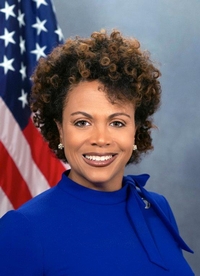
Rep. Gina Curry
Sponsored bills
Maddy summaryPennsylvania House Bill 2733, known as the Banked Use for Maternity Protection Act, requires employers to provide eligible employees with a dedicated account containing 24 hours of paid leave specifically for prenatal medical appointments and related travel. To qualify, an employee must have worked for the same employer in the Commonwealth for at least 30 days, after which the employer must establish this separate account within two days of notification. The bill mandates that this leave be compensated at the employee's regular rate and count toward seniority and benefits, while prohibiting employers from forcing staff to use other types of leave or retaliating against them for utilizing these protections. Employers with 15 or fewer employees may apply for a six-month hardship exemption, and violations of the act are subject to fines of up to $50,000 per instance.
Maddy summaryHouse Bill 1042 creates a system in Pennsylvania allowing eligible incarcerated individuals to earn credits that reduce their minimum sentence. Inmates can receive sentence reductions for completing vocational training, educational programs like a GED or college degree, and other department-required programming. The bill sets specific credit amounts for different achievements, with a maximum limit of one-fourth of an inmate's minimum sentence. However, individuals convicted of certain serious offenses, such as murder or sexual assault, are excluded from earning these credits.
Maddy summaryHB 1851 updates Pennsylvania's requirements for death and fetal death certificates under the 1953 Vital Statistics Law. It changes the specific information that must be recorded on these official documents, affecting hospitals, medical examiners, and vital records offices. The bill focuses on standardizing or adding details required for certification purposes. This procedural change aims to modernize record-keeping for public health data collection.
Maddy summaryThis bill (HB 2024) requires Pennsylvania's Office of the Deputy Adjutant General for Veterans' Affairs to create a mandatory training program for county veterans affairs directors. The program must cover specific topics like trauma-informed care, military sexual trauma, PTSD, and traumatic brain injury, developed in collaboration with the State Association of County Directors of Veterans Affairs. It directly affects county-level veterans' service staff who assist veterans across Pennsylvania. The training program becomes effective 180 days after the bill's passage.
Maddy summaryHB 1286 requires human trafficking awareness training for employees at hotels, motels, and similar public lodging establishments (defined as facilities offering >10 rooms for rent) and for workers contracted by third-party providers serving these locations. It also mandates similar training for short-term rental operators (like Airbnb hosts) and platforms listing such rentals. The training must cover identifying trafficking signs, legal definitions, reporting procedures, and differences between labor and sex trafficking in lodging contexts, with records maintained for two years. The Pennsylvania Commission on Crime and Delinquency will approve and list free training programs online to meet these requirements.
Maddy summaryThis Pennsylvania bill requires public and private schools to teach students in grades six through twelve about suicide prevention and violence awareness, while also introducing social isolation education for students from kindergarten through grade twelve. To support these requirements, the state education department must create and publish a list of evidence-based, age-appropriate curricula that schools can use to deliver at least one hour of instruction annually. The materials must cover identifying warning signs, seeking help, and reporting dangerous behavior, with the option for schools to combine these lessons into a single class period. Additionally, the legislation allows for the establishment of student-led violence prevention clubs to further promote safety within school communities.
Maddy summaryThis bill modifies Pennsylvania's Public School Code to clarify who must prove their case during special education disputes. Specifically, it states that school districts generally bear the burden of proof in due process hearings involving exceptional children, unless the parents unilaterally chose a private school placement, in which case the parents must provide the proof. The law applies to situations concerning a child's identification, evaluation, classification, placement, or disciplinary actions. The changes are designed to streamline legal procedures by explicitly defining these responsibilities rather than leaving them open to interpretation.
Maddy summaryThis bill removes the expiration date from Pennsylvania's health care cost containment laws, ensuring these regulations remain in effect indefinitely. By repealing Section 3317 of the state's health statutes, the legislation prevents the automatic termination of rules designed to manage medical expenses. The change applies to all entities currently subject to these cost containment measures, effectively making the provisions permanent rather than temporary.
Maddy summaryThis bill is a resolution that formally recognizes June 2026 as Caribbean-American Heritage Month in Pennsylvania. It directly affects state residents and officials by encouraging them to honor the contributions of Caribbean Americans during that month. The resolution cites the historical significance of Caribbean heritage and the positive impact of Caribbean Americans on the nation and the Commonwealth. As a commemorative measure, it does not create new laws or change policies, but rather serves to acknowledge and celebrate cultural contributions.