

1 co-sponsor
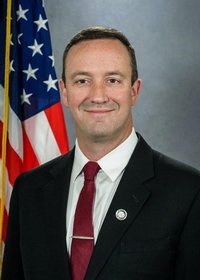
Total votes
1,197
all sessions
Attendance
44%
1,512 missed
Near the chamber average
With party
97%
of cast votes
Near the chamber average
Bipartisan score
1%
crosses aisle rarely
Near the chamber average
Sponsored
684
bills & resolutions
Near the chamber average
Committees
0
assignments
684 bills and resolutions
Sponsored bills
Total
684
Primary
35
Co-sponsor
649
This page
684
matching current filters
An Act establishing the First-time Homebuyer Savings Account Program and the First-time Homebuyer Savings Account Program Fund; and imposing duties on the Treasury Department.
Maddy summaryThis bill creates a new savings program for first-time homebuyers in the state, allowing them to open accounts specifically to save for down payments and closing costs on a single-family home. The program is administered by a new Bureau of Savings Programs within the Treasury Department, which will also manage a dedicated fund to hold contributions and earnings. To participate, individuals must apply through an online form and must not have previously owned a home in the state or another country. The money saved in these accounts can only be used for eligible housing expenses when the buyer purchases their first home.
Passed Oct 9, 2024
1 co-sponsor
An Act amending the act of October 27, 1955 (P.L.744, No.222), known as the Pennsylvania Human Relations Act, further providing for the title of the act, for findings and declaration of policy, for right to freedom from discrimination in employment, housing and public accommodation, for definitions, for unlawful discriminatory practices and for prohibition of certain real estate practices; providing for protection of religious exercise; and further providing for powers and duties of commission and for construction and exclusiveness of remedy.
Maddy summaryThis bill amends the Pennsylvania Human Relations Act to update the list of protected characteristics, explicitly adding sex, sexual orientation, gender identity or expression, familial status, handicap, disability, and the use of support animals to existing categories like race and age. The legislation directly affects employers, employment agencies, labor organizations, and providers of housing and public accommodations by clarifying that discrimination based on these new and existing traits is unlawful. It reinforces the state's policy of ensuring equal opportunity and mandates that the Pennsylvania Human Relations Commission enforce these protections through established procedures and penalties. Additionally, the bill includes provisions to protect religious exercise while maintaining the commission's powers and duties to prevent prejudice and handle complaints.
Passed Oct 8, 2024
1 co-sponsor
An Act amending Title 18 (Crimes and Offenses) of the Pennsylvania Consolidated Statutes, in firearms and other dangerous articles, repealing provisions relating to sale or transfer of firearms, further providing for Pennsylvania State Police and providing for duty to report to United States Immigration and Customs Enforcement.
Maddy summaryThis bill requires Pennsylvania State Police to report to the Attorney General and U.S. Immigration and Customs Enforcement when a background check reveals that a person attempting to buy a firearm is unlawfully present in the United States. Additionally, it mandates that judges inform the State Police about individuals who have been found incompetent, involuntarily committed, or treated for mental health issues, as well as those with drug use or addiction problems. These changes aim to improve the sharing of critical information between state authorities and federal immigration officials regarding firearm eligibility. The law will become effective 60 days after it is signed into legislation.
Passed Oct 8, 2024
1 co-sponsor
An Act amending the act of June 3, 1937 (P.L.1333, No.320), known as the Pennsylvania Election Code, in preliminary provisions, further providing for definitions; in qualifications of electors, further providing for qualifications of electors at primaries; in party organization, further providing for only enrolled electors to vote at primaries or hold party offices; in nomination of candidates, further providing for candidates to be nominated and party officers to be elected at primaries and providing for procedure for unenrolled electors to cast primary ballots; in preparation for and conduct of primaries and elections, further providing for manner of applying to vote, persons entitled to vote, voter's certificates, entries to be made in district register, numbered lists of voters and challenges; in voting by qualified absentee electors, further providing for applications for official absentee ballots; in voting by qualified mail-in electors, further providing for applications for official mail-in ballots; in returns of primaries and elections, further providing for computation of returns by county board, certification and issuance of certificates of election; and, in penalties, further providing for election officers refusing to permit elector to vote in proper party at primaries and repealing provisions relating to elector voting ballot of wrong party at primary.
Maddy summaryHB 979 amends the Pennsylvania Election Code to clarify the rules for voting in primary elections, specifically addressing the rights of unenrolled electors who have no registered political party affiliation. The bill establishes that only voters enrolled in a political party can vote in that party's primary or hold party office, while allowing unenrolled voters to choose a party at the polling place and cast a ballot for that specific election. Under the new procedures, election officers must ask unenrolled voters which party they wish to support, record that choice on their certificate, and treat them as enrolled for that single vote. Additionally, the legislation updates definitions and repeals penalties related to voters accidentally using the wrong party ballot, streamlining the process for primary election administration.
In committee Oct 8, 2024
1 co-sponsor
An Act amending Titles 18 (Crimes and Offenses) and 42 (Judiciary and Judicial Procedure) of the Pennsylvania Consolidated Statutes, in firearms and other dangerous articles, further providing for persons not to possess, use, manufacture, control, sell or transfer firearms and for abandonment of firearms, weapons or ammunition; in community and municipal courts, further providing for masters; adding provisions relating to extreme risk protection orders; imposing duties on the Office of Attorney General; and imposing penalties.
Maddy summaryThis bill expands Pennsylvania's existing rules on firearm possession by clarifying the responsibilities of individuals who are legally prohibited from owning guns. It mandates that people facing certain disabilities must surrender their firearms, ammunition, and licenses to law enforcement or transfer them to eligible buyers within a specific timeframe, with stricter requirements for those subject to abuse protection orders. The legislation also introduces new penalties for failing to comply with these surrender orders and for knowingly accepting or returning weapons to prohibited individuals before a court order allows it. Additionally, the bill outlines duties for the Office of Attorney General and establishes procedures for handling firearms in community and municipal courts.
Passed Oct 8, 2024
1 co-sponsor
An Act amending the act of June 13, 2008 (P.L.182, No.27), known as the Clean Indoor Air Act, further providing for title of act, for definitions, for prohibition, for signage, for enforcement, for preemption of local ordinances and for repeal; and making editorial changes.
Maddy summaryThis bill amends Pennsylvania's Clean Indoor Air Act to update definitions and clarify which specific types of businesses are subject to smoking restrictions. It directly affects establishments such as drinking establishments, cigar bars, and gaming floors by refining the criteria used to classify them under the law. Key provisions include adding new definitions for terms like "electronic smoking device" and "private club," while also removing certain categories like "cigar bars" from the list of regulated venues. The legislation maintains the state's authority to set these rules and prevents local governments from passing conflicting ordinances.
In committee Jun 11, 2024
1 co-sponsor
In committee Feb 7, 2024
1 co-sponsor
Passed Nov 21, 2023
1 co-sponsor
In committee Oct 31, 2023
1 co-sponsor
Ask Maddy
·
AI policy assistant
Ask Maddy about Mike Zabel
Scope: pennsylvania
Hi! I can help you understand Mike Zabel's legislative record. What would you like to know?
Try one of these
i
Maddy answers using official bill text and legislative records. Always verify before sharing.
Sources cited inline