Maddy summaryThis Pennsylvania House Resolution formally designates September 2026 as "Suicide Prevention Awareness Month" and September 10, 2026, as "World Suicide Prevention Day." The bill cites national statistics regarding suicide rates and attempts to highlight the ongoing public health challenge. It does not mandate specific actions or funding but instead encourages residents of the Commonwealth to provide support for individuals in need.

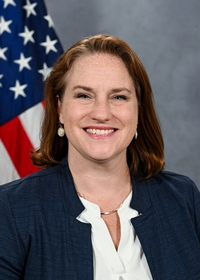
Rep. Heather Boyd
Sponsored bills
Maddy summaryPennsylvania House Bill 2752 amends state criminal law to mandate the seizure of assets from individuals convicted of human trafficking offenses. The bill requires courts to order the forfeiture of any property used in the crime or derived from its proceeds, ensuring these assets are transferred to local district attorneys or the state Attorney General for sale. A key provision establishes that funds recovered through this process must be prioritized for victim restitution before being distributed to law enforcement agencies or other government bodies. This legislation directly affects convicted traffickers by expanding the scope of their financial penalties and aims to ensure victims receive compensation from the illicit gains of the offenders.
Maddy summaryPennsylvania House Bill 2748 significantly expands the state's employer child care contribution tax credit for taxable years beginning after December 31, 2025. The bill increases the maximum amount of employee contributions that count toward the credit from $500 to $10,000 per employee and raises the credit rate from 30% to 100% of those qualifying contributions. To manage funding, the legislation caps total annual credits at $10 million and includes a proration mechanism that proportionally reduces individual claims if the total demand exceeds this limit.
Maddy summaryHB 2124 establishes a "transfer on death deed" process in Pennsylvania, allowing property owners to directly transfer real estate to named beneficiaries upon their death without probate. The bill enables owners to create a legally binding deed (requiring only county recording before death) that automatically transfers property to designated beneficiaries, with no need for beneficiary acceptance or payment during the owner's lifetime. Owners retain full control to revoke or modify the deed anytime before death, using the same legal capacity required for making a will. This applies to all Pennsylvania property owners seeking to simplify post-death property transfers for homes, land, or other real estate, avoiding court involvement in estate administration.
Maddy summaryThis Pennsylvania House resolution designates October 20, 2026, as Community Health Worker Awareness Day to honor the contributions of community health workers throughout the state. The bill aims to raise public awareness about these trusted professionals who help residents navigate healthcare systems, access resources, and manage health conditions. While the resolution does not create new laws or funding, it formally recognizes the vital role these workers play in improving community health and encourages continued investment in their training and support.
Maddy summaryHouse Bill 1042 creates a system in Pennsylvania allowing eligible incarcerated individuals to earn credits that reduce their minimum sentence. Inmates can receive sentence reductions for completing vocational training, educational programs like a GED or college degree, and other department-required programming. The bill sets specific credit amounts for different achievements, with a maximum limit of one-fourth of an inmate's minimum sentence. However, individuals convicted of certain serious offenses, such as murder or sexual assault, are excluded from earning these credits.
Maddy summaryThis bill increases the annual funding cap for Pennsylvania's Entertainment Economic Enhancement Program from $24 million to $26 million. The change directly affects the state's entertainment industry by allowing a larger pool of tax credits to be distributed each fiscal year. These credits are designed to help businesses in the entertainment sector by reducing their tax liability. The new limit will apply to fiscal years starting on or after July 1, 2026.
Maddy summaryHB 482 authorizes Pennsylvania to join the Interstate Occupational Therapy Licensure Compact, enabling licensed occupational therapists and assistants from Pennsylvania to practice in other participating states without obtaining separate licenses. The bill establishes mechanisms for mutual recognition of licenses, sharing of disciplinary and investigative data between states, and accountability for practitioners providing services across state lines. It directly affects occupational therapists, assistants, and patients seeking services in multiple states, particularly supporting military spouses relocating and expanding telehealth access. Key provisions include requiring states to participate in a shared data system, defining terms like "Compact Privilege," and preserving each state’s regulatory authority over local practice standards. This is a procedural bill enabling Pennsylvania’s participation in an existing interstate framework, not creating new licensing requirements.
Maddy summaryHB 2017 amends Pennsylvania's Radiation Protection Act (1984) by updating definitions related to radiation safety and revising fees for nuclear facilities and radioactive material transport. It directly affects nuclear power plant operators and companies transporting radioactive materials by changing how these fees are calculated and collected. The bill clarifies specific terms used in the original law and adjusts fee structures to reflect current operational standards. These changes aim to modernize the regulatory framework governing radiation safety oversight.
Maddy summaryThis Pennsylvania bill requires public and private schools to teach students in grades six through twelve about suicide prevention and violence awareness, while also introducing social isolation education for students from kindergarten through grade twelve. To support these requirements, the state education department must create and publish a list of evidence-based, age-appropriate curricula that schools can use to deliver at least one hour of instruction annually. The materials must cover identifying warning signs, seeking help, and reporting dangerous behavior, with the option for schools to combine these lessons into a single class period. Additionally, the legislation allows for the establishment of student-led violence prevention clubs to further promote safety within school communities.