

Maddy summaryPennsylvania House Bill 2728 amends state corporate law to prohibit business corporations, nonprofit corporations, and limited liability companies from directly or indirectly engaging in election activity or ballot question activity. The bill revokes existing general powers granted to these entities and re-grants them with specific exclusions for political spending, defining such activities as paying or contributing money to support or oppose candidates, political parties, or ballot measures. Any language in a corporate charter that purports to authorize this political activity is declared void, and any such activity conducted by an entity is considered ultra vires and legally invalid. Entities that violate these provisions face the automatic forfeiture of their charter privileges, including limited liability and perpetual duration, until they fully disgorge funds and certify future compliance. The Attorney General is authorized to pursue civil actions for injunctive relief and enforcement against non-compliant entities.
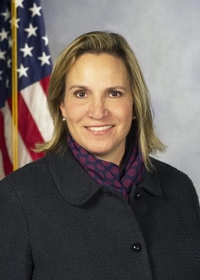
Rep. Christina Sappey
Sponsored bills
Maddy summaryThis bill updates Pennsylvania laws regarding borough and town governance to address financial management when auditor positions are empty. It allows a borough council to temporarily appoint one or two individuals to fill vacancies in the auditor's office, granting them the same powers as elected auditors until the next election. Additionally, the legislation clarifies that the council must adopt the town budget by December 31 and ensures total spending cannot exceed available estimated revenues. The council retains full discretion to set the qualifications for these temporary appointments.
Maddy summaryThis Pennsylvania bill creates a new tax incentive to encourage the installation of green infrastructure, such as rain gardens, green roofs, and permeable pavement, on properties within the state. It defines "green infrastructure" as stormwater management practices that reduce or reuse runoff and sets rules for claiming a tax credit based on qualified costs like design, materials, and installation. To receive the credit, taxpayers must complete a certified project and submit detailed documentation to the Department of Revenue, while excluding costs covered by grants or routine maintenance. The legislation also updates the legal definition of "tax credit" to include this new program alongside existing state tax benefits.
Maddy summaryHB 482 authorizes Pennsylvania to join the Interstate Occupational Therapy Licensure Compact, enabling licensed occupational therapists and assistants from Pennsylvania to practice in other participating states without obtaining separate licenses. The bill establishes mechanisms for mutual recognition of licenses, sharing of disciplinary and investigative data between states, and accountability for practitioners providing services across state lines. It directly affects occupational therapists, assistants, and patients seeking services in multiple states, particularly supporting military spouses relocating and expanding telehealth access. Key provisions include requiring states to participate in a shared data system, defining terms like "Compact Privilege," and preserving each state’s regulatory authority over local practice standards. This is a procedural bill enabling Pennsylvania’s participation in an existing interstate framework, not creating new licensing requirements.
Maddy summaryThis bill updates Pennsylvania laws regarding child protective services to improve how cases are investigated and how records are handled. It requires that when a child abuse report is found to be unfounded but the family still needs help, agencies must keep those records for a specific time before expunging them, while ensuring the subject of the record receives written notice of the expunction. Additionally, the legislation mandates the creation of specialized review teams for cases where a child dies or suffers a near-fatal injury due to abuse. These teams must include a diverse group of experts, such as healthcare professionals, law enforcement, mental health specialists, and community representatives, to conduct thorough reviews and write reports. The bill also clarifies the composition of these teams to ensure broad representation and expertise in preventing and treating child abuse.
Maddy summaryThis bill is a House Resolution that officially recognizes September 2026 as 'International Underground Railroad Month' within Pennsylvania. It does not create new laws or change how the state operates, but rather serves as a formal acknowledgment of the state's historical role in the Underground Railroad network. The resolution honors the individuals who helped enslaved people escape to freedom and highlights the significance of related historical sites across the Commonwealth.
Maddy summaryHB 2146 modifies Pennsylvania's open meetings law to clarify when government agencies can take action on unlisted agenda items. It creates specific exceptions for minor administrative approvals that arise unexpectedly, such as urgent legal filings, small purchases under $10,000 (based on current thresholds), grant applications with deadlines, or minor permit approvals. Agencies must obtain and publicly disclose a legal opinion confirming an item qualifies under these exceptions before acting. This directly affects state and local agencies holding public meetings, ensuring transparency while allowing limited flexibility for time-sensitive matters. The bill does not change core meeting notice requirements but adds defined exceptions for minor, non-financial actions.
Maddy summaryThis bill amends Pennsylvania's Fiscal Code to create a disaster recovery grant program for fruit and vegetable growers affected by freeze events between April 1 and April 21, 2026. It allocates up to $20 million from previously set-aside funds for highly pathogenic avian influenza to assist growers of specialty crops, including pome and stone fruits, grapes, berries, and vegetables, who suffered production losses exceeding 30%. The legislation explicitly excludes costs already covered by federal funding, insurance, or other contracts from receiving these state grants and requires the Department of Agriculture to publish implementation guidelines within 90 days of the bill's effective date.
Maddy summaryThis resolution directs the Joint State Government Commission to study suicide prevention and data collection efforts in Pennsylvania and provide recommendations for improvement. The study will specifically examine how well the state has met eight existing suicide prevention goals and analyze the Pennsylvania Violent Death Reporting System to identify barriers like lack of mandatory reporting and insufficient funding. The commission is tasked with proposing legislative actions to ensure medical examiners, coroners, and law enforcement agencies consistently report violent death data to the Department of Health.
Maddy summaryThis Pennsylvania bill requires health insurance companies to cover fertility preservation services for individuals facing medically necessary cancer treatments that could cause infertility. The law mandates that insurers include at least three years of egg, sperm, or ovarian tissue storage at an in-network facility, with a minimum lifetime benefit of $100,000 per person. While the coverage must follow standard policy rules like deductibles and copayments, religious employers are allowed to request exemptions if the services conflict with their beliefs, provided they notify patients and allow them to buy separate supplemental insurance.