

1 co-sponsor
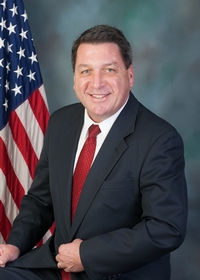
Rep. Craig Staats
Total votes
4,235
all sessions
Attendance
100%
11 missed
Near the chamber average
With party
95%
of cast votes
Near the chamber average
Bipartisan score
2%
crosses aisle rarely
Near the chamber average
Sponsored
1,714
bills & resolutions
Near the chamber average
Committees
1
assignment
1,714 bills and resolutions
Sponsored bills
Total
1,714
Primary
38
Co-sponsor
1,676
This page
1,714
matching current filters
An Act amending the act of March 10, 1949 (P.L.30, No.14), known as the Public School Code of 1949, in career and technical education, further providing for duty of secretary to report annually and for organization and operation of schools and institutes.
Maddy summaryPennsylvania House Bill 2737 amends the state's Public School Code to require annual reporting on student wait lists for career and technical education programs. The bill mandates that area career and technical boards submit data on the number of students waiting for enrollment in specific programs to the Department of Education by July 1 each year. Additionally, it requires the Secretary of Education to report this wait list information, broken down by program, to the state legislature's standing education committees annually.
In committee Aug 18, 2026
1 co-sponsor
An Act amending the act of March 10, 1949 (P.L.30, No.14), known as the Public School Code of 1949, in school finances, further providing for limitations on certain unreserved fund balances.
Maddy summaryPennsylvania House Bill 2735 updates the Public School Code of 1949 to restrict school districts from increasing real property taxes unless their projected ending fund balances meet specific limits. The bill establishes a sliding scale where larger districts with higher total budgeted expenditures must maintain lower percentages of committed, assigned, and unassigned funds compared to smaller districts. To ensure compliance, each district that approves a tax increase must submit certification data to the Department of Education by August 15 of each year starting in 2027.
Budget & TaxesOpposes Budget & TaxesThe bill restricts school districts from increasing real property taxes unless fund balance limits are met, directly limiting local fiscal autonomy and tax revenue growth.
EducationOpposes EducationBill restricts school districts from increasing real property taxes by imposing limits on fund balances, thereby limiting local control over school funding.
In committee Aug 18, 2026
1 co-sponsor
A Resolution recognizing December 7, 2026, as "Pearl Harbor Remembrance Day" in Pennsylvania in honor of the courage, sacrifice and memory of the American service members, civilians and citizens of Hawaii who were killed, wounded or forever impacted by the attack on Pearl Harbor on December 7, 1941.
Maddy summaryThis Pennsylvania House Resolution designates December 7, 2026, as "Pearl Harbor Remembrance Day" to honor the service members and civilians affected by the 1941 attack. The bill highlights a specific connection between the state and the event by noting that the USS Pennsylvania was present at Pearl Harbor and sustained casualties. It encourages residents to pause in remembrance, honor World War II veterans, and recognize the resilience of the people of Hawaii.
In committee Aug 11, 2026
1 co-sponsor
An Act amending Title 53 (Municipalities Generally) of the Pennsylvania Consolidated Statutes, in assessments of persons and property, providing for senior property tax freeze.
Maddy summaryPennsylvania House Bill 2727 authorizes local governments to offer a voluntary property tax freeze for seniors who are at least 65 years old, have lived in the state for five or more years, and meet specific income limits. Eligible homeowners can keep their real estate taxes fixed at the amount paid during a designated base year, provided they continue to meet financial criteria that are adjusted annually for inflation. The tax freeze applies only to a primary residence and transfers if the owner moves within the same local jurisdiction, but it ends when the property is sold or transferred. The state Department of Community and Economic Development will oversee the program by creating a standardized application form and publishing annual reports on its performance and cost savings.
Budget & TaxesSupports Budget & TaxesBill provides property tax relief for seniors by freezing taxes, directly addressing taxation and fiscal policy.
HousingSupports HousingThe bill provides a property tax freeze for seniors, which protects their financial stability and ability to remain in their primary residences.
In committee Aug 4, 2026
1 co-sponsor
An Act amending the act of March 10, 1949 (P.L.30, No.14), known as the Public School Code of 1949, in school finances, further providing for school districts lying in more than one county or in more than one municipality and limitation on total tax revenues.
Maddy summaryThis bill limits how much school districts that span multiple counties or municipalities can increase their property tax rates. It allows a district's tax rate to rise only by the amount of a specific index adjustment plus any prior year's rate, unless the increase is due to a formal reassessment of property values or a successful voter referendum. The rules apply to tax years starting after June 30, 2026, and are designed to prevent significant jumps in local property taxes for these multi-jurisdictional districts.
Budget & TaxesOpposes Budget & TaxesBill restricts property tax rate increases for multi-jurisdictional school districts, limiting government spending capacity.
EducationOpposes EducationBill restricts property tax increases for multi-jurisdictional school districts, limiting their ability to raise revenue and potentially constraining school funding.
In committee Jul 29, 2026
1 co-sponsor
An Act designating the interchange of Interstate 81 with State Route 4007, known as Exit 119, on the border of Cass Township and Butler Township, Schuylkill County, as the PSP Trooper Michael E. Pahira, Jr. Memorial Interchange.
Maddy summaryThis bill designates a specific highway interchange in Schuylkill County as a memorial to Pennsylvania State Police Trooper Michael E. Pahira, Jr., who died in the line of duty in 2026. The legislation requires the Department of Transportation to install signs identifying the interchange by his name. This action honors Trooper Pahira's service and memory without altering any traffic laws or infrastructure.
In committee Jul 27, 2026
1 co-sponsor
A Resolution urging the members of the United States Senate and the United States House of Representatives to review Major Richard D. Winters' actions at Heteren Crossroads in Holland in 1944 and to award him with the Congressional Medal of Honor.
Maddy summaryThis Pennsylvania House resolution urges the U.S. Congress to review the actions of Major Richard D. Winters during World War II and award him the Congressional Medal of Honor. The bill highlights Winters' leadership at Heteren Crossroads in Holland in 1944, where he led a small force against a larger German unit, resulting in significant enemy casualties and preventing an attack on American headquarters. By formally requesting this review, the resolution aims to recognize Winters' military service and the events depicted in the television series Band of Brothers.
Passed Jul 1, 2026
1 co-sponsor
In committee Jul 1, 2026
1 co-sponsor
An Act providing for sport activities in public institutions of higher education and public school entities to be expressly designated male, female or coed; and creating causes of action for harms suffered by designation.
Maddy summaryHB 158, the "Fairness in Women's Sports Act," requires public schools and colleges in Pennsylvania to explicitly designate athletic teams as male, female, or coed based on biological sex. It prohibits teams designated for females from allowing male students to participate and allows students who face denied opportunities or harm due to violations to sue for damages. Schools can also sue entities that punish them for following the law. The bill applies directly to all public school districts, colleges, and athletic programs covered under Pennsylvania's Public School Code.
In committee Jul 1, 2026
1 co-sponsor
Ask Maddy
·
AI policy assistant
Ask Maddy about Craig Staats
Scope: pennsylvania
Hi! I can help you understand Craig Staats's legislative record. What would you like to know?
Try one of these
i
Maddy answers using official bill text and legislative records. Always verify before sharing.
Sources cited inline