

Passed Sep 22, 2026
1 co-sponsor
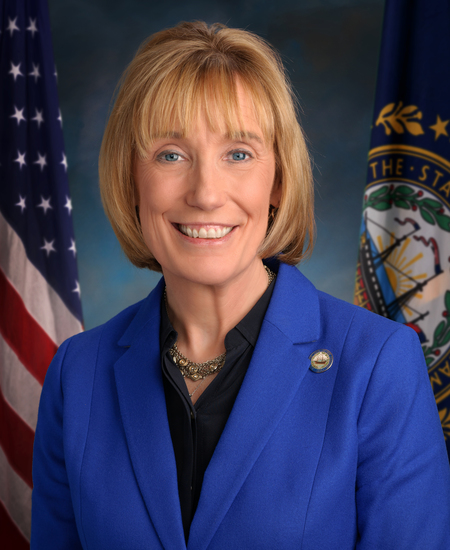
Sen. Margaret Wood Hassan
Total votes
1,041
all sessions
Attendance
99%
7 missed
Near the chamber average
With party
95%
of cast votes
Lower than 84% of chamber peers
Bipartisan score
3%
crosses aisle rarely
Higher than 82% of chamber peers
Sponsored
1,380
bills & resolutions
Near the chamber average
Committees
12
assignments
1,380 bills and resolutions
Sponsored bills
Total
1,380
Primary
193
Co-sponsor
1,187
This page
1,380
matching current filters
Connected Vehicle Security Act of 2026
Maddy summaryThe Connected Vehicle Security Act of 2026 restricts the importation, sale, and use of connected vehicles and related technology from China, Russia, Iran, and North Korea to protect national security. Starting in 2027, the bill generally bans these vehicles if they originate from or are controlled by these countries, with separate restrictions on software and hardware taking effect in 2030. The Secretary of Commerce is authorized to issue specific exemptions for items that do not pose a security risk and must publish a list of approved products. The law also requires companies to submit declarations confirming their vehicles comply with the rules and imposes heavy fines for violations.
TechnologyOpposes TechnologyBill restricts importation, sale, and use of connected vehicles and related technology from specific countries, limiting market access and technological availability.
TransportationOpposes TransportationBill restricts importation, sale, and use of connected vehicles from specific countries, limiting vehicle availability and technology access.
In committee Sep 22, 2026
1 co-sponsor
A resolution expressing support for the designation of the week of September 19 through September 26, 2026, as "National Estuaries Week".
Maddy summaryThis resolution expresses the U.S. Senate's support for designating the week of September 19 through September 26, 2026, as National Estuaries Week to raise public awareness about the importance of these coastal ecosystems. The bill highlights that estuaries support a significant portion of the nation's population, jobs, and economic output while providing critical services such as flood control, water filtration, and habitat for fish and wildlife. It acknowledges ongoing threats to these areas, including pollution, sea-level changes, and harmful algal blooms, which have led to the loss of wetlands and degraded water quality. The resolution also commends the efforts of federal, state, local, and tribal governments, as well as community organizations, in protecting and restoring estuary health.
In committee Sep 17, 2026
1 co-sponsor
In committee Sep 17, 2026
0 co-sponsors
Canterbury Shaker Village National Heritage Area Study Authorization Act
Maddy summaryThis bill authorizes a study to determine if Canterbury Shaker Village in New Hampshire should be designated as a National Heritage Area. The study, led by the Secretary of the Interior with input from local groups and agencies, will assess the site's suitability and feasibility for this designation. It does not create the heritage area itself but sets the process for evaluating the historic site’s potential status. The study area includes the existing National Historic Landmark, covering 700 acres of land, 25 buildings, and associated historical resources.
In committee Sep 17, 2026
0 co-sponsors
Billion Dollar Boondoggle Act of 2025
Maddy summaryThis bill requires federal agencies to report annually on major projects that are either significantly delayed or exceed their original budget by over $1 billion. Covered agencies (including Executive departments and independent regulatory bodies) must submit detailed reports for each "covered project," including cost changes, schedule delays, contractor information, and explanations for budget overruns. The Office of Management and Budget will compile these reports into a public annual document for Congress and the public. The bill does not change funding or stop projects - it only mandates transparency about large-scale federal spending.
Passed Sep 16, 2026
1 co-sponsor
Kay Hagan Tick Reauthorization Act
Maddy summaryThis bill extends two existing public health programs focused on tick-borne diseases through 2030. It updates the funding timeline for national vector-borne disease centers and health department support from 2021-2025 to 2026-2030. The bill does not change program content or eligibility but ensures continued funding for efforts addressing tick-related illnesses. It directly affects public health agencies administering these programs, not specific individuals.
Passed Sep 15, 2026
1 co-sponsor
Regional Ocean Partnerships Reauthorization Act
Maddy summaryThis bill reauthorizes existing regional ocean partnerships through 2031, extending funding for coastal states and tribes managing ocean resources. It sets specific annual funding levels: $11.57 million for 2028, $11.69 million for 2029, $11.81 million for 2030, and $11.92 million for 2031. The bill makes technical updates to reporting requirements and adjusts the funding period to align with the new authorization. It directly affects current regional ocean partnership programs under the 2023 defense act, ensuring continued federal support for coastal management efforts.
In committee Sep 14, 2026
1 co-sponsor
Recognizing the Role of Direct Support Professionals Act
Maddy summaryThis bill requests the Office of Management and Budget to add a new occupational code for "direct support professionals" within the federal Standard Occupational Classification system. It directly affects how the government tracks and analyzes data on this workforce, which supports people with intellectual and developmental disabilities in daily living, community inclusion, and independence. The key provision requires revising the classification system to recognize these workers as a distinct category - different from home health aides - addressing high turnover rates (39% nationally) that disrupt care. The bill does not create new programs or funding, solely aiming to improve data collection for workforce planning.
In committee Sep 14, 2026
0 co-sponsors
Duplication Scoring Act of 2025
Maddy summaryThe Duplication Scoring Act of 2025 requires the Government Accountability Office (GAO) to assess most federal bills and joint resolutions for risks of creating new redundant government programs or initiatives. For each covered bill, the GAO must identify if it would duplicate or overlap with existing programs previously flagged in GAO reports, specifying the program name, bill section, and relevant report. The GAO must publish this analysis online and provide it to Congress and the Congressional Budget Office (CBO), which may include the findings in its budget estimates. This bill directly affects congressional committees, the CBO, and federal agencies by adding a standardized duplication review step to the legislative process. It does not create new policies but mandates a new assessment mechanism for bills.
In committee Sep 14, 2026
1 co-sponsor
Ask Maddy
·
AI policy assistant
Ask Maddy about Margaret Wood Hassan
Scope: oregon
Hi! I can help you understand Margaret Wood Hassan's legislative record. What would you like to know?
Try one of these
i
Maddy answers using official bill text and legislative records. Always verify before sharing.
Sources cited inline