Maddy summaryThis House resolution expresses support for designating the week of September 19 through September 26, 2026, as National Estuaries Week to raise public awareness about the importance of these coastal ecosystems. The bill highlights that estuaries support a significant portion of the U.S. population and economy while providing critical services such as flood control, water filtration, and habitat for fish and wildlife. It acknowledges ongoing threats to estuary health, including pollution and sea level changes, and recognizes the efforts of government agencies, organizations, and individuals working to protect and restore these areas.

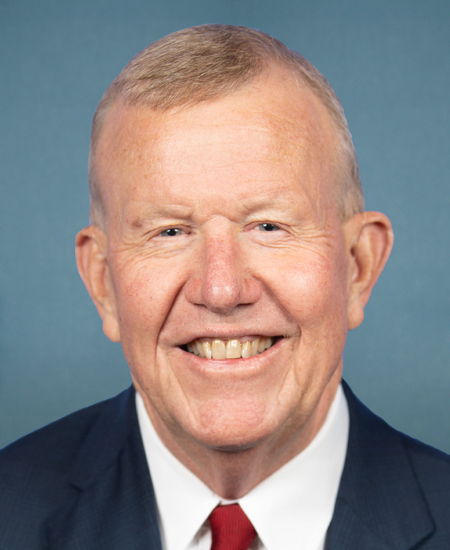
Rep. Mike Ezell
Sponsored bills
Maddy summaryThe Strengthening Coast Guard Communities Act of 2026 grants the Commandant of the Coast Guard the authority to enter into intergovernmental support agreements on behalf of the department in which the service is operating. This provision allows the Commandant to act with the same legal standing as the Secretary of that department for these specific agreements. The bill requires the Commandant to submit a written notification to the relevant Senate and House committees within 60 days of exercising this authority, detailing any agreements made.
Maddy summaryHR 5267, the American Franchise Act, clarifies when franchisors can be considered joint employers of franchisee employees under federal labor laws. It defines "substantial direct and immediate control" over essential employment terms like wages, benefits, hours, hiring, and discipline - requiring franchisors to actively set these terms to be deemed joint employers. The bill explicitly excludes routine brand standards, training, or minimal safety requirements from constituting such control. This directly affects franchisors and franchisees by limiting joint employer liability to cases where franchisors exert significant, ongoing influence over core employment decisions. The law applies prospectively to new cases after enactment, not past disputes.
Maddy summaryThis bill, known as Kayleigh's Law Act of 2026, requires federal courts to issue permanent restraining orders against defendants convicted of certain serious crimes, prohibiting them from contacting their victims for the rest of their lives. The law applies specifically to individuals convicted of violent felonies or felony offenses involving sexual acts, including crimes like child exploitation and human trafficking. Courts must include these orders in sentencing, and violations are treated as contempt of court, while the only way to lift the order is if the conviction is overturned or pardoned. The bill also ensures that victims cannot be charged any fees for obtaining these protective orders and clarifies that the restrictions apply regardless of state laws.
Maddy summaryThe STORM FORTIFIED and Wildfire Prepared Act authorizes $100 million annually from 2027 through 2036 to establish state-level revolving loan funds that provide grants to homeowners for installing storm-resistant roofs and wildfire-prepared home improvements. To receive federal capitalization, states must contribute at least 35 percent of the grant amount to their own fund, which then lends money to state agencies at an interest rate of no more than 1 percent. Homeowners are eligible for grants up to $10,000 if they meet specific criteria, including owning a primary residence, maintaining required property insurance, and ensuring the work is verified by qualified evaluators. The bill requires states to forgive the homeowner's repayment obligation for individuals with incomes below 120 percent of the area median income, while excluding new construction, condominiums, and mobile homes from participation.
National Law Enforcement Officers Remembrance, Support and Community Outreach Act. [ sic ] This bill temporarily directs the Department of the Interior to award a grant to the National Law Enforcement Officers Memorial Fund for the expenses associated with operating and enhancing the community outreach, public education, and officer safety and wellness programs of the National Law Enforcement Museum.
Maddy summaryThis joint resolution seeks to overturn a specific Environmental Protection Agency rule that granted California the authority to enforce its own nonroad engine pollution standards for commercial harbor craft. If enacted, the bill would render the EPA’s decision invalid and prevent it from taking effect. The measure directly affects California by removing its ability to impose stricter local emissions regulations on these vessels.
Maddy summaryThis bill designates the U.S. Postal Service facility at 825 Highway 198 in Beaumont, Mississippi, as the "Jeremy Malone Post Office." It updates all official references in federal documents, maps, and records to reflect this new name. As a naming bill, it has no policy or funding impact - it solely commemorates an individual through the facility's official designation. The change affects only the postal facility and its official documentation.
Maddy summaryThe Wildfire Reduction Market Expansion Act of 2026 updates the Clean Air Act to broaden the definition of renewable biomass eligible for carbon credits. It specifically allows materials from forest management, such as slash, storm debris, and wood residuals, to be counted as renewable fuel if they come from sustainably managed lands or public forests designated for fuel reduction. The bill also includes vegetation cleared from defensible space around buildings and from wildfire risk reduction projects in the wildland-urban interface. By clarifying these categories and establishing certification requirements, the legislation aims to increase the supply of biomass available for generating renewable energy credits.
Maddy summaryThis bill requires pharmacy benefits managers (PBMs) administering prescription drug benefits for federal employee health plans to reimburse pharmacies at specific rates, including the national average drug cost plus a small percentage or $50, whichever is lower. It prohibits PBMs from favoring their own pharmacies, restricting patient choice, or reducing pharmacy payments after claims are processed. The bill establishes $10,000 civil penalties for violations, with debarment from federal health plans after 10 penalties in 10 years. This directly affects PBMs, in-network pharmacies, and federal health benefit plans covering millions of federal employees and their families. The law aims to ensure fair reimbursement practices and maintain pharmacy choice under the Federal Employees Health Benefits Program.