Maddy summarySB 1090 creates the "Invest In Oklahoma" program, allowing nine specific state retirement systems (including Teachers’ Retirement and Public Employees Retirement) to invest up to 5% of their assets in Oklahoma-based private equity, venture capital, and growth funds. The State Treasurer must select qualifying funds using criteria like return rates, investment track records, and the percentage of capital invested in Oklahoma. A new Cash Management and Investment Oversight Commission will review investment performance and establish reporting standards. The program requires the Treasurer to maintain public lists of approved funds and ensure investments align with safety and return goals.

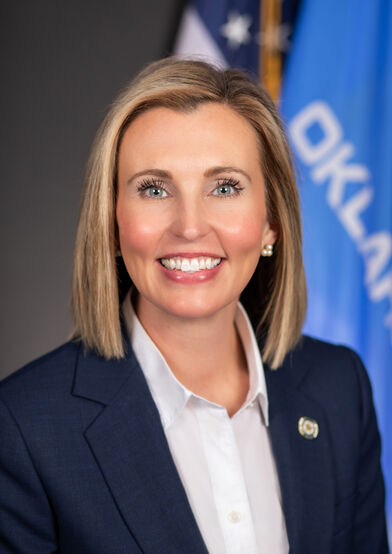
Sen. Kristen Thompson
Sponsored bills
Maddy summarySB 1630 allows Oklahoma public school districts and charter schools to count up to two days (12 hours) of virtual instruction toward their annual requirement of 1,086 classroom hours, starting in the 2026-2027 school year. This applies only if the school district submits a virtual instruction plan approved by the Superintendent of Public Instruction. The bill prohibits counting virtual instruction days toward the requirement except under this limited exception, directly affecting all Oklahoma public schools and charter schools. It modifies existing school year requirements but does not change the core 1,086-hour or 181-day instructional standards.
Maddy summaryThis bill establishes the "Oklahoma Workers' Compensation Medical Fee Policy Act of 2025," creating a new framework for setting medical fees in workers' compensation cases. It directly affects medical providers treating work-related injuries and injured workers receiving medical care through workers' compensation. The policy will take effect on November 1, 2025, standardizing fee rates for medical services under workers' compensation claims.
Maddy summaryHB 3986 modernizes Oklahoma's gross production tax for oil, gas, and mineral production. It sets a 7% tax rate on most oil and gas production (increasing from previous rates), with a temporary 5% rate for wells spudded before the law's effective date for 36 months. The bill creates tax exemptions for 5 years for secondary/tertiary recovery projects (approved after July 2022) and offers a 50% tax reduction for 36 months on production from orphaned wells (requiring a $25,000 bond per well). Producers of oil/gas using recycled water for well completion also get a 24-month exemption proportional to recycled water use. Refunds for exempt production are capped annually at $15 million for recovery projects and $10 million for recycled water projects.
Maddy summarySB 2018 amends Oklahoma property tax law to establish a specific valuation method for large residential rental housing developments. It defines "residential rental housing" as properties with at least 60 rental units and prescribes how county assessors must value these properties for ad valorem tax purposes. The bill updates statutory definitions and requirements in Sections 2802 and 2817 of the Oklahoma Statutes, ensuring these properties are assessed using a method consistent with market value standards. This change directly affects county tax assessors and owners of large multi-unit rental properties across Oklahoma.
Maddy summaryHB 2959 requires all school employees in Oklahoma to immediately report suspected abuse or neglect of students under 18 to both the Department of Human Services and local law enforcement (police, not school resource officers). It mandates that school superintendents or administrators must report suspected abuse by staff to law enforcement within 24 hours - before any school investigation or interviews occur - and prohibits school officials from questioning accused staff until law enforcement is notified. The bill also requires all school employees to annually acknowledge their reporting duty and defines "abuse or neglect" broadly to include sexual abuse, trafficking, and other specific offenses under Oklahoma law. This law directly affects every school employee and administrator in Oklahoma public and private schools.
Maddy summaryHB 3320 repeals Oklahoma's Sunset Act, which automatically terminated state agencies, boards, and commissions after fixed periods unless reauthorized by the legislature. The bill removes automatic termination dates for specific entities like the Oklahoma Abstractors Board, State Board of Examiners of Certified Shorthand Reporters, and the Board of Chiropractic, making their continued operation permanent without future legislative approval. This change eliminates the need for periodic reauthorization votes on these bodies. The bill also repeals related statutes that were part of the Sunset Act framework.
Maddy summaryHB 2115 transfers administration of Oklahoma's Energy Conservation Assistance Fund from the Department of Commerce to the Department of Human Services. It provides grants of up to $3,000 for weatherization work (like insulation, storm windows, and structural repairs) to low-income elderly and handicapped homeowners who meet income guidelines (125% of federal poverty level). The bill requires an energy audit before grants are issued, prioritizes applicants with greatest need, and establishes a revolving fund for ongoing program funding. This directly affects qualifying homeowners seeking energy efficiency improvements to their primary residences.
Maddy summaryHB 3586, the "Parents Protection Act of 2026," amends Oklahoma adoption laws and the Oklahoma Children's Code. It prohibits denying adoption eligibility based on an adoptive parent's refusal to support a child's gender transition, and explicitly states that referring to a child by their biological sex or raising them consistent with biological sex does not constitute child abuse under state law. The bill directly affects prospective adoptive parents, child welfare professionals, and children in foster care or adoption systems by changing how abuse is defined and ensuring biological sex references cannot be classified as abuse. Key provisions include updated adoption eligibility criteria (Section 7503-1.1) and revised definitions of "abuse" and "child" in the Oklahoma Children's Code (Section 1-1-105). The bill takes effect upon enactment.
Maddy summarySB 2155 allows Oklahoma municipalities to consider the competitiveness of their development fee schedules when setting or raising fees for new construction or expansions. It clarifies that cities are not required to keep fees uniform across jurisdictions and mandates periodic reviews of these fee schedules. The bill requires that fees directly match the cost of new infrastructure capacity (like water, roads, or storm systems) generated by development, cannot fund maintenance of existing systems, and must be proportionate to the actual impact. This affects developers and local governments by changing how municipalities calculate and adjust fees tied to new growth.