

Maddy summarySB 1360 creates a three-year pilot program (2026-2027 to 2028-2029) where Oklahoma's State Department of Education assigns math instruction teams to public school districts with the lowest student math assessment scores (starting with the bottom 10% in year one, expanding to 20% and 30% in later years). These teams provide targeted support to students struggling with math, including those with dyscalculia, and help teachers improve instruction through specialized training in evidence-based math teaching methods. The bill also requires the Department to establish an Office of Mathematics Improvement to oversee the program and submit a final report evaluating its impact on student math proficiency by December 2029. The program directly affects school districts identified by assessment data and teachers seeking updated instructional resources.
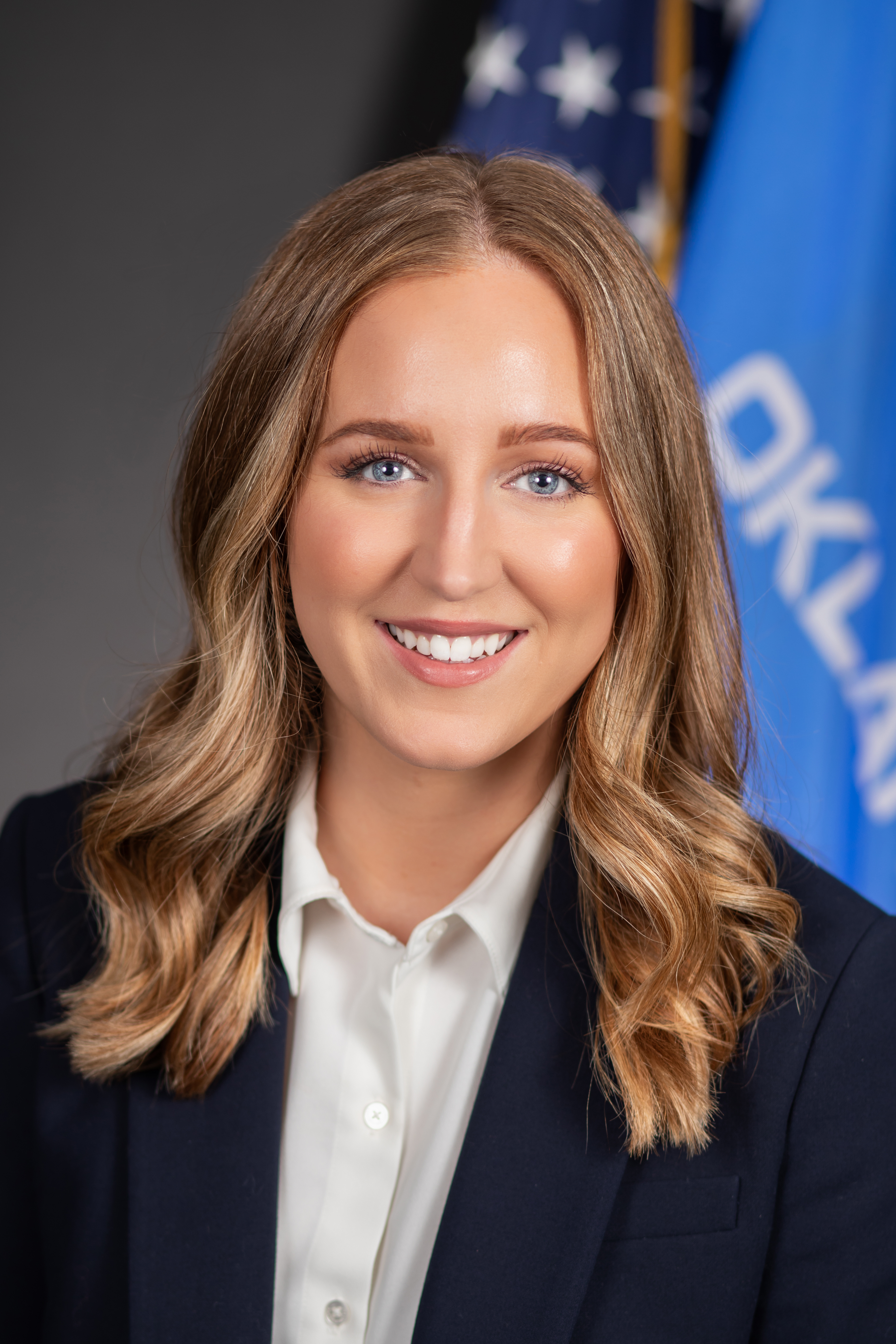
Sen. Ally Seifried
Sponsored bills
Maddy summarySB 1614 modifies Oklahoma's requirements for adjunct teachers by establishing that they must hold a high school diploma and have "distinguished qualifications in their field" but do not need standard teaching certification. The bill specifically prohibits adjunct teachers from being employed full-time as math or English language arts teachers for grades 1-5 in public schools or public charter schools. It also clarifies that adjunct teachers without a valid teaching certificate are not considered "teachers" under Oklahoma law (Section 1-116). The bill amends Section 6-122.3 of state law and takes effect immediately due to an emergency declaration.
Maddy summarySB 1734, the Oklahoma Responsible Technology in Schools Act, restricts AI tool use in public schools to educator-supervised settings, requiring all classroom AI applications to operate under teacher oversight ("human-in-the-loop") with educators reviewing outputs before use in instruction or assessment. It prohibits AI from determining high-stakes outcomes like grading, discipline, or student placement, and mandates school districts to adopt policies by the 2027-2028 school year covering data privacy, appropriate use, and transparency for families. The State Department of Education must develop guidance to help districts comply, while ensuring AI tools meet federal privacy laws (like FERPA) and minimize student data sharing. The bill takes effect July 1, 2026, and does not compel schools to adopt AI but sets guardrails for its responsible use.
Maddy summarySB 1725 allows Oklahoma public colleges and universities to charge security fees for permitted campus events like protests or gatherings, but only based on neutral factors such as event size, location, or alcohol service - not on speech content, viewpoint, or expected reaction. Institutions must publish their fee criteria online. The bill also directs the Oklahoma Free Speech Committee to develop mandatory training on these policies for students. These changes update existing free speech protections for campus activities at public higher education institutions.
Maddy summarySB 710 renames Oklahoma's Commission for Educational Quality and Accountability to "Commission for Education Impact" and updates the Office of Educational Quality and Accountability to "Office of Educational Quality and Accountability ImpactEd," effective November 1, 2025. It also adjusts member terms to be staggered starting July 1, 2027, with two members' terms ending in 2029, 2030, and 2031. The bill primarily updates statutory references to reflect these name changes throughout Oklahoma law, with no new policy provisions or responsibilities added.
Maddy summaryHB 4359 requires Oklahoma's statewide student assessments to be administered in May each year, rather than at other times of the year. This bill directly affects all Oklahoma public school students in grades 3-12, as it amends existing law governing the timing of required assessments in English Language Arts, math, science, and U.S. History. The key mechanism is a specific amendment to the statute requiring assessments to occur "in May" annually, while maintaining all other assessment content, grade-level requirements, and graduation criteria. This change aims to standardize assessment timing across districts for better planning and reporting. The bill does not alter what is assessed or the graduation requirements themselves.
Maddy summaryHB 4326 expands eligibility for Oklahoma's Higher Learning Access Program to include students in court-ordered custody of private nonprofit child-placing agencies or federally recognized Indian tribes during specific grades (8th-11th). It removes the income requirement for these students and adds eligibility for students whose parent is a certified classroom teacher. The bill amends existing program rules to broaden access for these groups while maintaining other standard requirements like residency, academic performance, and admission standards. This change directly affects students in foster care or tribal custody who previously faced financial barriers to qualify.
Maddy summaryHB 4427 requires Oklahoma's State Board of Education to create rules defining "distinguished qualifications" for adjunct teachers, including minimum experience and education requirements. It prohibits adjunct teachers without a valid teaching certificate from instructing core subjects in prekindergarten through fourth grade unless a school district obtains a waiver from the State Board. The bill also mandates annual reports from the State Department of Education detailing adjunct teacher qualifications, subject areas taught, and their distinguished experience. These reports must be published online and shared with legislators by January 15 each year. The law directly affects school districts, adjunct teachers, and the State Board of Education, with no impact on standard teaching certification requirements.
Maddy summaryHB 3066 creates the Health Care Workforce Training Commission and establishes the "Rural Health Transformation Revolving Fund" in Oklahoma's state treasury. The fund will collect federal funds (including those from the One Big Beautiful Bill Act of 2025), interest, and designated state monies to specifically recruit and retain healthcare workers in rural and underserved Oklahoma communities, requiring a minimum 5-year service commitment. The Commission can use these funds for workforce programs and create necessary rules to implement the program. The bill takes effect July 1, 2026, and directly affects rural healthcare providers and communities facing workforce shortages.
Maddy summaryHB 3076 creates a pilot program for alternative teacher certification pathways in Oklahoma, allowing organizations like school districts or colleges to offer non-traditional teacher preparation programs. It requires the State Board of Education Commission to approve providers meeting specific criteria (such as financial stability, infrastructure, and program effectiveness) within 60 days, and mandates that approved programs use research-based methods to prepare teachers. The bill permits teacher candidates to demonstrate competency through non-traditional means like work experience or industry certifications, rather than solely standardized tests. The pilot program is limited to a two-year timeframe ending July 1, 2026, and requires annual reporting on program success rates.