

Maddy summarySB 1632 requires Oklahoma public schools to provide free career-readiness assessments to students in grades 10-12 starting in the 2026-2027 school year. The assessments measure foundational workplace skills like applied math, workplace documents, and critical thinking, and lead to nationally recognized credentials upon meeting proficiency standards. It shifts approval authority for these assessments from the Oklahoma Department of Commerce to the State Department of Education, while directing the Oklahoma State Regents for Higher Education to establish rules for awarding college credit based on assessment results. The bill affects all Oklahoma public high school students in targeted grades and mandates school districts to administer the assessments at no cost to students who choose to participate.
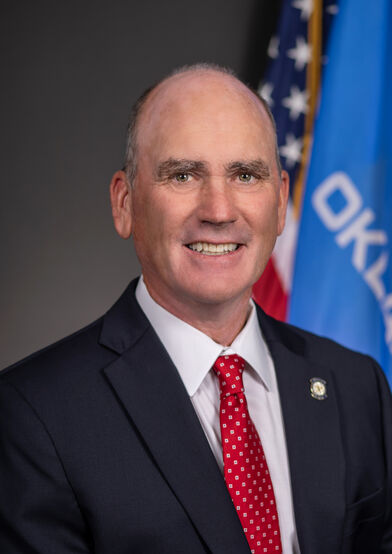
Sen. Jerry Alvord
Sponsored bills
Maddy summarySB 1277 modifies Oklahoma's unemployment benefits rules by requiring job seekers to complete five specific work search activities each week to maintain eligibility. It lists 15 acceptable actions, such as submitting resumes, attending job fairs, completing online job search workshops, or developing a resume in the state's employment system. The bill replaces vague prior requirements with clear, actionable steps for recipients to prove they are actively seeking work. It does not change benefit amounts but affects individuals receiving unemployment benefits in Oklahoma. The changes take effect November 1, 2026.
Maddy summarySB 2143 allows Oklahoma county assessors to use digital visual technology - such as drones, satellite imagery, or photos - for inspecting real property when determining property tax values, instead of requiring in-person visits. It updates tax code definitions (specifically Sections 2802 and 2821 of Title 68) to explicitly include "digital visual technology" as a valid inspection method. This change directly affects county tax assessors and property owners, as it modernizes how property values are assessed. The bill aims to improve efficiency in the assessment process while maintaining statutory accuracy standards.
Maddy summarySB 2067, the "Protection of Vulnerable Adults from Financial Exploitation Act," requires financial institutions to report suspected financial exploitation of vulnerable adults to Oklahoma's Department of Human Services. Employees must notify their institution if they suspect exploitation, and institutions must submit a report to DHS within five business days or after completing their assessment. The bill also allows financial institutions to temporarily hold transactions related to suspected exploitation and mandates they adopt internal policies for reporting and assessment. This law directly affects vulnerable adults, financial institutions, and the Department of Human Services by creating a structured process to prevent financial abuse through timely reporting and intervention.
Maddy summaryHB 3143 extends Oklahoma's moratorium on new medical marijuana business licenses (dispensaries, processors, growers) from August 1, 2026, to August 1, 2028. It requires existing license holders to get written approval from the Oklahoma Medical Marijuana Authority before transferring ownership, including submitting documentation to the Oklahoma State Bureau of Narcotics. Transfers must follow a 15-business-day timeline for license and registration changes, and applicants cannot submit transfer requests if disciplinary actions are pending. The bill also mandates that businesses provide a full inventory of all medical marijuana products during ownership changes and prohibits transfers without approval, with a 30-day window for pending applications to comply with new rules.
Maddy summaryHB 3240 requires Oklahoma public school districts and charter schools to adopt a policy allowing daily prayer or reading of the Bible or other religious texts during school hours, effective for the 2026-2027 school year. The policy must include a consent form for students and employees, acknowledging their choice to participate, specifying opportunities for individual or group activities, and waiving legal claims under the First Amendment. Schools must prohibit participation without consent, ban public address system use for religious content, and ensure the activity does not replace instructional time. Parents or students may revoke consent at any time, and schools must provide a model consent form. This bill directly affects all Oklahoma public schools, students, and employees.
Maddy summarySB 1287 amends Oklahoma's Abstractors Act to update license qualification standards for abstractors. It directly affects individuals applying for abstractor licenses by requiring applicants to have legal U.S. work authorization, reside in or be physically present in the United States, and not have certain criminal convictions that pose a threat to public safety or relate to abstracting duties. The bill clarifies that the Oklahoma Abstractors Board may deny licenses based on these criteria, defining "poses a reasonable threat" as criminal conduct involving harm to others and "substantially relates" as direct bearing on abstracting duties. Licenses remain valid for one year with a maximum $150 renewal fee. The bill takes effect November 1, 2026.
Maddy summaryThis bill requires Oklahoma cities and towns to use competitive bidding for all purchases of supplies, materials, and equipment, as well as for selling surplus or obsolete items. It directly affects city managers, who must follow these bidding procedures, and city councils, which must approve contracts exceeding an amount set by the council. The bill mandates that no contracts, purchases, or sales can be exempted from competitive bidding, and it allows city councils to transfer some purchasing authority to a subordinate employee. The law will take effect on November 1, 2026.
Maddy summaryHB 3416 amends Oklahoma county purchasing rules to clarify when county purchasing agents can bypass standard bidding procedures. It establishes a $25,000 threshold for simplified purchases (requiring only a single purchase order), prohibits splitting orders to avoid this limit (with misdemeanor penalties for violations), and adds exceptions for emergency purchases during declared emergencies (allowed under district attorney authority). The bill also specifies requirements for food procurement in large counties (over 100,000 residents) and clarifies procedures for using state bid lists or nationwide purchasing programs. These changes directly affect county purchasing agents, county officers, and local government operations managing public funds.
Maddy summaryHB 3882 creates a new "Lake and Industrial Access Revolving Fund" within Oklahoma's State Treasury for the Oklahoma Department of Transportation (ODOT). The fund will use existing DOT-received monies to provide recurring grants through ODOT's Lake Access and Industrial Access programs, with no annual budget restrictions. It allows ODOT to reuse funds for these specific projects without needing annual legislative appropriations. The bill takes effect July 1, 2026, and declares an emergency to expedite implementation. This directly affects ODOT's grant programs and the communities/businesses receiving infrastructure support for lake access or industrial site development.