

Maddy summaryHB 3831 formally designates Oklahoma Task Force 1 (OK-TF1) as the state's official urban search and rescue team for emergency deployments, requiring it to be the first asset sent for out-of-state disaster responses under the Emergency Management Assistance Compact. The bill appropriates $5 million from the General Revenue Fund for the Emergency Management Assistance Compact Revolving Fund, with $2 million specifically allocated to support OK-TF1's Oklahoma City and Tulsa teams. Funds must cover deployment costs, training, equipment, and operational expenses but cannot be used for routine fire department operations or facilities. This establishes clear funding and operational guidelines for OK-TF1's disaster response capabilities within Oklahoma.
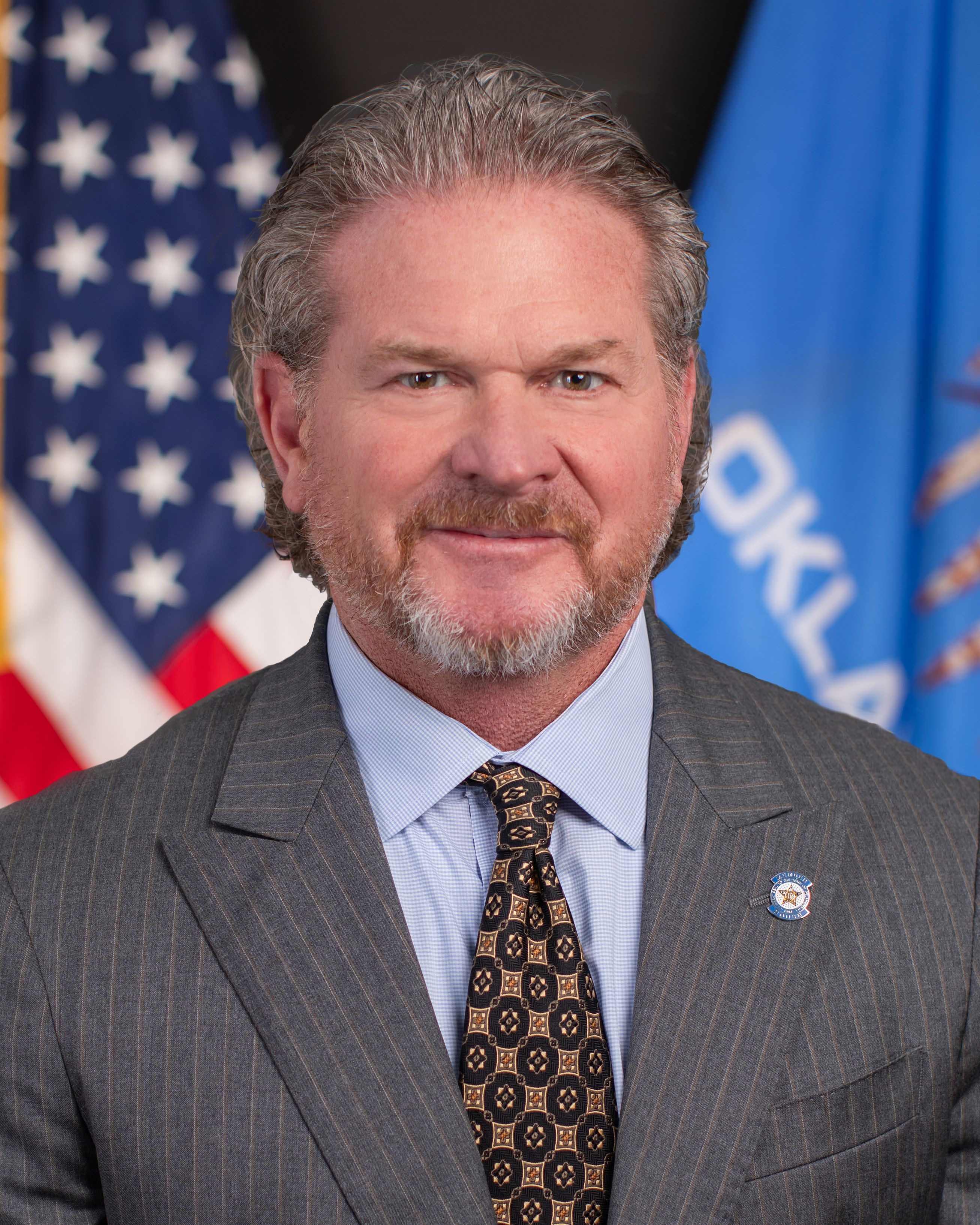
Rep. Stan May
Sponsored bills
Maddy summaryHB 3834, the "Oklahoma Breakthrough Therapy Act," establishes a framework for ibogaine clinical trials in Oklahoma. It requires drug developers to match state funding for trials, provide detailed plans for FDA approval and post-approval patient access (including priority for state residents and low-income care), and share intellectual property proceeds with the state. These proceeds fund an "Ibogaine Intellectual Property Account" managed by the State Treasurer, which must be spent on programs for at-risk populations with conditions treatable by ibogaine (like opioid use disorder). The bill also protects Oklahoma-licensed medical professionals from adverse licensing actions for recommending ibogaine therapy.
Maddy summaryHB 3835 allows courts in Oklahoma to seal (expunge) criminal records for individuals convicted of offenses committed as a direct result of being a victim of human trafficking. It specifically targets prostitution-related or other crimes tied to trafficking, requiring courts to consider trafficking victim status using Oklahoma's definition or federal standards. Key provisions include waiving court fees, closing hearings to the public, applying a "preponderance of evidence" standard (not beyond reasonable doubt), and permitting petitions at any time regardless of when the offense occurred. This bill directly affects trafficking victims with criminal records who were coerced into unlawful acts by traffickers.
Maddy summarySB 2174 modifies the composition and appointment process for Oklahoma's State Fire Marshal Commission. It reduces the commission from seven to five members: three appointed by the Governor (with staggered initial terms of 5, 4, and 3 years), one by the Senate President Pro Tempore, and one by the House Speaker. The bill requires specific representation from firefighter associations, municipalities, fire chiefs, electrical workers, and professional firefighters, ensuring these groups are always included. All future appointments will serve five-year terms subject to Senate confirmation, with staggered terms for the initial appointments.
Maddy summaryHB 1889 adjusts retirement benefits for a specific group of Oklahoma public employees called "Tweeners" who retired before 1989 or 1990 without 20 years of service by May 1983. It requires the Pension and Retirement Board to calculate a cost-of-living adjustment based on inflation (measured by the Consumer Price Index) to restore 100% of lost benefits due to price increases since their retirement start date. The adjustment applies to Tweeners receiving benefits as of June 30, 2025, and becomes effective July 1, 2025. This bill directly affects approximately 1,200 retired public employees in Oklahoma's state retirement systems who were previously ineligible for full inflation adjustments.
Maddy summarySB 1262 provides a resident tuition waiver for Oklahoma students under 18 who were victims of human trafficking for commercial sex or labor, as defined in Oklahoma law. The waiver covers no resident tuition at Oklahoma public colleges and universities but is limited to five years from the date of eligibility. It requires rules to be established for implementation and takes effect immediately upon passage. The bill directly affects Oklahoma residents who were minors during specific trafficking offenses.
Maddy summaryThe provided context does not include the full text of the Exotic Entertainer Licensing Act, which is the core focus of SB 1284. The bill text shown only details an amendment to Oklahoma's Open Records Act (Section 24A.5) to protect personal information in license applications, but does not describe the licensing requirements, qualifications, or prohibitions of the new act. Without the specific provisions of the licensing act, a complete summary of the bill's policy changes cannot be generated.
Maddy summaryHB 3832, the Entertainer Safety and Verification Act, requires exotic entertainers in Oklahoma to obtain an annual license from the Alcoholic Beverage Laws Enforcement (ABLE) Commission. To qualify, performers must be at least 21, pass background checks, provide verified ID, and not have certain felony convictions. Businesses hosting such performances must verify each entertainer’s valid license before allowing shows and securely maintain encrypted records of licenses for 12 months. Violations - such as unlicensed performances or failure to verify - carry misdemeanor penalties with fines up to $500 for performers and daily fines for businesses.
Maddy summaryHB 3336 removes the fixed salary range of $130,000 to $160,000 for Oklahoma's Chief Information Officer (CIO), allowing the Governor to set the position's pay without those specific limits. This change directly affects the state budgeting process for the CIO role and executive compensation structure. The bill does not alter the CIO's existing qualifications (e.g., a bachelor's degree in IT fields and 10 years of experience) or responsibilities, such as managing state information technology systems. The CIO will continue to oversee IT and telecommunications services across all state agencies as defined in current law.
Maddy summaryHB 3833, the Oklahoma Autologous and Directed Blood Donation Act, establishes rules for hospitals and blood banks to handle patients' own blood donations (autologous) or donations specifically for a named patient (directed). It requires hospitals to follow physician orders for these donations when donors meet eligibility standards, ensure proper handling and availability, and not deny use based on internal policies. Blood banks must process and store these donations according to federal standards, and facilities may charge reasonable administrative fees for special handling. The law directly affects hospitals, blood banks, physicians, and patients needing blood for scheduled procedures, with rules to be implemented by the State Department of Health by November 1, 2026.